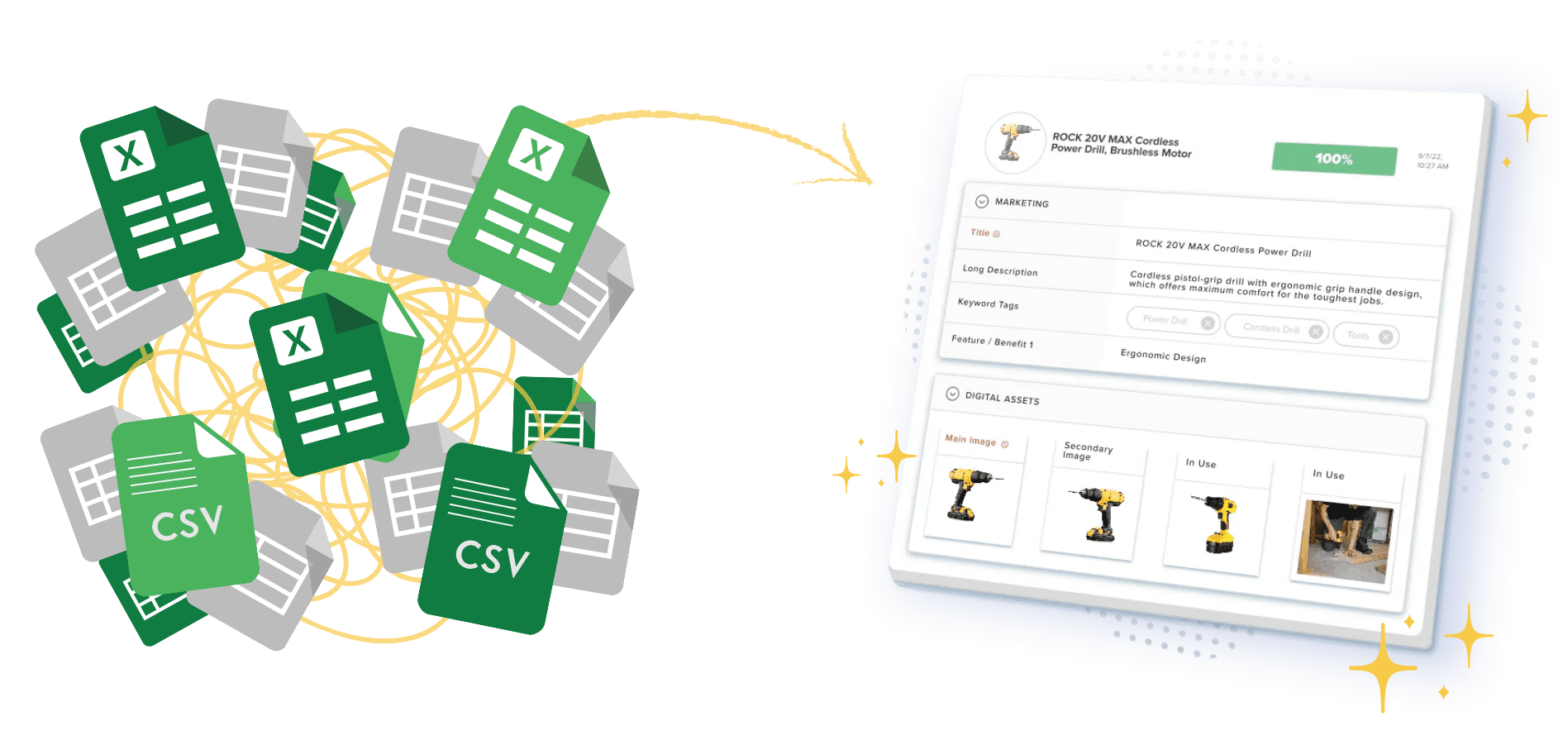
Search for a PIM comparison and every result hands you the same thing: a vendor list, ranked by someone else’s criteria. But product information management isn’t one-size-fits-all. The platform that delights a lifestyle brand on Shopify will frustrate an industrial distributor syndicating 40,000 SKUs to Ferguson — and vice versa. This guide compares PIM platform types, so you can pick the right category before you ever sit through a demo. Already know what you need? Our ranked picks for the best PIM software are the next stop.
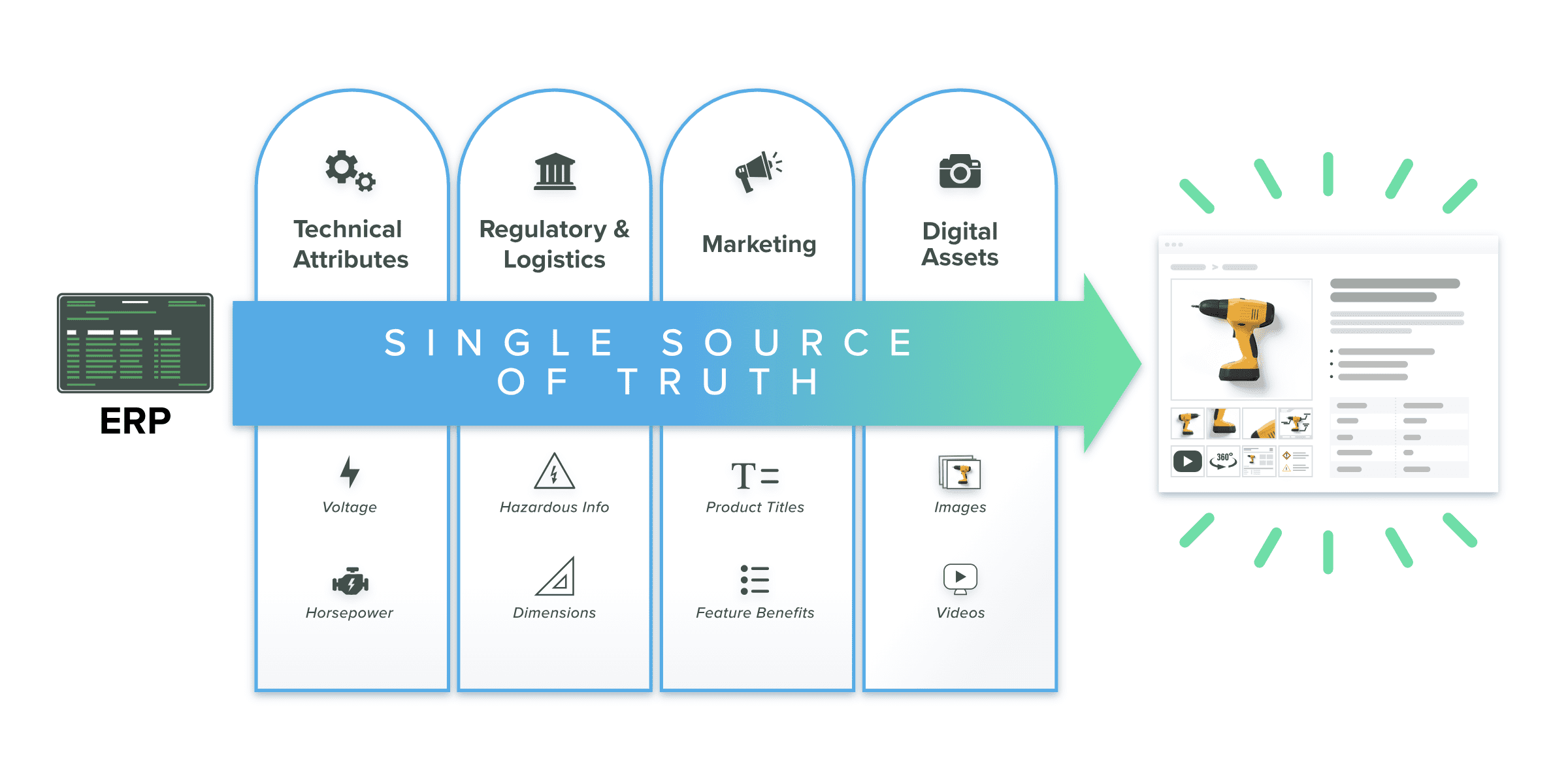
A PIM platform is a system that centralizes, enriches, and syndicates product data — descriptions, specifications, attributes, and digital assets — from a single source of truth to every sales channel you sell on. An ecommerce PIM keeps that product information accurate across storefronts, marketplaces, and distributor networks without the spreadsheet chaos.
The distinction that matters when comparing options: a PIM tool stores product data; a PIM platform is the whole operating system around it — the data model, the integrations with your ecommerce platforms and ERP systems, the digital asset management, the channel templates, and the workflows that govern who changes what.
New to the category entirely? Start with our primer on what a PIM is and come back — this guide assumes you know you need one and are deciding which kind.
Before you look at a single vendor website, answer these four questions. They’ll narrow your shortlist faster than any feature grid, because they’re about your business — not the software.
Your commerce platform imposes real constraints on any PIM solution you connect to it. Shopify caps variants and pushes complex product data into metafields. BigCommerce B2B sellers live and die by faceted search and distributor-format exports. Magento gives you total flexibility — and makes the data model your problem. WooCommerce scatters product information across plugins. Amazon rejects listings that miss its category style guides.
The right PIM software speaks your stack’s language natively; the wrong one makes every sync a project. We’ve built dedicated guides for PIM for Shopify, BigCommerce PIM, Magento PIM integration, PIM for WooCommerce, and PIM and DAM for Amazon — we’ll route you to the right one below.
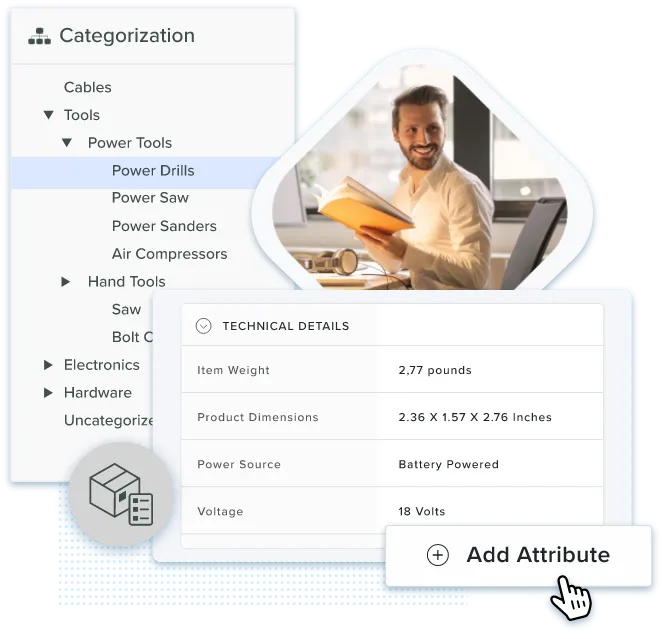
SKU count is the number everyone quotes. Attribute density is the number that matters. A single industrial fastener line can carry 40+ attributes per SKU — thread pitch, tensile strength, plating, certifications, units of measure — before you count the spec sheets and CAD drawings attached to each product. Add variants, multi-language localization, and regional pricing, and a “small” catalog of 3,000 SKUs can hold more product data than a 50,000-SKU apparel catalog. Data quality at that density doesn’t survive in spreadsheets.
Marketing-led teams need an interface a marketer can actually use — bulk editing, workflows, completeness scoring — without filing an IT ticket. IT-led teams can tolerate configuration-heavy platforms in exchange for control. Be honest about which you are, because the mismatch is expensive in both directions.
If a marketer can’t fix a product description without a developer, your time to market didn’t improve — it just moved departments. Some platforms excel at one persona and struggle with the other. A demo that looks effortless for an IT lead can be genuinely unusable for the person who actually touches product content every day. Ask both people to evaluate it.
Digital asset management (DAM) — the system that stores, versions, and delivers your images, videos, and documents — is either part of your PIM platform, a separate purchase, or an unbudgeted surprise. Most comparisons treat it as a checkbox. It’s a category-defining axis, and we’ll give it its own section below.
Every PIM software on the market falls into one of four categories. None of them is “best.” Each is built for a different buyer, and naming which buyer you are is most of the decision.
| Category | Built for | Strengths | Trade-offs | Typical examples |
|---|---|---|---|---|
| Enterprise suite | Large brand portfolios with heavy retail syndication | Digital-shelf analytics, syndication network depth | Cost; implementations measured in quarters; usually needs dedicated admins | Salsify, Syndigo, inRiver |
| Mid-market SaaS | Ecommerce businesses scaling past spreadsheets | Usability, fast onboarding, app ecosystems | DAM often an add-on tier; manufacturer depth varies | Akeneo, Plytix, Sales Layer |
| Open-source / self-hosted | IT-led organizations that want full control | No license fee; you own the data model and hosting | You staff the roadmap: upgrades, security, developers | Pimcore, AtroPIM |
| Integrated PIM + DAM | Manufacturers and distributors whose assets are product data | One system of record for data and digital assets | Fewer vendors in this category to compare | Catsy |
Enterprise suites earn their price when you syndicate to dozens of retail endpoints and need digital-shelf analytics on top. If your distribution channels are that broad and your budget matches, they’re a rational choice — just plan for the implementation weight.
Mid-market SaaS platforms win on approachability. They onboard quickly and look great in demos. Check what happens at your catalog’s density: unit-of-measure handling, supplier data, print catalogs, and whether digital asset management is included or metered as a separate tier.
Open-source platforms trade license fees for staffing. You get control over every field and workflow — and responsibility for hosting, upgrades, and security. Weighing SaaS against self-hosted? Our guide to cloud PIM platforms covers the deployment trade-offs in depth.
Here’s the comparison axis every vendor list treats as a feature checkbox — and it deserves better, because for manufacturers it’s the whole ballgame.
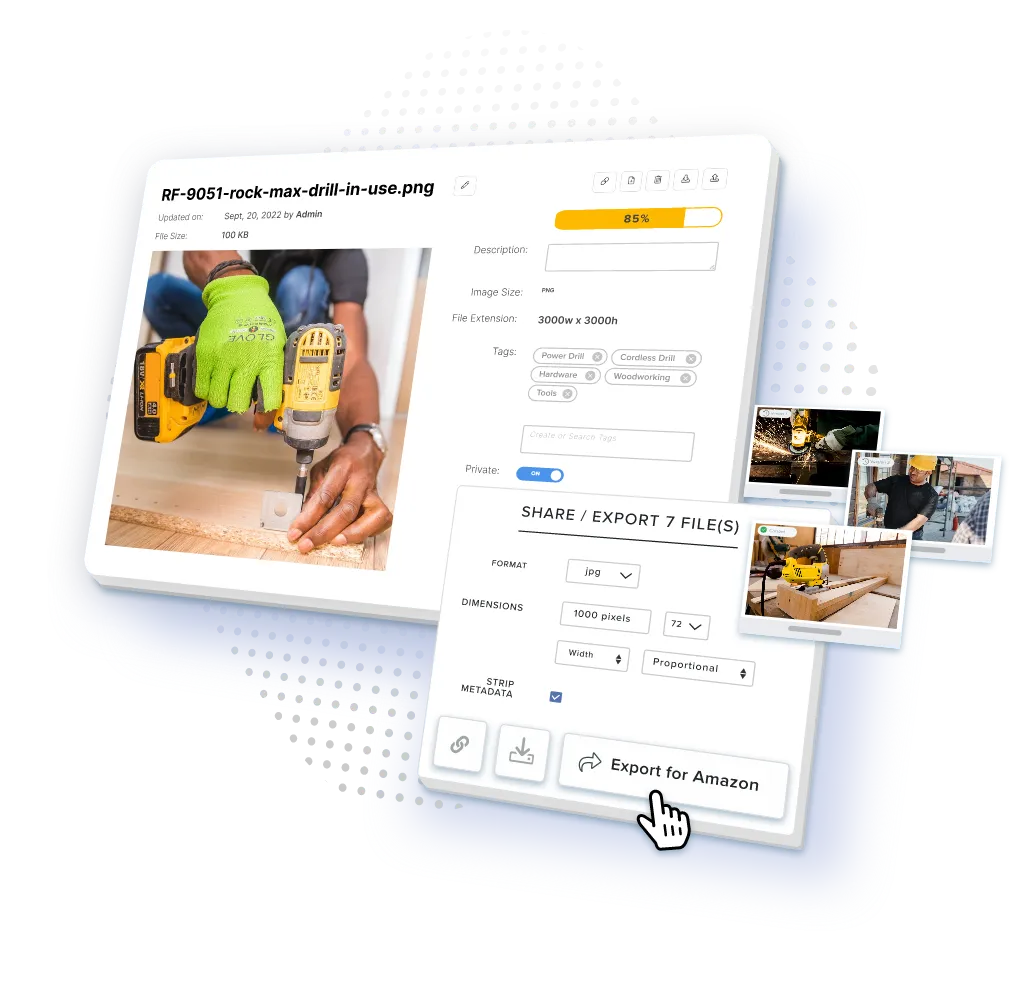
Spec sheets, CAD drawings, safety documentation, lifestyle shots, and product videos aren’t marketing extras. They’re product data. A distributor that can’t pull the current spec sheet doesn’t have your product information — it has a liability. And when your DAM is a second system connected to your PIM by exports and good intentions, drift is guaranteed: links break, versions fork, and channels ship stale assets.
The cost of drift is concrete. Your ecommerce site serves version 4 of a spec sheet while your distributor portal still hosts version 2. A customer engineers around the old tolerances, the product gets returned, and your support team spends a week reconstructing which channel had which file. Multiply by every asset and every sales channel you manage.
“Integrated” should mean more than a media library bolted onto the product record. In a genuinely integrated system, assets link at the attribute level, completeness scoring counts missing assets the way it counts missing copy, and channel exports pull the correct rendition automatically — delivering a consistent customer experience on every product page instead of just the recently audited ones.
For a deeper breakdown of how the two disciplines divide the work, read our guide to PIM vs DAM or explore digital asset management on its own. And if you’re pricing a separate DAM alongside your PIM shortlist, see the single-system approach first — a walkthrough of Catsy’s PIM platform will show you what one source of truth for data and assets looks like.
Your commerce platform decides more of your PIM requirements than any feature list. Here’s the one constraint on each stack that changes the decision — and where to go deeper.
Shopify’s constraint is structure: variant limits and a metafield system that turns complex product data into custom development unless your PIM manages metafields natively. Multi-store merchants feel it worst — every storefront multiplies the manual updates, and stale prices or descriptions reach customers fast. Look for native metafield support, same-day sync, and completeness grading against Shopify’s own requirements. Full breakdown: PIM and DAM for Shopify.
BigCommerce’s B2B strength is also its demand: faceted search and category filtering only work as well as your attribute data is clean and complete. B2B sellers also need distributor-format exports (Grainger, Zoro, MSC) running alongside the storefront, plus freshness — hourly updates, not weekly batch jobs. Look for multi-storefront sync and B2B export templates out of the box. Full breakdown: BigCommerce PIM software.
Magento gives you unlimited flexibility, which means the product data model is yours to design and govern. Multi-store, multi-persona setups — B2B and B2C pricing on the same SKU — are where it shines and where data governance gets hard. The thing most teams underestimate: the connector work sits on the Magento side, not the PIM side. Budget for it, and insist your PIM handles multiple personas per SKU before the demo ends. Full breakdown: Magento PIM integration.
WooCommerce’s constraint is sprawl: attributes, SEO fields, and product information end up scattered across a plugin stack, each with its own data collection habits and update cycle. A PIM’s job here is to sit above the plugins as the system of record, so the store becomes a publishing target instead of the place where product data lives. Full breakdown: PIM for WooCommerce.
Amazon doesn’t negotiate. Category style guides, required attributes, and image specifications decide whether your listing renders, ranks, or gets suppressed — and they differ by category. The PIM question isn’t just whether you can export to Seller Central. It’s whether you can grade content against Amazon’s requirements before export, so suppressions get caught in your workflow instead of on a Friday afternoon. Full breakdown: PIM and DAM for Amazon.
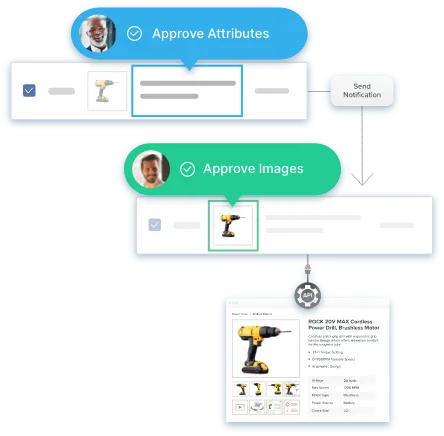
Demos are theater unless you script them. These ten questions — asked of every vendor, in the same order — turn a sales presentation back into an evaluation. Score each platform 1–5 per question and compare totals.
One way to pressure-test all ten at once: Catsy demos run on your data, not a canned catalog. Bring your worst spreadsheet and your hardest distributor template — book a demo and see what happens.
The framework is short enough to keep in your head: your commerce stack sets the integration requirements, your catalog’s attribute density sets the data model requirements, and your team decides how much configuration you can absorb. The DAM question — built in, bolted on, or missing — separates platforms that manage the whole product record from platforms that manage half of it.
Answer those four questions and the right PIM software category picks itself. The scorecard handles the rest.


A PIM platform is software that centralizes product data — attributes, descriptions, pricing data, and digital assets — into a single source of truth, then enriches and syndicates it to sales channels like ecommerce platforms, marketplaces, distributors, and print catalogs. It replaces the spreadsheets and shared drives where product information otherwise scatters.
PIM manages structured product data (attributes, specs, descriptions); DAM manages the files (images, videos, documents) and their versions. They’re two halves of one product record, which is why they drift when run as separate systems. See our full PIM vs DAM comparison.
If you manage 500+ SKUs across two or more sales channels, almost certainly. An ecommerce PIM solution pays for itself in faster time to market, fewer listing errors and returns, and marketing data your team stops re-keying. Under a few hundred SKUs on a single channel, spreadsheets may still hold.
The best PIM for Shopify is one with native metafield support, multi-store sync, and completeness grading against Shopify’s requirements. Evaluate platforms against Shopify’s variant and metafield constraints before comparing vendor rankings. See our Shopify PIM guide for the full breakdown.
No. Master data management (MDM) governs every data domain in the enterprise — customers, suppliers, finance, and products. A PIM system is the product slice of that master data pie, purpose-built for enriching and publishing product content rather than governing all corporate data.
Script your demos around your hardest use cases: your messiest data, your most demanding distributor template, and your most complex product family. The 10-question scorecard in this guide gives you a consistent evaluation framework across vendors. The questions that matter most are whether DAM is included or metered separately, how the ERP integration actually works, and who fixes a rejected feed — you or a support ticket queue.
The right PIM platform type is the decision that makes every subsequent vendor comparison faster and more honest. The guides below cover the specific platforms and use cases that follow once you’ve identified your category.
Catsy demos run on your catalog, not a canned one. Bring your worst spreadsheet and your hardest distributor template — and see what one source of truth for product data and digital assets actually looks like.
Book a Demo