PIM MCP vs API: Which Product-Data Connection Fits Your Workflow
MCP and APIs solve different product-data problems. A decision framework for choosing the right connection for each PIM workflow.
Table of Contents
Choosing between PIM MCP and an API is not a showdown between two technologies. It comes down to what you’re building. Model Context Protocol and regular APIs are not competing for the same job. They are built for different callers with different needs. That’s why most companies handling product data end up using both instead of picking one.
This article walks through how to make that call. Start with your workflow, compare the two options based on what actually matters for your setup, and you’ll usually find spots where you genuinely need both at once.
Start With the Job, Not the Tool
Before you ask “MCP or API,” ask what the job actually needs to do. Most cases fall into four types:
Requires reasoning:
A person asks a normal question and wants a real answer, not raw data. For example, “Which products are missing a required detail?” For this, you need an AI that can look at the situation and figure out the answer. This is where MCP fits.
An AI has to decide its next move as it goes, changing its plan based on what it just learned. There’s no fixed set of steps here.
Doesn’t require reasoning:
Two systems trade data the exact same way every time: same address, same format, no changes. There’s nothing to decide.
A large batch of records moves from one system to another on a schedule or trigger, with no individual record needing attention. This is a speed-and-volume job, so a PIM with solid API connections handles it well.
So here’s the simple difference: Questions and step-by-step decisions go to MCP. Predictable, repeated data movement goes to a regular API.
MCP and APIs Compared Across Six Areas
Once you know the job type, here are six areas that show why these two work so differently in real use.
One thing worth knowing about “handling context” is that MCP’s actual messages are self-contained JSON-RPC 2.0 requests. It’s the same basic format used in a lot of regular API tools. So the real difference is the session, plus what the AI has already figured out and remembers using.
One study comparing the two put it simply: REST is built for the caller driving fixed request-and-response steps, while MCP is built for AI-driven sessions where the tools get worked out as it goes. This matches the pattern from before. Fixed steps suit an API, while tasks that require judgment calls suit MCP.
Three Real Examples of MCP and APIs
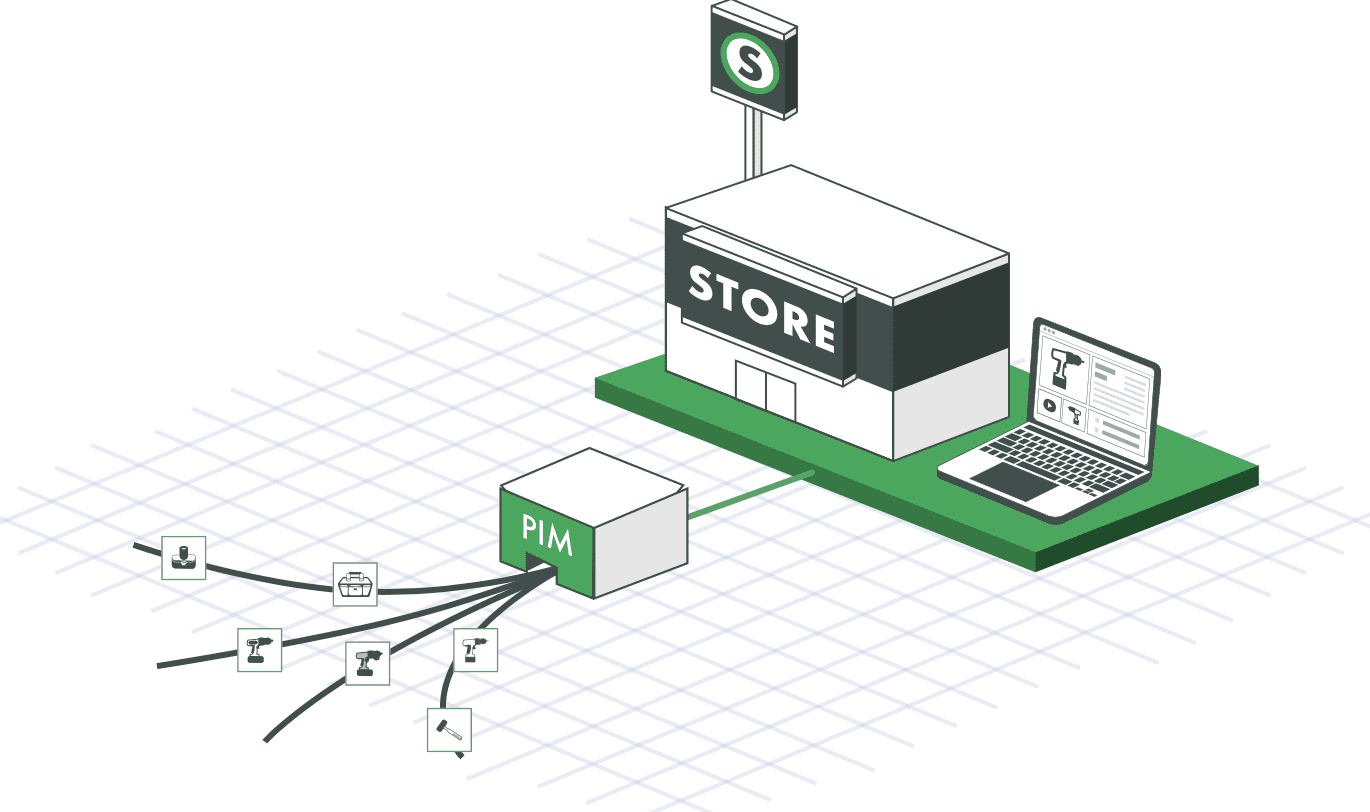
Here are three that come up all the time in PIM work.
Where One Workflow Needs Both
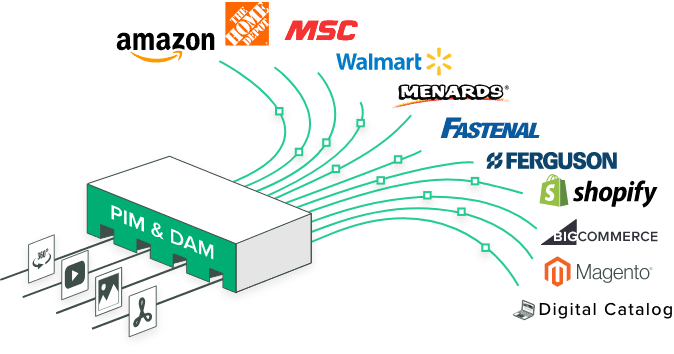
So, will you need both? Yes. In fact, this setup is fairly common. It’s what a well-built system normally looks like: an API for the main data connection and MCP for the part where a person or AI interacts with it.
The API remains the foundation. Stock levels, price updates, and bulk data syncs run through a fixed setup that can be tested and checked because that’s what those jobs need. MCP sits on top of this and handles the parts that benefit from AI reasoning through data the API has already pulled in. A few examples include answering a readiness question or writing a draft for review.
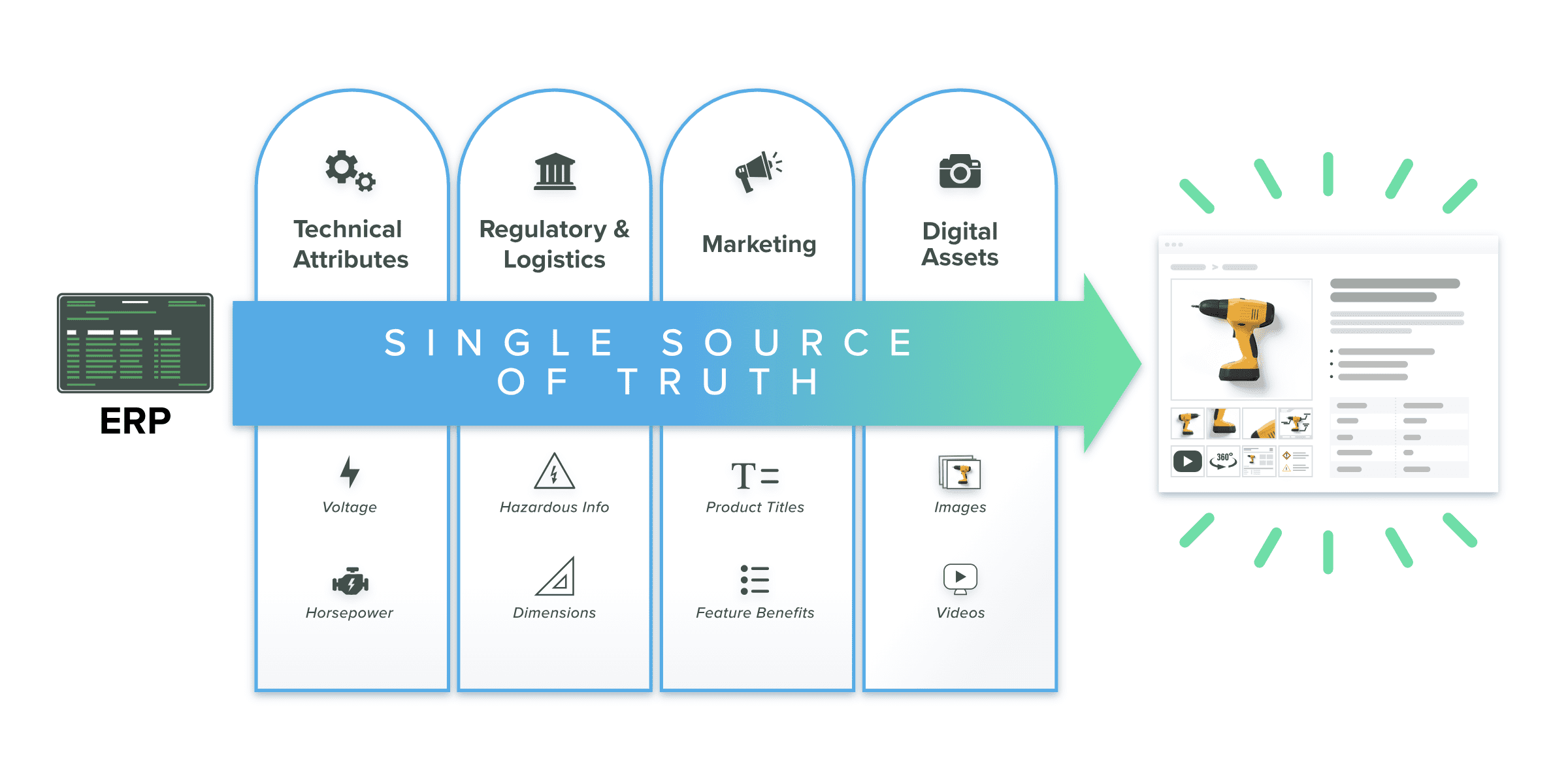
In this case, don’t treat it as an either-or choice. When you force a high-volume, repetitive sync through an AI that reasons through every record, it can be slow and unnecessary. At the same time, don’t force a judgment-based task into a fixed API setup that can’t handle what it wasn’t built for. A solid, well-managed data foundation under both is what makes either one reliable, since neither an API nor an MCP session can give a good answer from unchecked data.
Where This Fits With the MCP Implementation Checklist
This article covers a different question than Catsy’s PIM MCP implementation checklist. That checklist assumes MCP is already the right choice and walks through access, review, logging, and escalation decisions. This article comes before that step, helping you decide whether MCP is actually the right fit for the workflow or whether a regular API would do the same job more reliably.
The same applies to Catsy’s Shopify MCP coverage. It assumes an agent-facing storefront workflow has already been chosen.

The same idea applies to how a workflow connects to the product information management system behind it. A high-volume, repetitive sync stays fast and reliable when it runs through that system’s own API which is the same foundation an MCP reasoning layer should build on, not replace.
Key Takeaways
Choose the Right Workflow
If your team is trying to decide whether a product-data workflow needs MCP, an API, or both, the decision usually comes down to whether the task involves judgment or predictability, not which technology is newer. To help you decide, Catsy’s Connection-Decision Matrix maps the workflow types, comparison dimensions, and examples in this article into a single reference you can apply to your own integrations. Request a demo to see how Catsy supports both API and MCP connections side by side, or browse Catsy’s PIM and DAM resource center for more on choosing the right integration architecture.