Compare PIM platform types by commerce stack, catalog complexity, taxonomy, and DAM. Use the 10-question scorecard to choose the right PIM for 2026.
Most PIM comparisons are vendor rankings built on someone else’s criteria. A platform that suits a lifestyle brand on Shopify can fail an industrial distributor sending 40,000 SKUs to Ferguson. This guide compares platform types instead, so you can pick the right category before any demo. Already know your type? See our best PIM software list.
The short answer: Four things decide which PIM (product information management) platform fits: your commerce stack, how many attributes your products carry, who does the daily work, and whether DAM (digital asset management) is built in. Most platforms fall into one of four types: enterprise suites (Salsify, Syndigo) for multi-brand retail syndication and digital shelf analytics; mid-market SaaS (Akeneo, Plytix) for fast onboarding as catalogs grow; open-source (Pimcore, AtroPIM) for IT teams that want to own the code; and integrated PIM + DAM (Catsy) for manufacturers and distributors that need product data and files in one record.
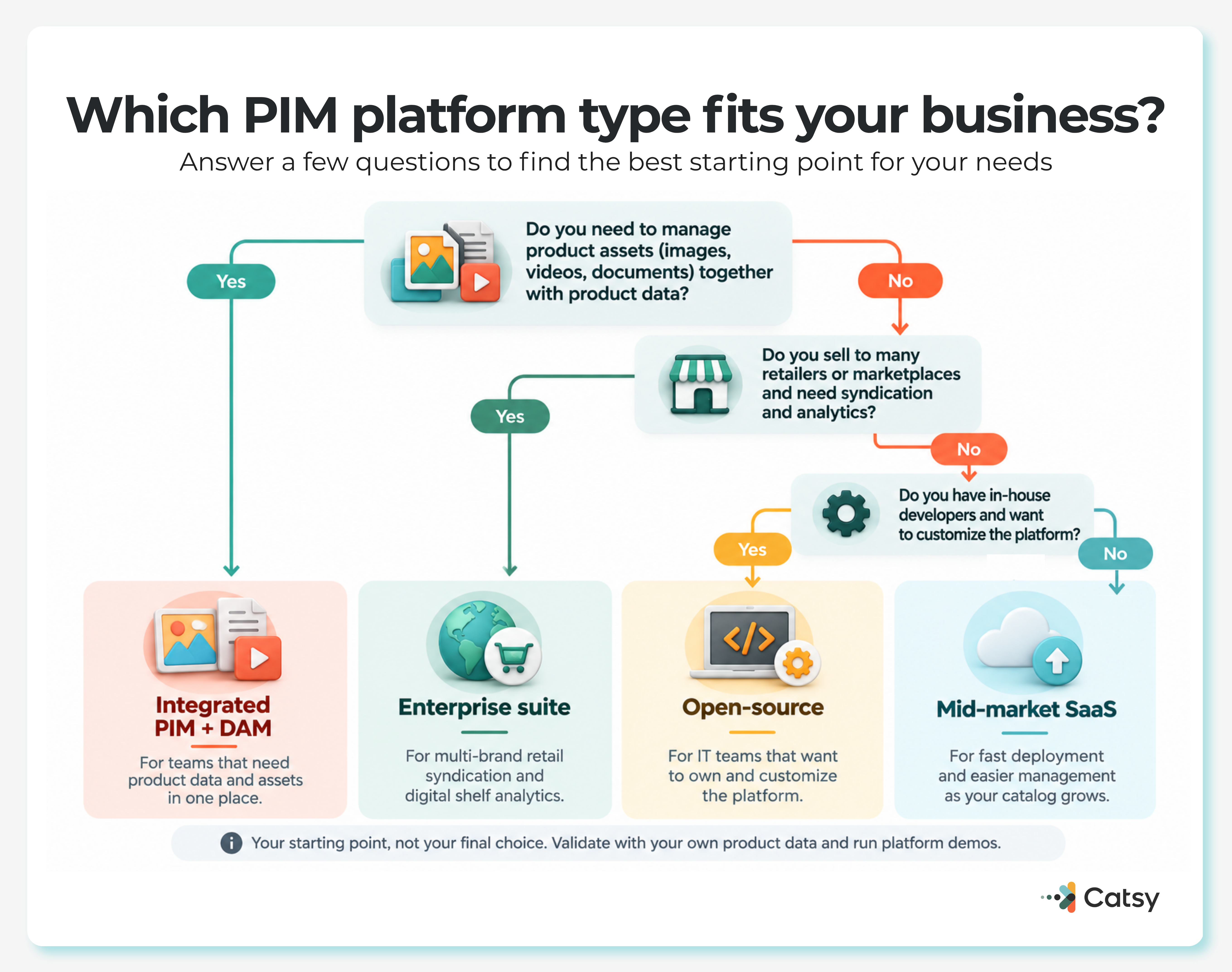
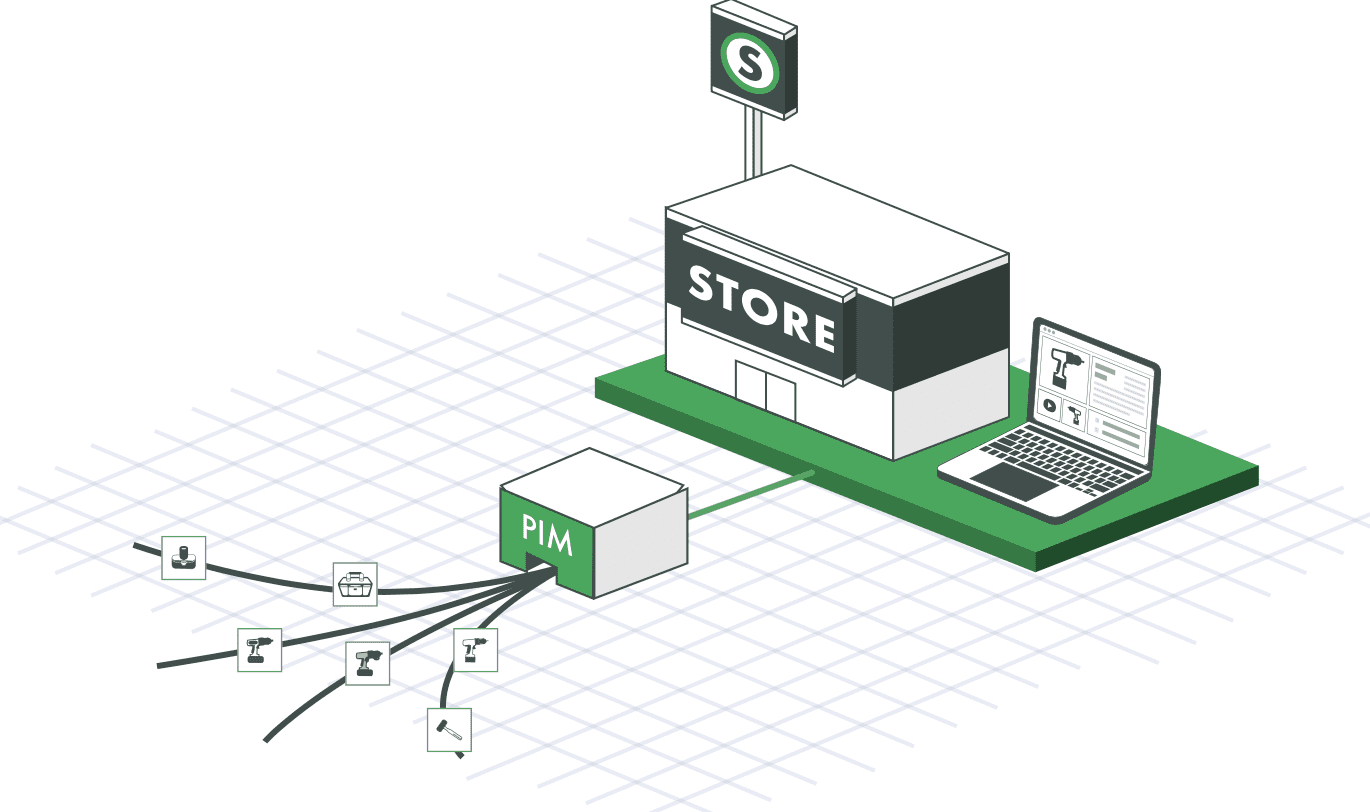
A PIM platform collects product data in one place, improves it, and sends it to every sales channel. A PIM tool only stores the data. A platform also includes the data model, ERP and ecommerce connections, digital asset management, channel templates, and approval workflows.
The market is crowded. Fortune Business Insights valued it at $5.48 billion in 2025 and projects growth from $6.74 billion in 2026 to $20.66 billion by 2034. Most vendors now claim AI and syndication, so labels say little about fit.
Catalogs also have a new reader. On Shopify, AI agents can search products and pull full product details as structured data, so an empty attribute is invisible to them. Our guide on what AI agents see in a Shopify catalog shows what agents actually read. New to PIM? Start with our introduction to PIM.
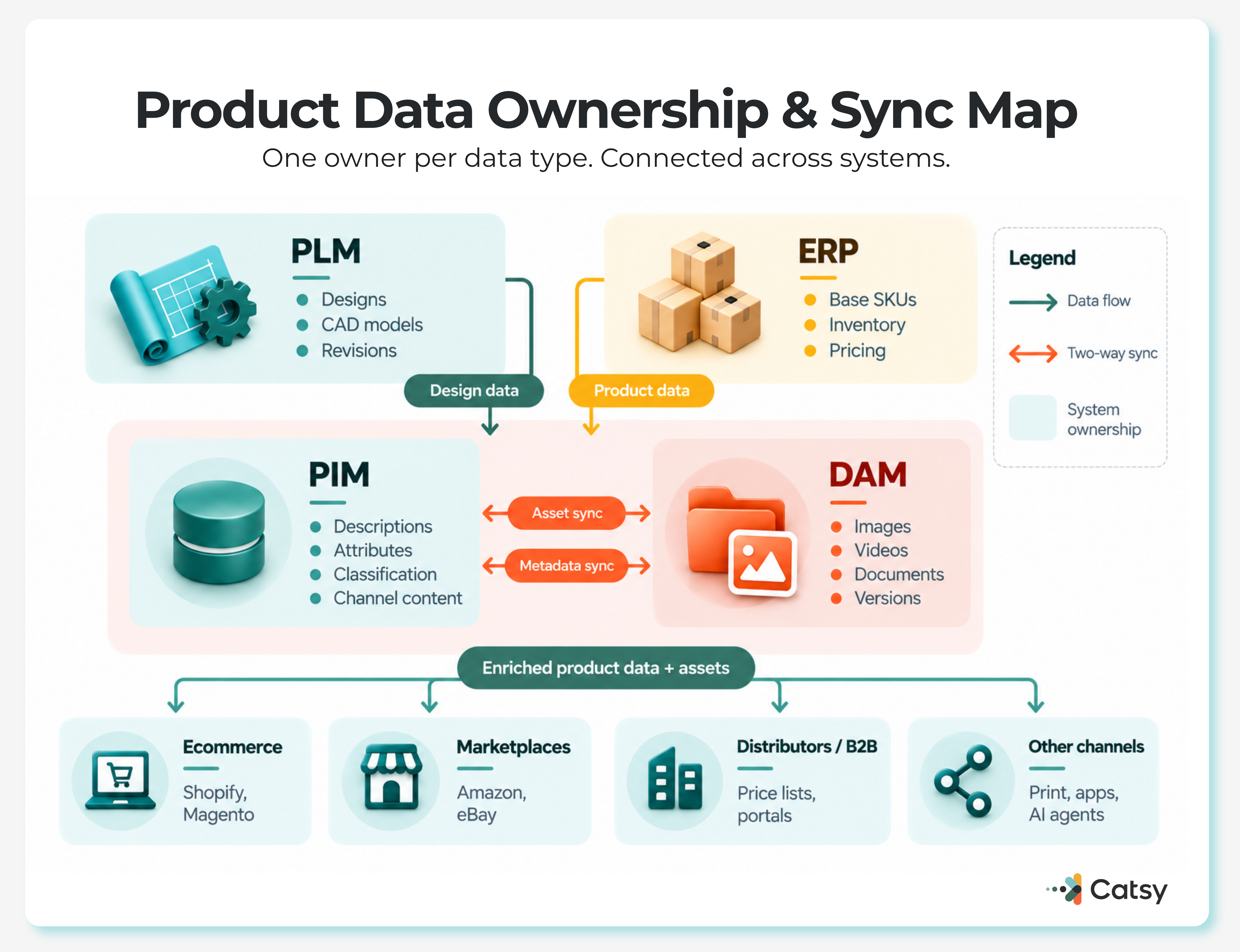
Before comparing platforms, agree on which system owns what:
| System | Owns |
|---|---|
| PLM | Engineering designs, CAD models, revisions |
| ERP | Base SKUs, inventory, list prices, costing |
| PIM | Channel-ready descriptions, attributes, classification codes |
| DAM | Images, videos, spec sheets, Safety Data Sheets |
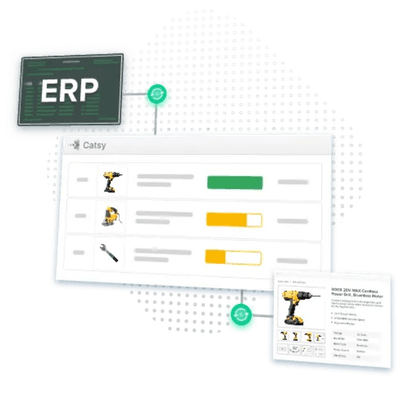
Catsy follows the same split: the ERP owns costing and inventory, the PLM owns design, and the PIM owns product content. An integrated PIM + DAM platform merges the last two rows.
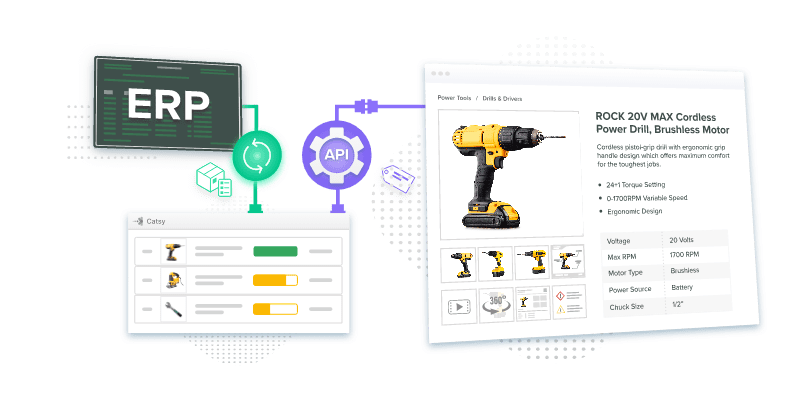
Each commerce platform stores product data differently, which limits the PIM. Shopify keeps complex specs in metafields and has required new public App Store apps to use only GraphQL since April 1, 2025. BigCommerce keeps filterable specs in product custom fields, up to 200 per product. Magento and Adobe Commerce use an EAV model where attributes can hold different values at Global, Website, and Store View scope. Ask every vendor which of these its connector writes to directly.
One industrial fastener line can carry more than 40 attributes per SKU before anyone attaches a spec sheet. A 3,000-SKU catalog like that can hold more data than a 50,000-SKU apparel catalog. Spreadsheets do not survive that detail.
Many distributors and procurement systems also expect standard codes. ETIM classifies technical products, UNSPSC covers products and services for procurement, and ECLASS releases a new version every year (version 16.0 arrived on November 27, 2025). Check whether one SKU can hold your own category plus these codes, and whether the class can decide which attributes are required. Our article on why product taxonomy breaks down as catalogs grow covers how to keep categories under control.
Marketing-led teams need bulk editing and completeness scores without IT tickets. IT-led teams can accept heavy configuration in exchange for more control. If a marketer needs a developer to fix one description, the work only moved departments. Role-based permissions and validation rules let both groups work in one system. See how Catsy handles product data governance.
In any PIM deal, DAM is either included, sold separately, or an unbudgeted surprise. It gets its own section below.
| Type | Best For | Main Trade-Off |
|---|---|---|
| Enterprise suite | Content sent to dozens of retail endpoints | High cost, implementations measured in quarters |
| Mid-market SaaS | Brands moving past spreadsheets | DAM often a paid add-on |
| Open-source | IT teams wanting full control | You staff upgrades, security, and hosting |
| Integrated PIM + DAM | Manufacturers whose files are product data | Fewer vendors to compare |
With open-source options, check the production-use license before assuming the software is free. Our guide to cloud PIM platforms compares SaaS and self-hosted setups.
Spec sheets, CAD drawings, and safety documents are product data. When the DAM is a separate system, files drift: your website shows version 4 of a spec sheet while a distributor portal still shows version 2, and a customer designs around the wrong tolerances.
In an integrated system, assets link to specific attributes and completeness scores count missing files like missing copy. Dynabrade, a pneumatic tool maker selling in more than 90 countries, moved its images and certification PDFs into Catsy’s PIM + DAM across 58,000 SKUs. According to Catsy’s case study, completeness rose from 61% to 99% and distributor feed errors fell to zero within 11 weeks.
Regulation raises the stakes. The EU Digital Product Passport Registry became operational on July 20, 2026, and battery passports become mandatory for the relevant battery categories on February 18, 2027. A passport only helps if it points to current product information. See Catsy’s digital asset management and PIM platform for the single-record approach.
| Channel | What to Check | Learn More |
|---|---|---|
| Shopify | Native metafields and the 2,048-variant limit through current GraphQL APIs | Shopify PIM |
| BigCommerce | Custom field mapping, multi-storefront sync, B2B exports | BigCommerce PIM |
| Magento | Store View scopes and B2B or B2C personas per SKU | Magento PIM |
| WooCommerce | PIM as the system of record above plugins | WooCommerce PIM |
| Amazon | Content checked against category rules before export | Amazon PIM + DAM |
| Distributors | Distributor-specific templates (Grainger, Ferguson, Fastenal) validated before export | Channels |
Distributor networks are often the hardest channel for manufacturers. Catsy’s PIM for distributors covers templates and partner portals.
Ask every vendor the same ten questions and score each answer from 1 to 5:
Weight what matters to you. Before the first demo, mark your must-have questions. A distributor-led manufacturer might double questions 2 and 10. A marketing-led team might double question 5. Multiply each score by its weight and compare totals. A vendor that scores 1 on any must-have should leave the shortlist.
Confirm what you heard. A demo shows what a platform can do, not what your contract will include. Get pricing, an implementation plan with roles and hours, the supported integrations, and any limits on SKUs, users, or API calls in writing. You can even ask for a reference customer with a similar catalog.
Test on your own data. Bring your messiest spreadsheet and your hardest distributor template to a Catsy demo, and score Catsy the same way.
Your stack, attribute density, and team set the requirements. The DAM question decides whether a platform manages the whole product record or only half. Choose the category first, then let the scorecard choose the vendor.