Manufacturers rely on accurate product data to keep operations moving and customers informed. As product ranges grow and sales channels multiply, information often ends up spread across disconnected systems. That fragmentation makes it harder to stay consistent, slows teams down, and creates avoidable risk.
Managing product information in a manufacturing business can get messy fast. You have technical specifications to track, digital assets to organize, and product data spread across emails, spreadsheets, and older systems that refuse to talk to each other. A good product information management (PIM) system can change all of that. It pulls everything into one centralized hub so your team can finally work from correct product data that’s easy to update and easy to share.
Today, manufacturers are feeling the pressure to modernize. Most B2B buyers start their research online, so your product descriptions and digital assets are often what shapes their first impression. If your data is consistent and clear, you can instantly deliver a better experience for your customers. If not, your sales channels struggle, your partners get confused, and your customers lose confidence.
In this guide, we’ll walk through what PIM software does, why manufacturers need a system built for their world, and the top 10 PIM solutions that fit today’s industrial needs, along with what’s changed in the market heading into 2026.
Key Takeaways
What a PIM System Does for Manufacturers
A PIM platform is the home base for all your product information. It stores technical specifications, marketing content, digital assets, and documents, all in one centralized repository. From there, you can push accurate data to ecommerce platforms and distributor portals as well as your internal tools and your sales channels.
Think of it as a single source of truth for your product data. If everything’s centralized, your marketing teams, product teams, and customer service staff can all work from the same, trusted information. It reduces errors and speeds your updates, while strengthening brand consistency across multiple channels.
Why Manufacturers Need a Specialized PIM
Manufacturing product data isn’t simple. Most products have multiple versions, custom configurations, safety documents, and long lists of technical details. You might also work with several suppliers who provide specs that change over time. A generic PIM tool can’t keep up with this level of complexity.
Manufacturers benefit from sophisticated PIM systems that support flexible data modeling, workflow automation, and seamless integration with ERP systems and other existing tools. These platforms help you manage product data in a way that matches real product development processes, not just ecommerce listings.
When manufacturers move to a PIM that was built for their business processes, they typically see fewer mistakes and faster updates. Operational efficiency improves, and teams stop chasing data across siloed spreadsheets.
Key Features Every Manufacturing PIM Should Have
Not all PIM solutions are built the same. If you manufacture or distribute physical products, make sure your PIM software includes the following.
Digital Asset Management in a PIM
Most manufacturers manage more than text. You also store a lot of digital assets, such as images, diagrams, manuals, and videos. A PIM with built-in digital asset management capabilities can organize all of this content in the same place as your product data.
This makes it easier to keep everything consistent across multiple sales channels. When marketing teams update a product photo or document, the system pushes the new version to every connected destination. It helps maintain brand consistency and improves customer satisfaction by making sure buyers always see accurate information.
Master Data Management for Manufacturers
Master Data Management (MDM) works hand in hand with PIM. MDM helps you keep all core data consistent across your organization. When paired with a PIM, it creates a unified platform for storing and sharing accurate information across departments and external partners.
This makes it easier to manage data across the entire product lifecycle. It also gives your teams data-driven insights that support better decision making and more efficient business processes.
The Top 10 PIM Solutions for Manufacturing
Without further delay, here are the best PIM solutions for manufacturers on the market today. These platforms stand out because of their data modeling and integration capabilities, and their ability to centralize product data for use across multiple channels.
Catsy
Catsy combines PIM and DAM to give manufacturers a clean, user-friendly interface for managing data and digital assets together. It supports technical specifications, BOM mapping, workflow management, and product data syndication across ecommerce platforms and distributor channels. Catsy is known for its simple setup and strong operational efficiency gains, with pre-built connectors for SAP, NetSuite, Microsoft Dynamics, and other ERPs commonly used by manufacturers.
inriver
inriver focuses on product relationships. It’s great for manufacturers with complex catalogs. Custom data models are supported, and the platform offers tools for creating channel-specific content. Teams gain clear visibility into product lifecycle management, and inriver was named a Representative Vendor in Gartner’s Market Guide for Product Information Management Solutions, published January 22, 2025.
Akeneo
Akeneo is one of the better-known PIM software options for growing manufacturers. It offers strong rule-based automation, easy enrichment tools, and a wide range of connectors. Akeneo supports multiple sales channels and helps marketing teams keep information consistent and up to date. In 2026, Akeneo began describing itself as a “Product Experience” platform and introduced an agentic AI layer called Ziggy for automated enrichment, reflecting a broader industry shift toward AI-assisted product data operations.

Pimcore
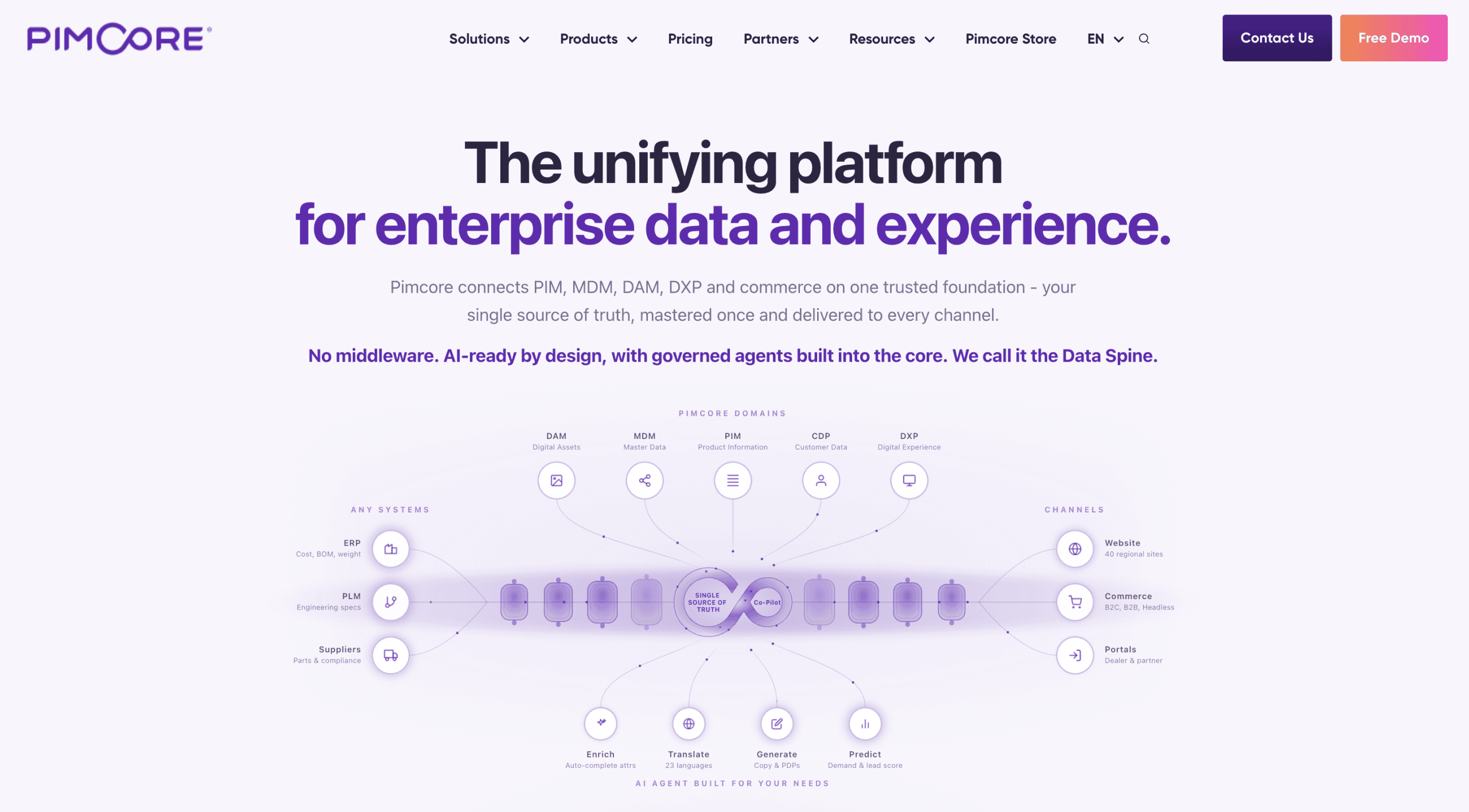
Pimcore is an open-source unified platform. It includes a wide feature set and integrates PIM, DAM, and MDM into one system. Pimcore supports custom development and advanced data storage, and manufacturing companies with in-house tech teams appreciate the flexibility, though that flexibility assumes dedicated developer resources for hosting and configuration.
Contentserv
Contentserv focuses on efficiency and workflow automation. It offers strong digital asset management capabilities and tools for managing data across multiple regions. Global brands use Contentserv for the combination of PIM and DAM.
Plytix
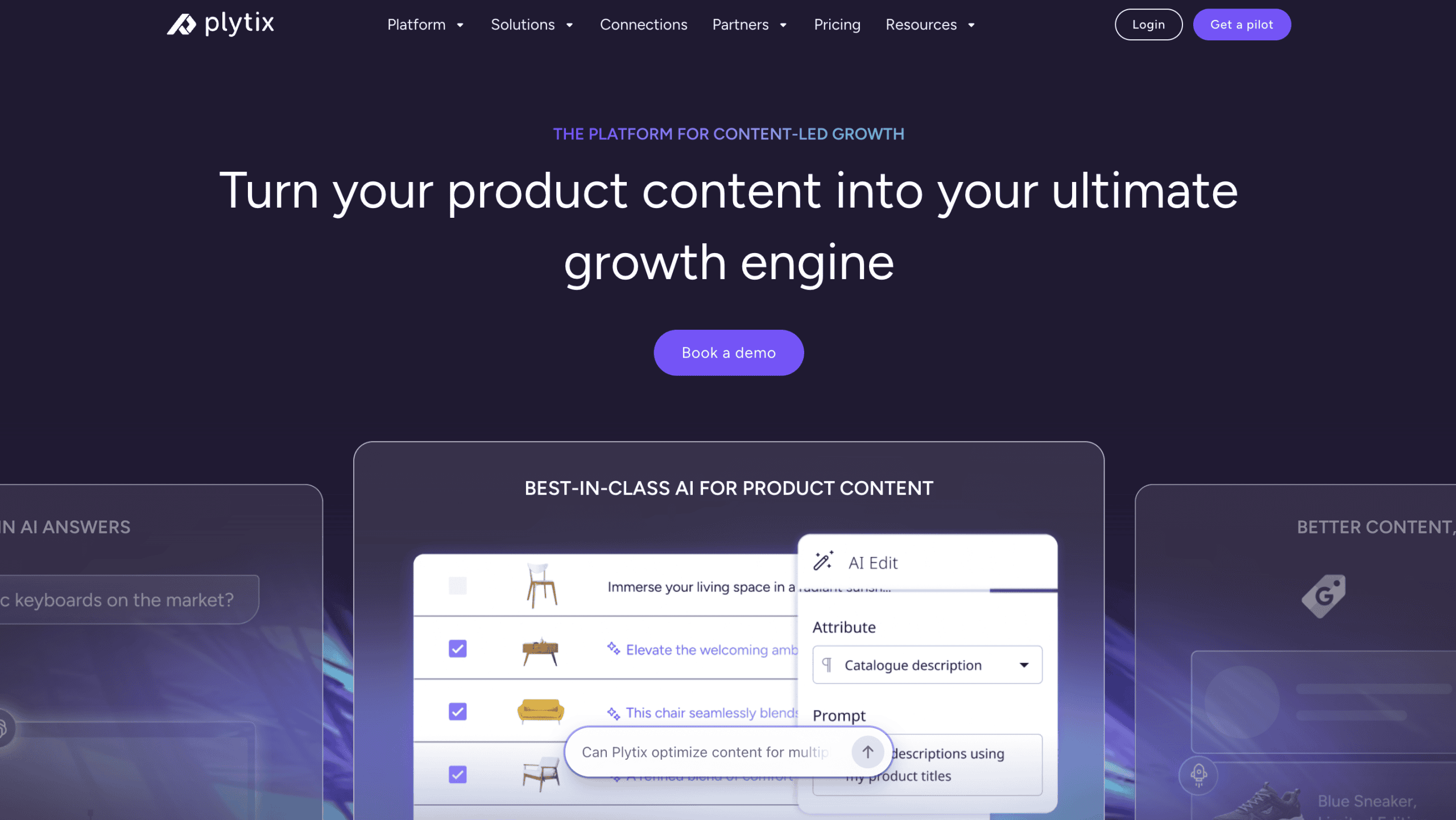
Plytix is a cloud-based PIM designed for small to mid-sized teams. It’s exceptionally user-friendly, and it works well for manufacturers who are expanding into new ecommerce channels. Plytix provides consistent product data without the configuration depth of heavier enterprise systems.
Pimberly
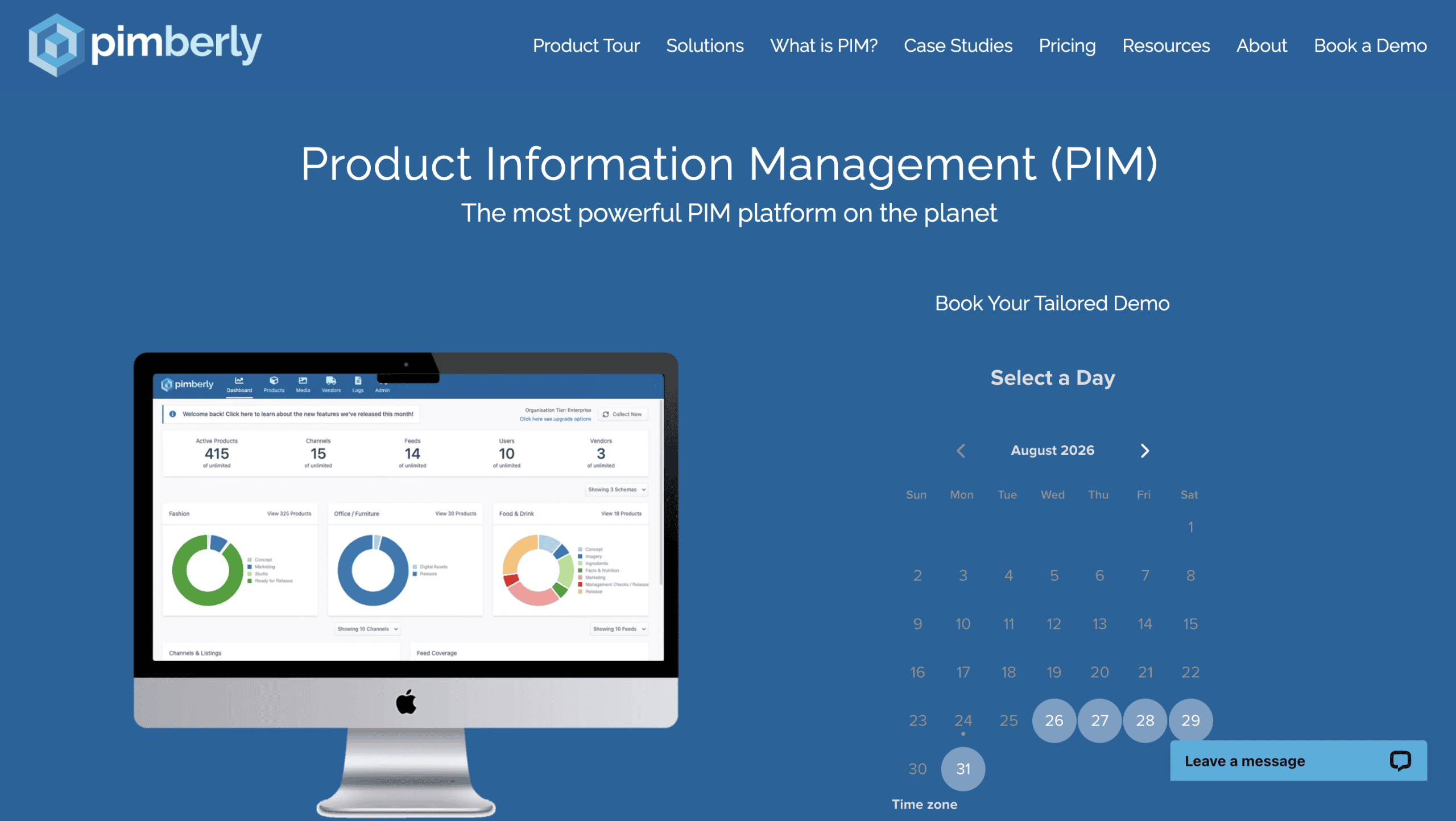
Pimberly is known for its automation features. It supports large catalogs and allows teams to manage data across multiple channels with ease. It’s a reasonable choice for global manufacturers with evolving product lines.
Syndigo
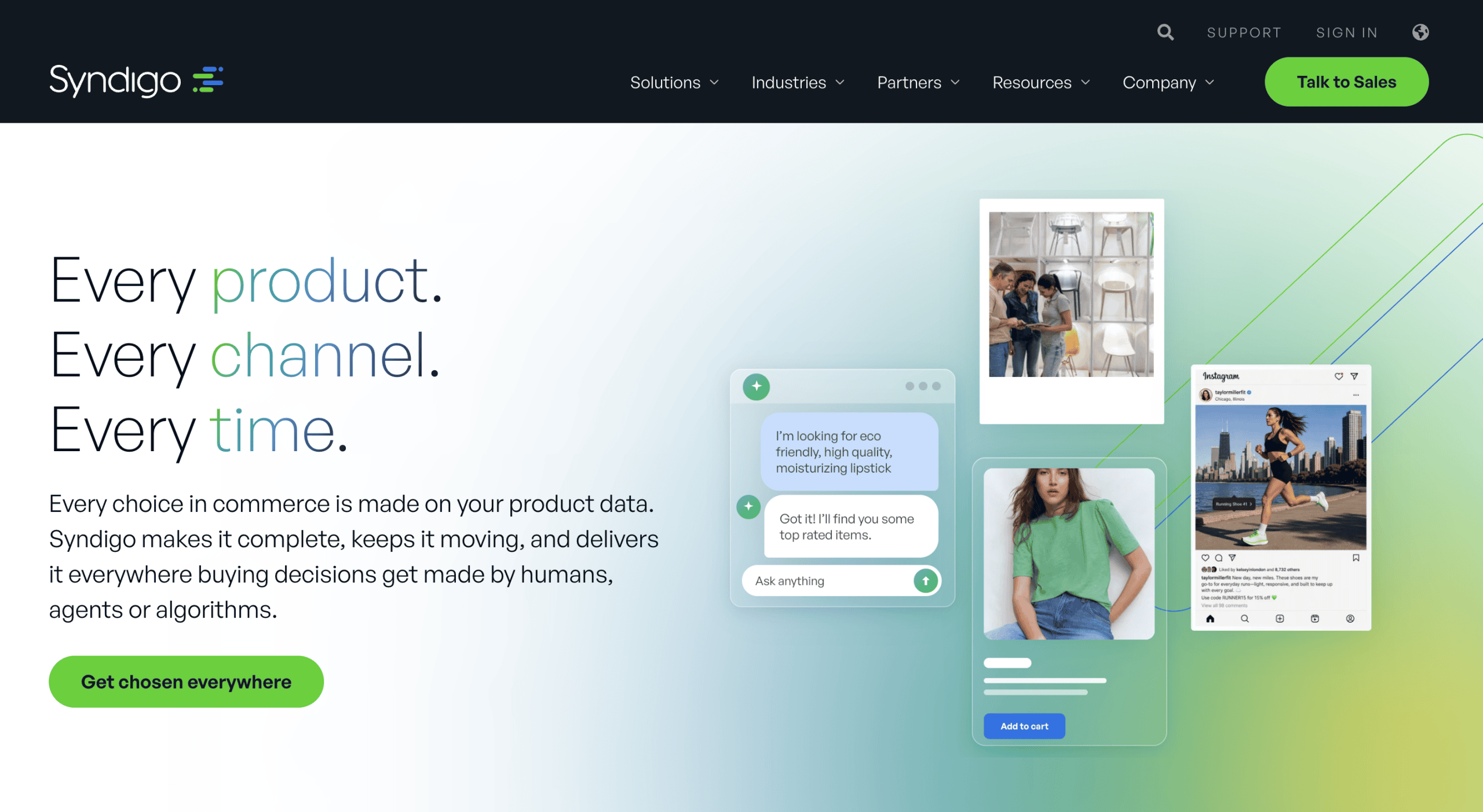
Syndigo stands out for its digital shelf analytics and its global syndication network. Manufacturers that must connect to retailers and marketplaces often choose Syndigo for its ability to manage and distribute accurate information quickly. Syndigo’s network expanded further through its acquisition of 1WorldSync in September 2025.
Sales Layer
Sales Layer helps teams manage product data with clear visibility and fast onboarding. It provides tools for improving data accuracy and supports data flow into multiple ecommerce platforms, and has continued adding AI-assisted enrichment features as part of a broader industry shift toward automated data quality tooling.

Informatica MDM Product 360 (Now Part of Salesforce)
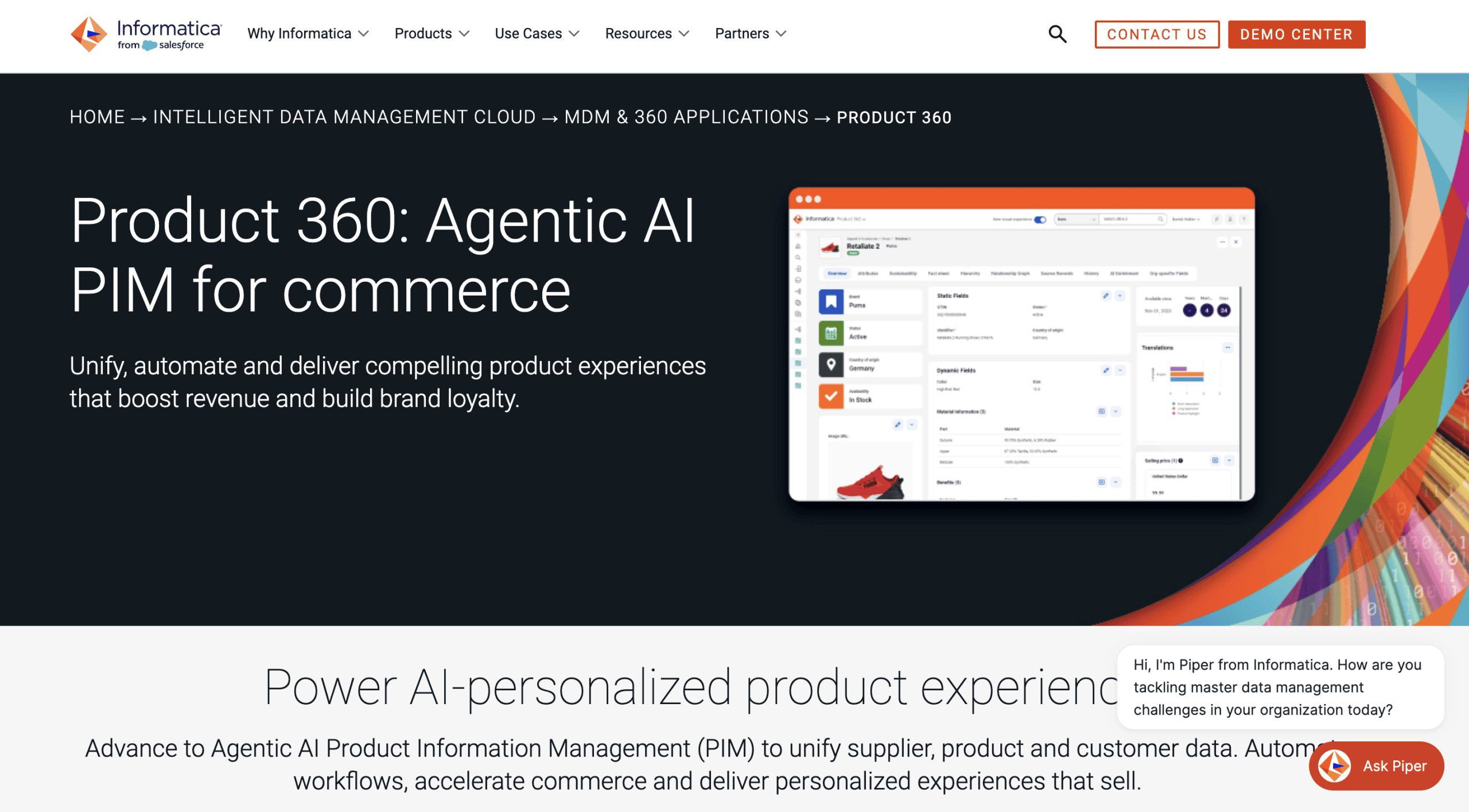
Informatica MDM Product 360 has long been a strong fit for enterprise manufacturers, offering deep data governance, automation, and integration capabilities for organizations with complex data management needs. Salesforce completed its acquisition of Informatica on November 18, 2025, folding these capabilities into the broader Salesforce Data Cloud ecosystem. Enterprise manufacturers already standardized on Salesforce may find this consolidation useful, though buyers should confirm current packaging directly with Salesforce given how recent the change is.
The Advantage of Cloud Based PIM Systems
Cloud based PIM solutions give manufacturers more flexibility. They scale right alongside your business and require less IT maintenance. Cloud systems also help internal teams collaborate with external partners in real time, improving data accuracy and reducing bottlenecks. Cloud deployments captured roughly 63.5% of total PIM market revenue in 2025 and continue to grow faster than on-premise alternatives, according to Mordor Intelligence’s 2026 market analysis, which tracks why cloud has become the default choice for most manufacturers rather than the exception.
How a PIM Strengthens Your Brand
Everything customers see should match. A PIM system helps you maintain brand consistency by keeping product descriptions, digital assets, and technical details aligned across channels. Accurate information reduces confusion, improves digital shelf visibility, and increases customer satisfaction.
Choosing the Right PIM System
When choosing the right PIM system, start with a few simple questions.
A small team might want a user-friendly interface. A large manufacturer might need sophisticated PIM systems that support deep customization and omnichannel sales operations. Think about your current needs and where your business is heading. The right PIM solution should support both. Catsy’s PIM platform comparison guide walks through these tradeoffs in more depth.
What to Expect from Your PIM Investment
Most manufacturers see improvements within the first year. Teams work faster because they spend less time searching for information. Product launches move quicker. Data accuracy improves. Operations become smoother overall.
Many organizations also see fewer returns once their product data becomes more consistent. When customers receive accurate information upfront, they make better decisions and trust your brand more.
The long-term payoff compounds. Once your PIM becomes part of your daily workflow, efficient product information management becomes your new normal.
What’s Changed for Manufacturers Evaluating PIM in 2026
A few developments since this guide was first put together are worth understanding before you commit to a platform.
B2B buying has become almost entirely self-directed. McKinsey’s 2026 Global B2B Pulse Survey found that buyers now use an average of ten touchpoints across in-person, remote, and digital channels before they ever talk to a sales rep, and they expect consistent information at every one of them. That raises the cost of inconsistent product data across your distributor networks, your Amazon listings, and your print catalogs alike.
The EU Digital Product Passport is now live. The European Commission’s Digital Product Passport (DPP) Registry went live on July 20, 2026, and the first mandatory category, certain battery types, comes into force on February 18, 2027. Additional categories including iron and steel, textiles, aluminum, tires, furniture, and mattresses phase in through 2029. A DPP is a structured, machine-readable record covering a product’s materials, compliance status, and environmental performance. For manufacturers exporting into the EU, this makes strong data governance a near-term requirement rather than a nice-to-have, and it’s worth weighing heavily when you evaluate the compliance tooling in any platform on this list.
AI-assisted enrichment is becoming standard. Several vendors, including Akeneo, now offer AI-driven attribute extraction from supplier PDFs, which Mordor Intelligence’s 2026 market analysis estimates can cut manual enrichment effort by roughly 60%, shrinking onboarding from weeks to days. This is worth asking every vendor about directly, since capability and maturity still vary widely.
The vendor landscape has consolidated. Two names on this list changed hands in the past year: Salesforce acquired Informatica, and Syndigo acquired 1WorldSync. Neither change makes either platform a worse choice, but it’s a good reason to ask any vendor pointed questions about post-acquisition roadmap and support continuity rather than evaluating only current-state features.
Bringing It Together with Catsy
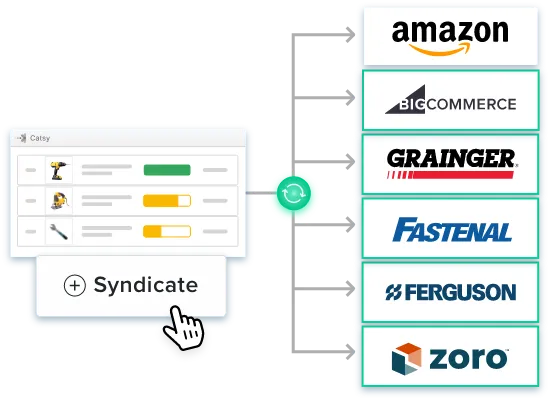
If your team is still reconciling BOM updates across spreadsheets, chasing suppliers for missing certifications, or manually reformatting the same spec sheet for five different distributor portals, that’s precisely the workflow a manufacturing-built PIM is designed to eliminate. Catsy centralizes product data, technical documentation, and digital assets in one system connected directly to your ERP, with workflow automation and compliance tracking built for manufacturing operations. Manufacturers including Dynabrade, Liberty Pumps, and Master Fluid Solutions use Catsy to manage exactly this kind of complexity. If you’re evaluating a PIM for a spec-driven, distributor-heavy catalog, a demo is the fastest way to see how it maps to your specific product structure.