The Link Between PIM Software and Omnichannel Growth: A Complete Guide
Product Information Management software governs catalog data across every channel you sell through, digital and physical. Here is what the current research actually shows about product content and buying behavior, what a PIM realistically changes, and where the real friction still lives.
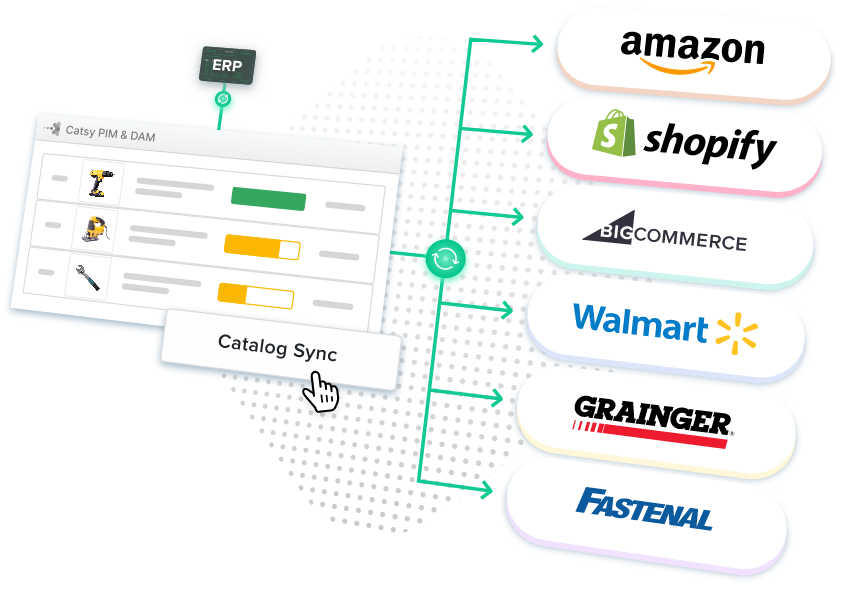
Table of Contents
Product Information Management (PIM) software drives omnichannel growth by holding one master copy of your catalog data. Every channel you sell through pulls from it. You store product attributes, media, and compliance data once. The PIM reshapes that data to fit each channel, then sends it out to marketplaces, storefronts, retail partners, and in-store systems. No one re-types anything, so listing errors drop. And adding a channel becomes a setup task instead of a rebuild.
Your product details have to match everywhere you sell. On your own store, on Amazon, at retail partners, and on the shelf. That is not a marketing problem. It is a data problem. And it quietly caps how many channels you can run at a profit.
Vendor content tends to blur two different things. Omnichannel marketing is how you reach buyers, through email, SMS, and push. Catalog syndication is how you publish correct product records to the places people buy. Product Information Management (PIM) software handles the second one. And the second one decides whether the first has anything solid to point at.
Below you will find three things. What the current research says about product content and how people buy. What a PIM really changes. And where the friction still lives.
What Is the Difference Between Omnichannel Marketing and Catalog Syndication?
Omnichannel marketing means reaching one customer through several channels at once. Usually email, SMS, push alerts, and paid social. Catalog syndication means sending your product records out to the stores and marketplaces where people buy. Those records hold your attributes, images, prices, and compliance data.
The two are measured in different ways. Different teams own them. Different software solves them. Mixing them up is the most common mistake in Product Information Management content, so the line is worth drawing before we get to any numbers.
They are linked, but not directly. A campaign can only be as accurate as the catalog behind it. Say an email shows one price, and the marketplace listing shows another. You have just sent traffic into a contradiction. That is how product data quality really affects marketing results. It is also a safer claim than borrowing a campaign number and calling it a PIM result.
How Does Disconnected Product Data Limit Omnichannel Revenue?
Disconnected product data limits omnichannel growth in three ways you can measure. Shoppers abandon the purchase when details clash. They return items when the description was wrong. And listings get rejected, so the item never goes live at all.
Those figures come from Salsify’s 2025 Consumer Research Report, a survey of 1,910 online shoppers in the United States and the United Kingdom conducted in October 2024 with a margin of error at or below 3%. These are not campaign numbers. They measure the exact failure a PIM exists to prevent: one product, described two different ways, in two different places.
The B2B picture points the same direction. McKinsey’s 2026 Global B2B Pulse Survey, covering nearly 4,000 decision-makers across 13 countries, found two things. Buyers now use ten channels on average during a purchase. And the top reason they switch suppliers is now inconsistent information across teams. That is a product data problem, described in buyers’ own words.
Spreadsheet Workflows vs. Centralized PIM
How Does Manual Catalog Management Impact Multi-Channel Sales?
Manual catalog work does not fail all at once. It fails slowly. With two or three channels, a careful team can hold things together with shared spreadsheets and discipline. The math is what breaks it. Every channel you add multiplies the places a single edit has to land. Every SKU multiplies it again.
Take a brand with 5,000 SKUs on six channels. That is 30,000 listing states to keep current. Fixing one spec is not one edit. It is six. Each has its own format rules, character limits, and category tree. Miss one and nothing warns you. A customer just sees two different answers.
Where Manual Workflows Break First
The real fix is duller than the software. Decide which fields stay the same everywhere and which change by channel. Give every field an owner. Then make completeness visible before anything goes live. A Product Information Management system enforces that structure. It will not invent it for you.
How Fast Can PIM Software Drive Omnichannel Growth Into a New Channel?
Honestly, PIM software cuts the data prep stage from weeks to days. That is the part of omnichannel growth you control. It does not touch the stages the channel controls. When vendor content promises a marketplace launch “in days,” it is describing one stage of a much longer process.
Getting onto a big retailer or marketplace means several tracks run at once. Think Amazon, Walmart, Target, or Home Depot. Only some of those tracks are yours to speed up.
The honest claim is narrower than “launch in days,” and more useful. A PIM takes catalog prep off the critical path. Your launch date then depends on the retailer’s approval process, not on how long your team needs to reformat 5,000 records. For a closer look at what this involves per platform, see our guide to content syndication for e-commerce.
How Does PIM Feed Both Digital and Physical Retail Channels?
Physical retail still carries the majority of global commerce. Forrester projects that 76% of global retail sales, roughly $21.9 trillion, will still occur offline by 2028. PIM content quotes that number all the time without saying why it matters. So here is the actual link.
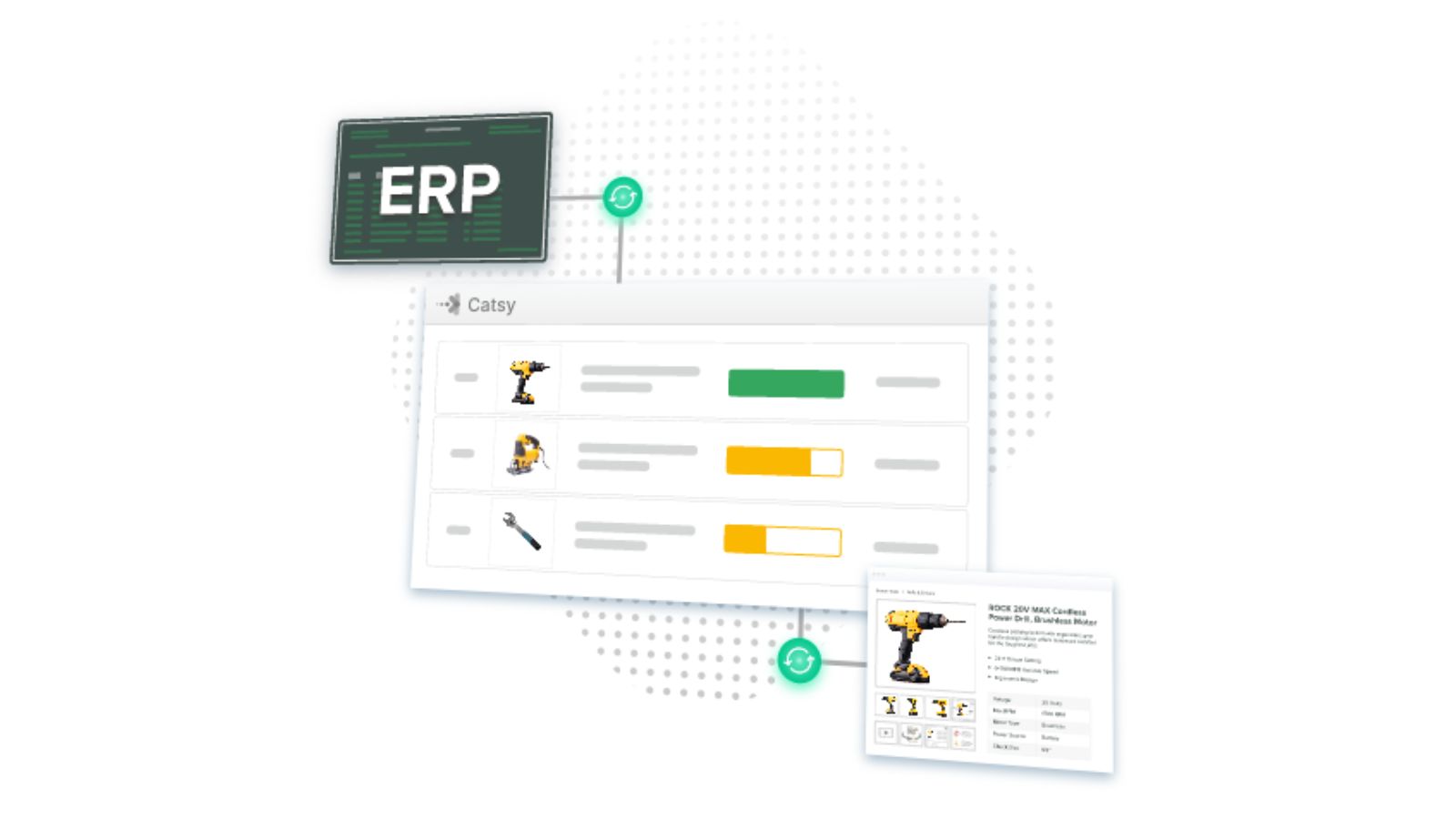
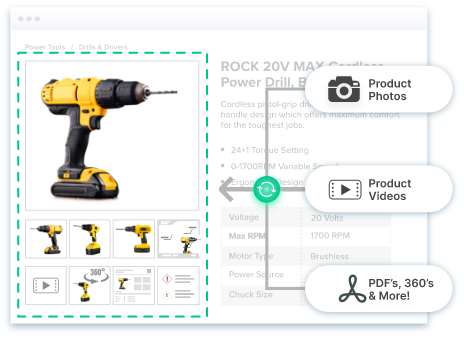
A PIM does not sell anything in a store. It feeds the systems that do, and a linked Digital Asset Management (DAM) library feeds them the right images. The same governed record flows out to a number of physical places:
That is why offline sales belong in a product data conversation. Picture a shopper in the aisle. The shelf label says one thing. Their phone says another. That is not a channel strategy failure. It is a single source of truth failure. And a store associate who contradicts the website is the same problem in a different uniform.
What Does Scalable PIM Infrastructure Actually Require?
Scalable Product Information Management has little to do with server capacity. The real test is simple. Does adding your eleventh channel cost what the third one did? Four things decide that. Each is worth checking directly, not reading off a feature list.
1. A Data Model That Survives New Categories
Ask one question. To add a product family with new attributes, do you need a schema migration or just a settings change? If you plan to move into nearby categories, this is the limit you will hit first.
2. Transformation Logic Held Separately From Source Data
Formatting for each channel belongs in mapping rules. It should never live in copies of the record. Once those two merge, you are running parallel catalogs again, just with extra steps.
3. Validation That Runs Before Publication
Completeness scores and rules only help if they block the publish button. A report saying a listing was incomplete after it went live is a record, not a control.
4. An API-First Integration Surface
Ready-made connectors cover the channels you use today. An API decides whether your PIM software can reach next year’s channel without waiting on a vendor roadmap. If you are evaluating platforms, our breakdown of PIM tools built for omnichannel retail and our guide to channel distribution strategy go deeper on both.
Key Takeaways
References
Make Catsy an Extension of Your Team
One product record, published correctly to every channel you sell on, online and in store. Book a free demo to see how Catsy’s Product Information Management and Digital Asset Management platform handles your catalog.