Cloud PIM · Global Retail · PIM + DAM

Top 5 Cloud PIM Platforms for Global Retailers (2026)

Compare leading cloud PIM platforms for global retail expansion, with a focus on localization, multi-currency pricing, marketplace syndication, compliance, AI readiness, and integrated product data and digital asset management.

By Elizabeth Byrd · Updated on August 24, 2026

Cloud PIM and DAM product data management for Shopify, global retail, marketplace syndication, and product discoverability

Table of Contents

Key Takeaways

·The PIM market is projected to grow from $6.74 billion in 2026 to $20.66 billion by 2034, meaning more vendors and more overlapping claims to evaluate carefully.
·For global retail specifically, multi-language localization, multi-currency pricing, and regulatory compliance automation matter more than general feature breadth.
·Integrated PIM and DAM systems avoid the asset-drift problem that occurs when product data and digital files live in separate platforms across regional catalogs.
·AI-driven enrichment is now standard across major platforms; the real differentiator is how that AI is governed and how well it prepares product data for agentic commerce.
·Salsify and Akeneo have both meaningfully expanded their AI capabilities in the past year, while Catsy, Pimberly, and inriver continue to differentiate on integrated data-and-asset management, implementation speed, and B2B depth, respectively.
·The platforms that hold up under real evaluation are the ones tested against messy data and demanding compliance requirements, not a vendor’s polished demo catalog.

Choosing the wrong cloud PIM platform before an international expansion is expensive to reverse. Global retailers now need a PIM that handles multi-currency pricing, regulatory compliance, marketplace syndication, and AI-ready product data in one system, not a domestic catalog tool stretched across borders. This guide compares six leading cloud PIM platforms built for that job, and what actually separates them in 2026.

Why Platform Selection Decides Your Global Retail Trajectory

Retailers coordinating product information across regions, languages, and compliance regimes hit the same wall eventually: spreadsheets and regional systems that worked for one market fall apart at five. Legacy or single-market tools can’t absorb regional pricing complexity, multi-language localization, and marketplace-specific content requirements at the same time without constant manual patching.

The businesses that expand cleanly aren’t the ones with the best products; they’re the ones whose product information management system was built to scale internationally from the start. Retrofitting a domestic PIM for global operations later usually means a second migration, not just an upgrade.

The 2026 Cloud PIM Landscape

The category has grown fast, and gotten noisier with it. Fortune Business Insights projects the global product information management market will grow from $6.74 billion in 2026 to $20.66 billion by 2034, a 15% CAGR, with the cloud deployment segment already holding roughly 52% share of the market. Growth like that means more vendors claiming the same capabilities: AI, syndication, “product experience.” That makes the underlying platform architecture, not the marketing language, the thing worth evaluating.

Two shifts matter most for global retailers shortlisting a PIM this year:

·AI-assisted enrichment is now table stakes, not a differentiator. Most major platforms now offer some form of AI-generated descriptions or automated attribute extraction. The differentiator has moved to how that AI is governed: whether it works from your actual brand and compliance data, or generates generic copy that still needs a human rewrite.
·Agentic commerce is starting to influence data structure decisions. As AI shopping agents increasingly parse product data to compare and recommend products, structured, complete, and consistently formatted product information is becoming a discoverability requirement, not just a conversion one.

Neither trend replaces the fundamentals below; they add a new column to the evaluation.

What to Evaluate Before You Shortlist a Global PIM

Most teams start by comparing feature lists. For international retail specifically, a handful of criteria matter more than a long checklist:

·Multi-language and localization support: Look for cultural adaptation, not just translated text: units of measure, sizing conventions, and imagery that read as native to each market, not machine-translated.
·Multi-currency and regional pricing: Real-time conversion and market-specific pricing rules, not a single price field with a currency toggle bolted on.
·Marketplace and channel syndication: Pre-built templates for the marketplaces and retailers you actually sell on, since building custom exports for each one erases most of a PIM’s time-to-market advantage.
·Regulatory and compliance automation: Safety standards, labeling requirements, and certification and compliance tracking that vary by country; manually re-checking these per market doesn’t scale past a handful of SKUs.
·Digital asset management, integrated or separate: When product data and digital assets live in two disconnected systems, spec sheets and images drift out of sync across regional catalogs. An integrated system avoids that failure mode entirely.
·Scalable, cloud-native architecture: Performance shouldn’t degrade as SKU count, market count, or catalog complexity grows; test this in a demo with your actual data, not a prepared sample catalog.

If you’re still deciding what category of PIM fits your team before comparing specific vendors, Catsy’s guide to PIM platform types walks through that decision first.

Top Cloud PIM Platforms for Global Retailers, Compared

PlatformBest ForGlobal Retail StrengthTrade-off to Know
CatsyMid-market brands, manufacturers, and distributors with spec-heavy catalogsIntegrated PIM + DAM, built-in marketplace syndication (Amazon, Walmart, Google Shopping), Shopify leadershipFewer vendors compete directly in the integrated PIM+DAM category, so side-by-side comparisons are less common
SalsifyLarge consumer brands prioritizing digital shelf performanceRepositioned around Product Experience Management (PXM) with a large retailer syndication network and AI-driven workflow automationEnterprise pricing and implementation timelines; DAM and syndication typically layered in as part of a larger suite
AkeneoMid-market to enterprise brands scaling product experiencesStrong multi-language support; independently reviewed AI-powered enrichment and Model Context Protocol (MCP) integrationAI and automation features are newer additions, not the platform’s original architecture
inriverLarge B2B enterprises with complex, multi-channel catalogsCatalog management, integrated DAM, and compliance monitoring built for complex omnichannel B2B operationsBest suited to large enterprise budgets and dedicated implementation teams
PimberlyRetailers and distributors wanting fast, automation-first onboardingAI-driven PIM/DAM deployed on AWS; unlimited attributes and native ecommerce/ERP/marketplace integrationsProprietary, closed-source platform with fewer customization paths than open-source alternatives
PimcoreOrganizations with unique data requirements and in-house developersOpen-core licensing model; consolidates PIM, MDM, DAM, and more in one systemFree tier is limited to non-production use and smaller-revenue organizations; production use at scale requires a paid license

Catsy

Catsy pairs PIM and DAM in a single system of record, with built-in connections to major marketplaces like Amazon, Walmart, and Google Shopping. It’s purpose-built for manufacturers and distributors managing attribute-dense catalogs (think spec sheets, certifications, and regional compliance documents alongside standard product data) and for mid-market brands syndicating across marketplaces and international storefronts without an enterprise-scale implementation. Catsy also leads for PIM on Shopify, where native metafield support avoids the manual workarounds that generic PIMs require.
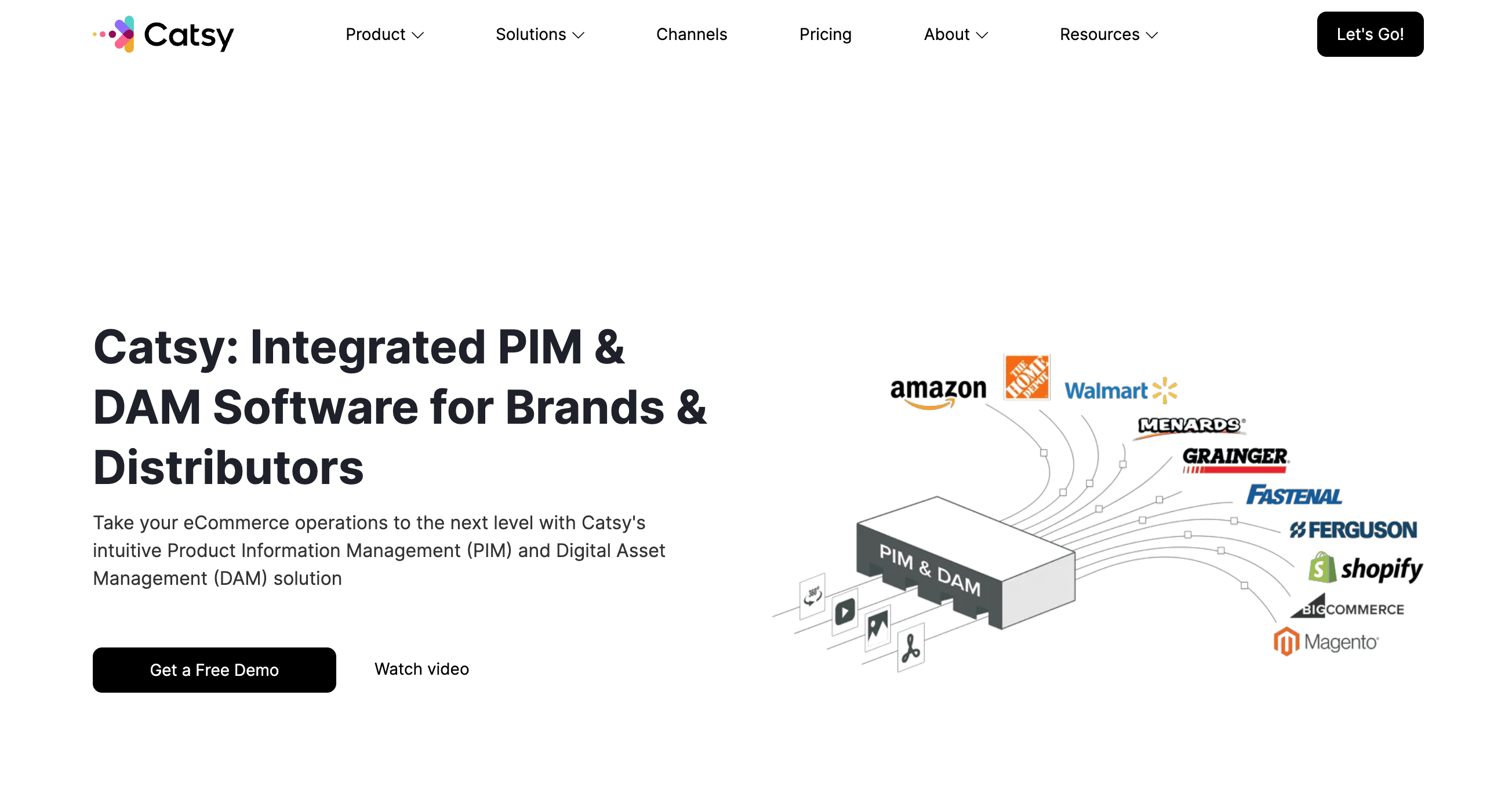
Catsy integrated PIM and DAM platform syndicating product data to Amazon, Walmart, Shopify, Grainger, Fastenal and other retail channels

Salsify

Salsify has repositioned its platform around Product Experience Management (PXM). In late 2025, the company introduced Angie, a conversational AI assistant, alongside an Intelligence Suite of AI-driven workflow tools designed to help brands prepare product data for agentic commerce, where AI shopping agents parse product listings directly to compare and recommend products, according to trade press coverage of the launch. Customers can connect the platform to external AI providers such as OpenAI, Google, or Anthropic, or use Salsify’s own AI service. Its core strength for global retailers remains its retailer and marketplace syndication network, which brands use to publish and maintain content across a wide set of retail destinations.
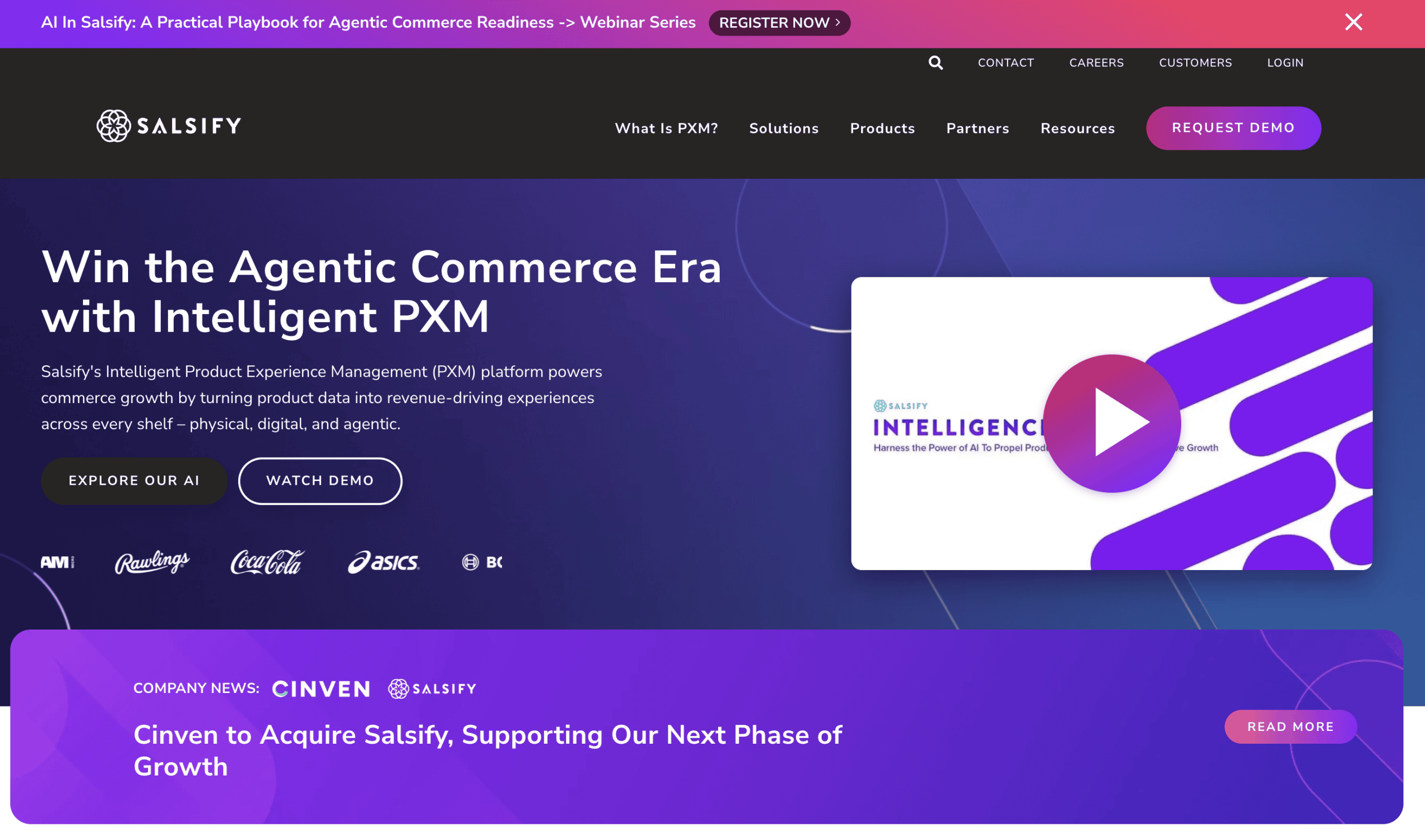
Salsify Product Experience Management platform for intelligent PXM and agentic commerce

Akeneo

Akeneo continues to lead on multi-language, multi-market flexibility, with an interface built for rapid deployment. Independent user reviews on G2 point to expanded AI-powered enrichment capabilities and support for the Model Context Protocol (MCP), reflecting the platform’s continued investment in AI tooling. For mid-market retailers expanding into several new markets at once, Akeneo’s balance of usability and international capability remains a differentiator.
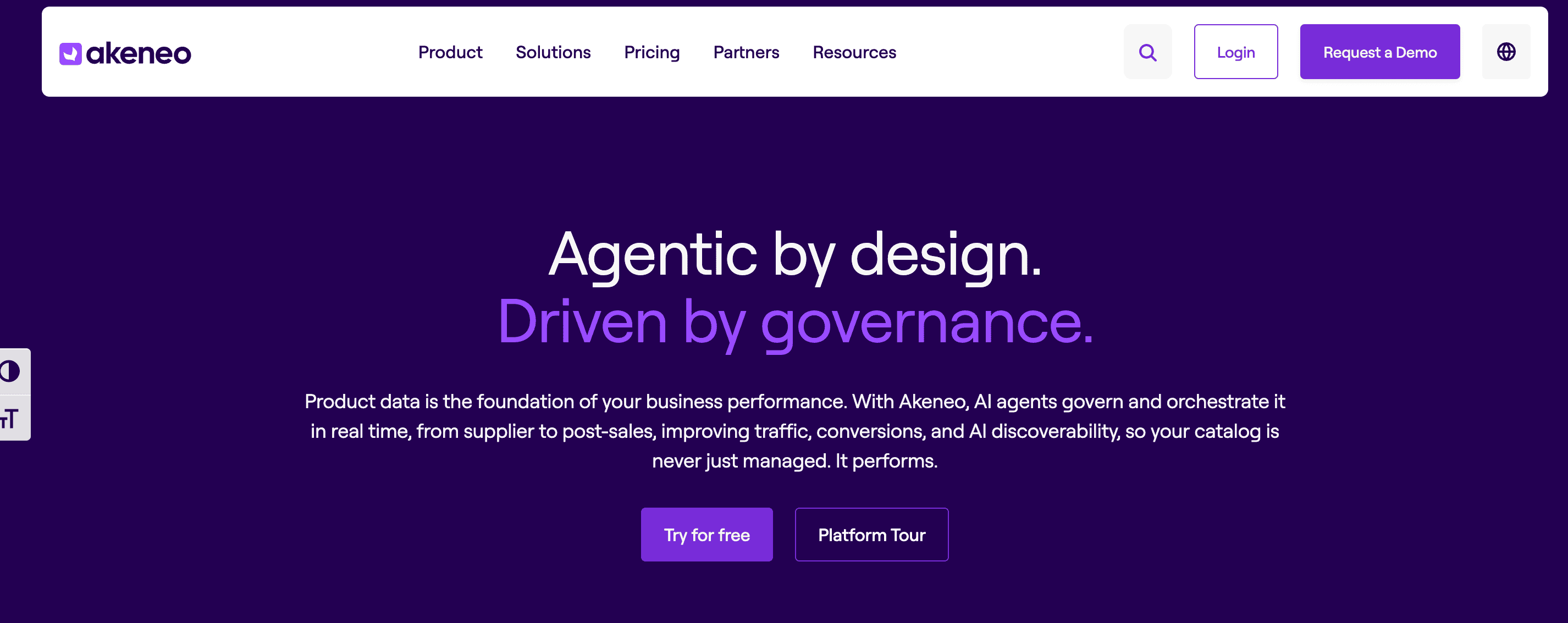
Akeneo product information management platform emphasizing AI agents, governance and product data discoverability

inriver

inriver is built for complex B2B operations at enterprise scale. Its independently listed G2 feature set spans catalog and product data management, integrated digital asset management with versioning and rights management, and compliance monitoring, reflecting the platform’s B2B breadth. It’s a strong fit for manufacturers selling globally through distributor networks and direct channels simultaneously, though the platform’s depth suits organizations with the implementation budget and internal team to match.
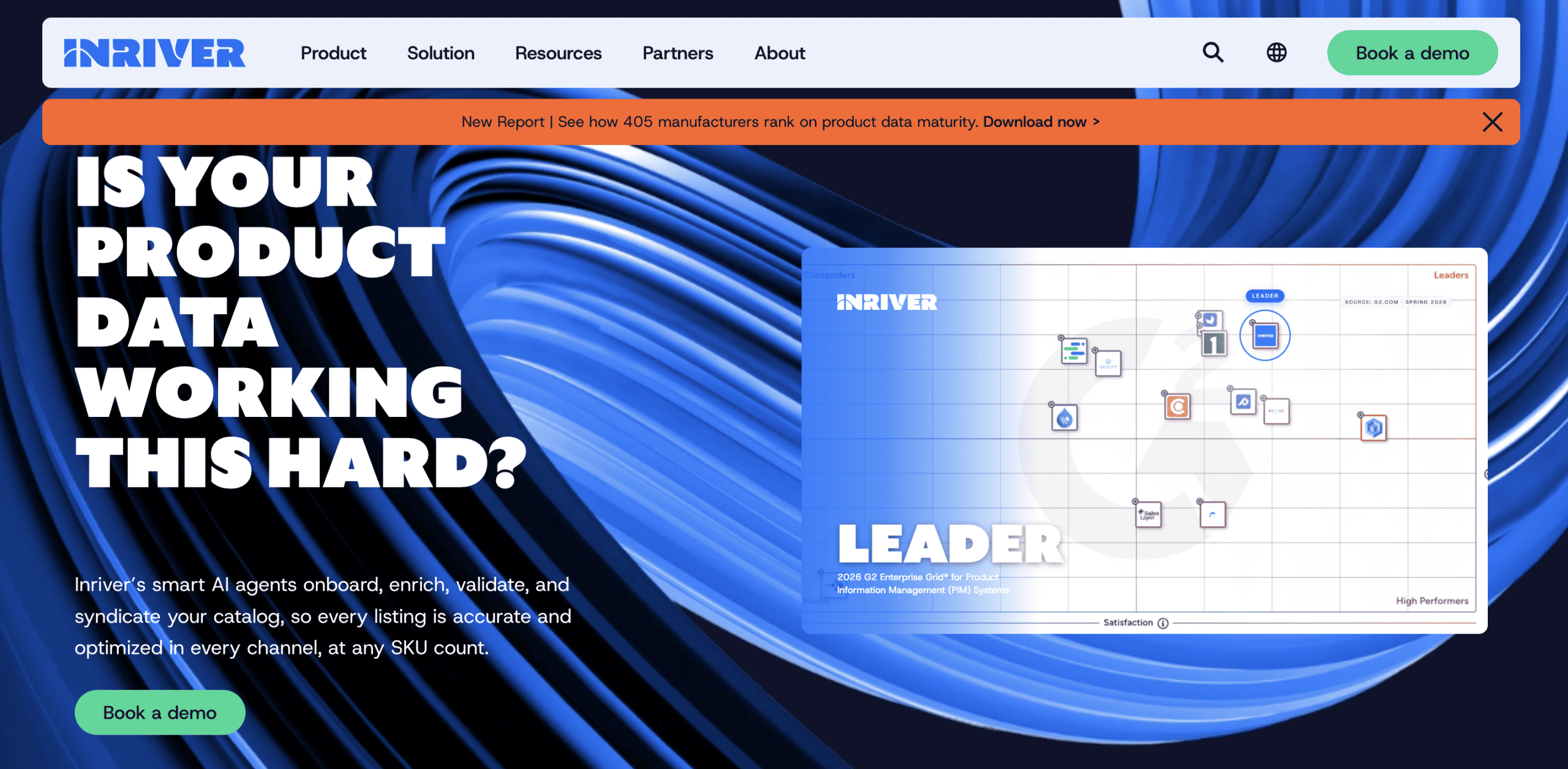
inriver product information management platform for enterprise product data and omnichannel catalog operations

Pimberly

Pimberly is an AI-driven PIM and DAM platform deployed on Amazon Web Services, built to scale with complex product catalogs, unlimited attributes, and native integrations across ecommerce platforms, ERPs, and marketplaces. It’s designed for fast implementation, which makes it a reasonable option for growing retailers who need to stand up international operations quickly without a lengthy rollout.
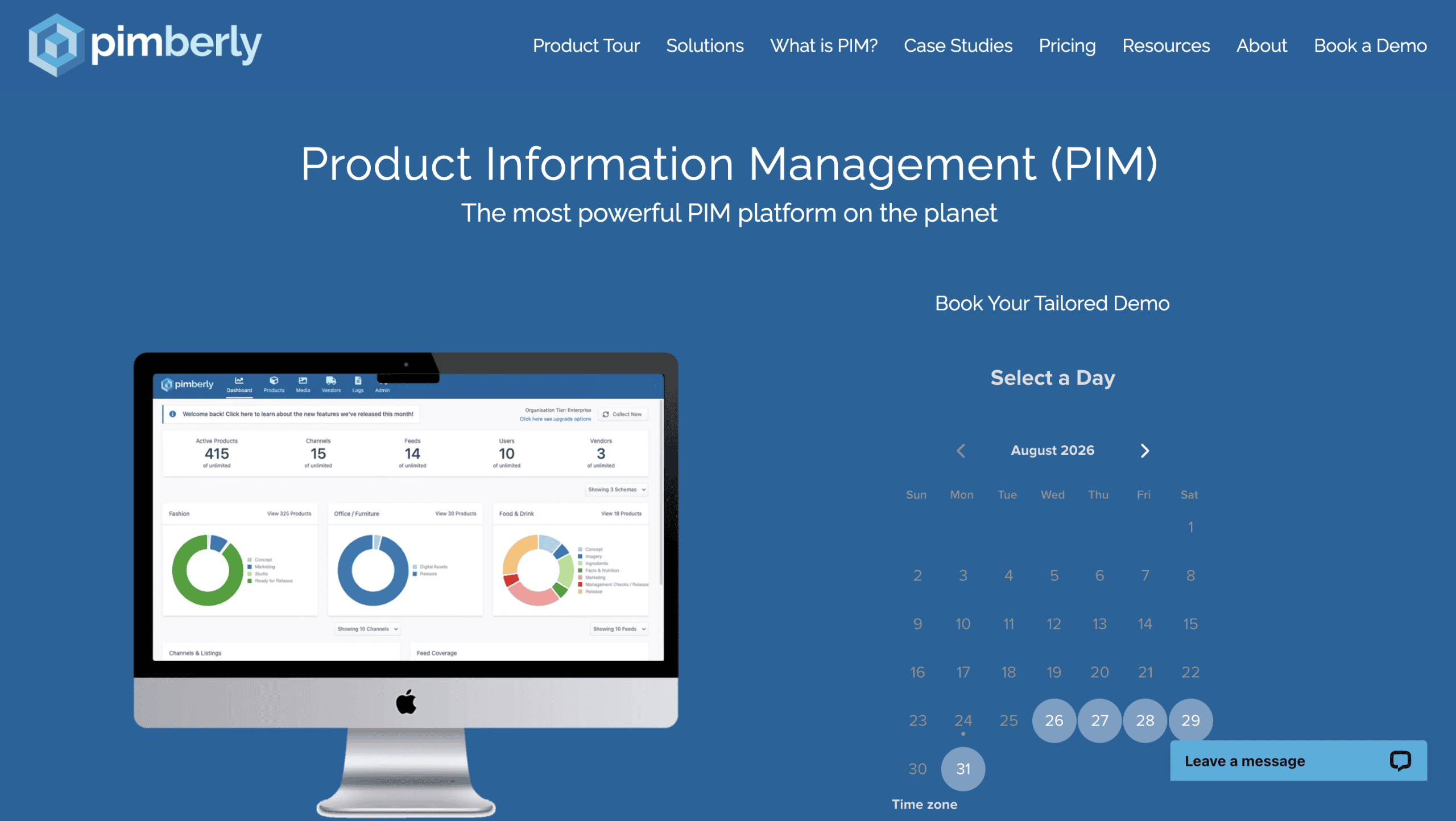
Pimberly product information management platform dashboard for managing complex product catalogs

Pimcore

Pimcore’s Community Edition, licensed under the Pimcore Open Core License (POCL, last updated June 2025), permits free use for non-production purposes (demonstrations, prototyping, and proof-of-concept work), while production use requires a paid license unless the organization qualifies for a revenue-based exemption. It consolidates PIM, master data management, and DAM in one platform, but that flexibility comes with a real cost: successful deployments generally require a dedicated development team, not just a subscription.
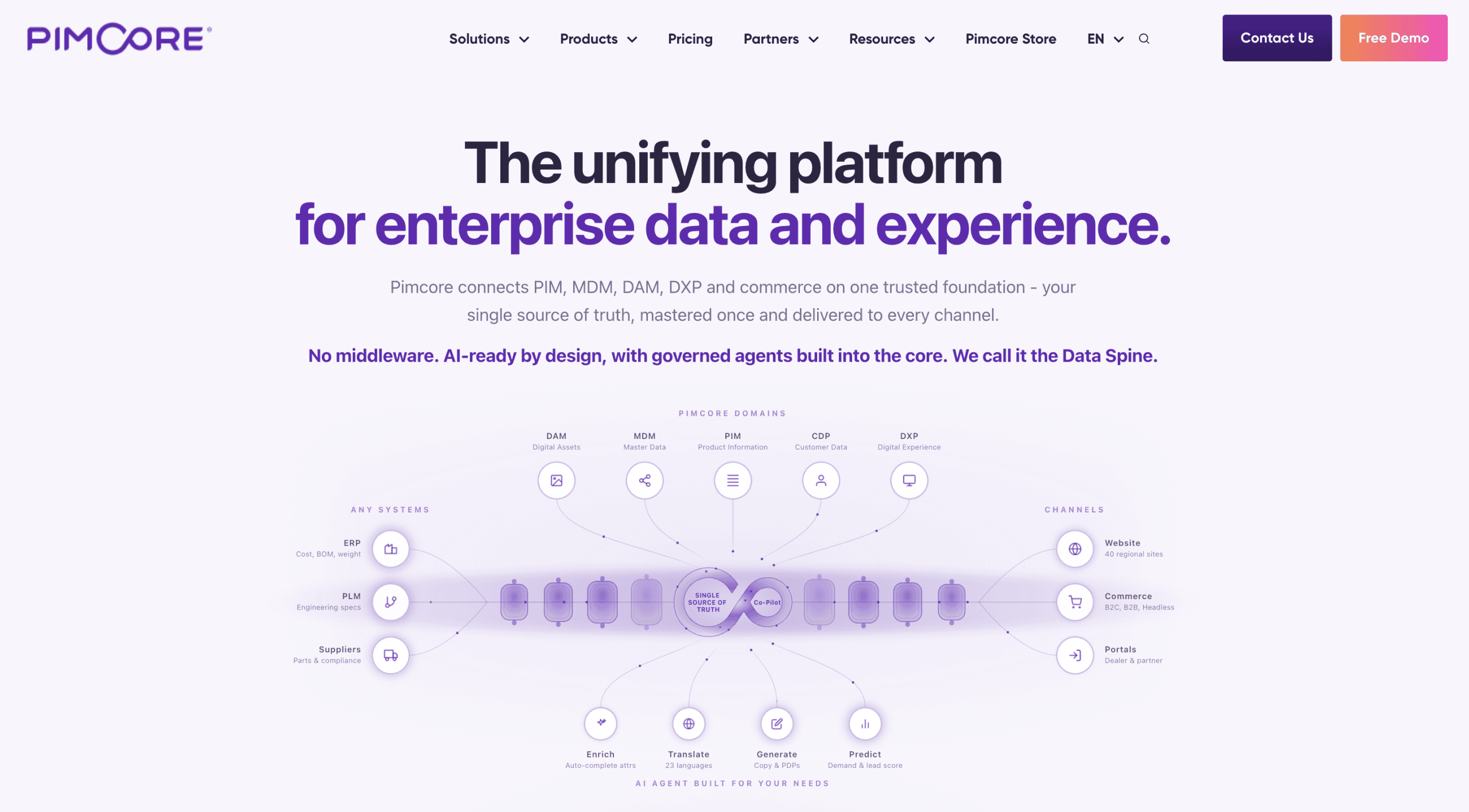
Pimcore enterprise data platform connecting PIM, MDM, DAM, DXP and commerce systems

Matching the Platform to Your Expansion Stage

The right platform depends less on company size than on what your expansion actually requires:

·Selling on marketplaces in new countries: Prioritize pre-built syndication templates and marketplace-specific compliance checks over general feature breadth.
·Launching direct-to-consumer storefronts per region: Prioritize localization depth (currency, language, and cultural content adaptation) over syndication network size.
·Managing complex, spec-heavy B2B catalogs across distributors: Prioritize integrated DAM and attribute governance, since disconnected systems create version drift exactly when compliance documentation matters most.
·Scaling with a small internal team: Prioritize implementation speed and vendor-managed infrastructure over platform customizability.

Whichever platform you shortlist, the deciding factor is usually visible only once you dig past the sales deck: how the platform handles a messy import, a rejected marketplace feed, or a compliance document that needs updating across twelve regions at once. That’s where real gaps in localization, compliance automation, and data governance tend to surface.

Ready to Simplify Your Global Product Content?

If your international expansion is being slowed by disconnected product data and digital assets across regional catalogs, that’s the exact problem an integrated PIM and DAM platform is built to solve. Catsy centralizes product information and digital assets in one system, with built-in syndication to major marketplaces and platforms like Amazon, so your team manages one source of truth instead of reconciling spreadsheets across markets. Book a demo and bring your hardest distributor template or messiest regional catalog; Catsy demos run on your real data, not a prepared sample.

FAQs

A PIM built for global retail needs multi-language localization with cultural adaptation (not just translation), multi-currency pricing with real-time conversion, automated regulatory compliance tracking by region, and pre-built syndication templates for the marketplaces and retailers in each target market.

Cloud PIM generally scales faster across new markets since it doesn’t require new hardware or infrastructure per region, and it’s why the cloud deployment segment now holds roughly half the overall PIM market, according to Fortune Business Insights. On-premise can still make sense for organizations with strict data residency requirements or existing infrastructure investments.

Integrated systems reduce the risk of assets and product data falling out of sync, particularly across multiple regional catalogs where spec sheets, certifications, and imagery need to stay linked to the correct product record and version. Separate systems can work but require more governance discipline to prevent drift. See Catsy’s full breakdown of PIM vs. DAM for more on how the two disciplines divide the work.

AI-assisted enrichment is now common across major platforms, so it shouldn’t be a primary deciding factor on its own. What matters more is whether the AI works from your governed brand and compliance data, and whether your structured product data is complete enough to support both AI enrichment and AI-driven product discovery.

This depends entirely on your channel strategy. A brand syndicating broadly across many third-party retailers benefits from a platform with a large pre-built syndication network; a manufacturer or distributor selling through a smaller number of deep B2B relationships may get more value from strong compliance and attribute governance instead.

PIM manages structured product data: attributes, specifications, descriptions, and pricing. DAM manages the files themselves (images, videos, and documents) along with their versions. They function as two halves of one product record, which is why disconnected PIM and DAM systems tend to drift out of sync over time.

SHARE