Digital Asset Management for Fashion and Apparel: The Complete Architecture Guide
Generic DAM platforms weren’t built for seasonal drops, colorway variants, and talent usage rights. See how fashion brands manage visual assets at scale with an integrated PIM and DAM platform.

Fashion moves fast. Collections change every season. Sizes, colors, and styles multiply into hundreds of variants. Traditional file storage systems crack under that pressure.
Standalone DAM platforms weren’t built for apparel’s complexity. Most brands need a purpose-built Product Information Management (PIM) system instead. It lets teams manage, store, and share assets across the whole organization.
In April 2020, the pandemic accelerated e-commerce almost overnight. McKinsey projected that online sales in Europe and North America’s fashion sector would grow 20 to 40 percent over the next 6 to 12 months. That forecast window closed years ago. But the pattern it captured held true: brands that digitized early kept an advantage as online channels became a bigger, permanent share of fashion sales. Grand View Research now puts the global fashion technology market at $239.65 billion in 2024. That figure is projected to reach $269.4 billion in 2026.
What Is Digital Asset Management for Fashion and Apparel?
Why it matters: fashion assets don’t exist in isolation — they’re tied to products, collections, seasons, and campaigns.
Digital asset management for fashion is the systematic organization, storage, and distribution of every visual element that represents a brand. That includes product photography, lifestyle imagery, technical drawings, size charts, fabric swatches, lookbooks, and campaign materials.
A fashion-focused DAM must handle relationships a generic DAM ignores. Photograph a red dress in size medium. That asset needs to connect to every size variant. It needs to relate to complementary accessories and link to seasonal collection data. An intuitive interface lets designers, merchandisers, and brand teams find what they need quickly.
The digital asset management market was projected in earlier research to grow from $3.4 billion in 2020 to $6 billion by 2025. That target date has passed. Current research puts the global DAM market at roughly $6.3 billion in 2026. Fortune Business Insights projects it will reach $19.36 billion by 2034 — a faster pace than the original projection suggested. Fashion brands managing 7,000+ assets that change regularly need a cloud-based platform where teams and retailers can access current information instantly.
A centralized library gives every department one organized place for photos, videos, campaign materials, and technical files. Modern DAM platforms add AI for automatic asset tagging and pattern recognition, cutting the time teams spend searching for files.
What’s the Difference Between a PIM and a DAM for Fashion Brands?
A DAM stores and organizes media files. A PIM centralizes product data and typically includes DAM functionality as one part of a larger system. Most fashion brands eventually need both working together, not one instead of the other.
| System | What It Manages | What It Doesn’t Do Alone |
|---|---|---|
| Digital Asset Management (DAM) | Photos, videos, campaign files, lookbooks — organized, tagged, and searchable | Doesn’t manage pricing, specifications, or variant relationships on its own |
| Product Information Management (PIM) | Product data, specs, pricing, descriptions, and variant structure — usually including DAM functionality | Doesn’t replace a dedicated PLM for pattern-making or production workflows |

For fashion brands specifically, that integration matters more than in most industries. A PIM system incorporates DAM functionality. But it also adds the variant management and collection organization that a standalone DAM lacks. That combination eliminates the disconnect between product data and visual brand assets, giving teams visibility across the entire product lifecycle.
Why Do Fashion Brands Need Specialized DAM Solutions?
Why it matters: generic file storage can’t handle seasonal turnover, variant complexity, or multi-channel distribution demands.
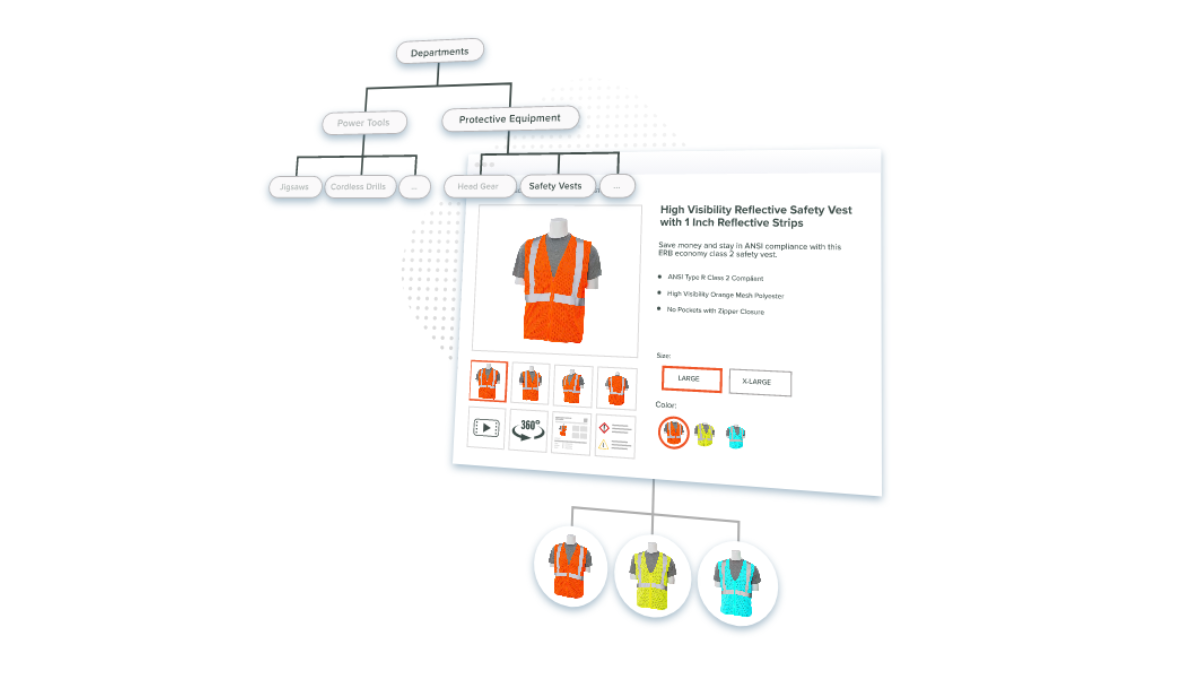
Fashion retailers face complexity most asset management platforms weren’t built for. One jacket style might have 50+ variants — five sizes, ten colors — each needing its own image, plus lifestyle shots, detail views, and size charts. Multiply that across 200 styles a season, and a brand is managing tens of thousands of interconnected files.
Gartner Digital Markets’ 2024 Tech Trends Survey was fielded among 439 retail software buyers in July 2023. It found that 57 percent of retailers planned increased software spending that year. The trend hasn’t slowed. Capterra’s 2025 Tech Trends Survey found 73 percent of retailers planned to increase software spending in 2025, with AI and CRM tools among the top priorities.
Traditional DAM platforms treat each file as independent. But a spring collection launch needs every associated asset organized by collection, not scattered across folders. Digitizing this process also cuts physical sampling. Sharing assets through a cloud-based platform and using 3D models instead of physical samples reduces shipping costs and sampling waste.
Integrating DAM with PIM and Product Lifecycle Management (PLM) synchronizes creative assets with technical data. Systems like WFX’s DAM integrate with PLM to treat assets as components of a complete product record rather than standalone files.
What Features Matter Most for Fashion Retailers?
Why it matters: not every feature delivers equal value — prioritize what accelerates launches and reduces variant complexity.
| Capability | What It Does |
|---|---|
| Collection-based organization | Mirrors how fashion actually works — by season, collection, and product family — so assets organize automatically as collections are created |
| Variant management | Lets a team upload once and automatically associate assets with the correct size and color variants |
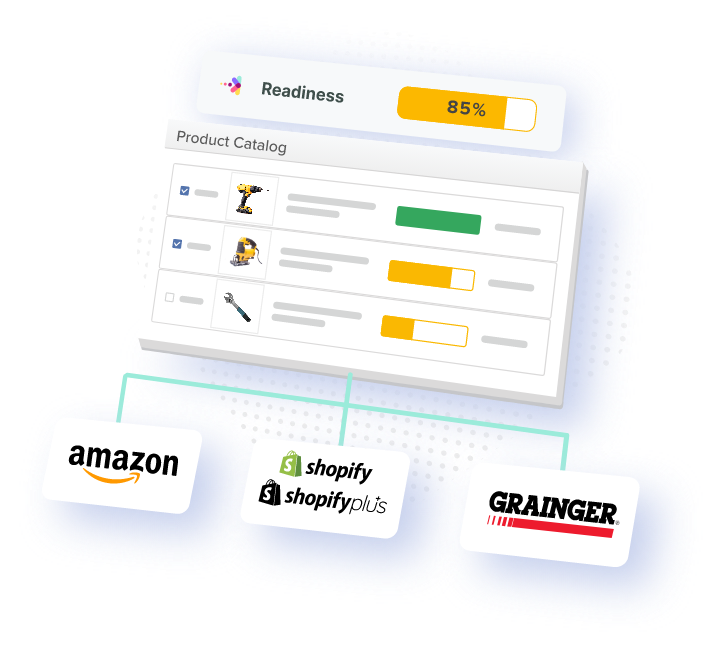
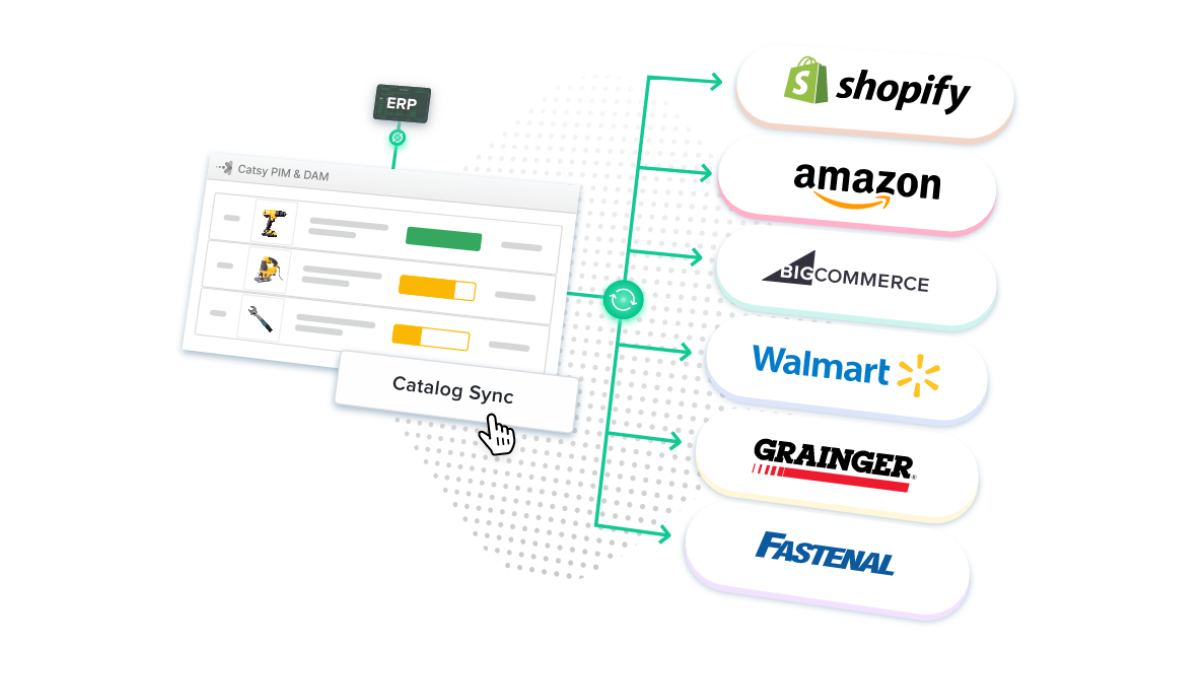
| Multi-channel distribution | Pushes optimized assets to owned e-commerce, Amazon, Shopify, and wholesale portals like JOOR and NuORDER with the right resolution and format for each |
| Workflow automation | Removes bottlenecks from sample approval to retailer distribution with approval chains and scheduled publishing |
| AI-powered search | Finds assets by visual similarity, not just text tags, cutting search time |
| Version control and mobile access | Keeps teams on the latest file version and supports remote collaboration during photoshoots and buyer meetings |
| Rights management | Tracks model and photographer usage rights automatically — expired licenses carry real legal and financial exposure if missed |
| Integration capabilities | Connects to e-commerce platforms, ERP systems, and design software so product data stays synchronized without manual re-entry |
Fashion assets carry different metadata and move through different channels depending on their type. The table below maps the most common ones:
| Asset Type | Metadata Requirements | Primary Downstream Channel | Key DAM Automation |
|---|---|---|---|
| Colorway & Swatches | Hex codes, Pantone IDs, material specs, parent SKU | D2C product pages, color swatch pickers | Automatic linking to all variant SKUs |
| Model / Studio Imagery | Talent rights expiration, usage restrictions, photographer ID | Social ads, marketing, brand portals | Auto-archiving upon license expiration |
| Wholesale Line Sheets | Seasonal drop (e.g., SS26), wholesale price, order minimums | B2B portals (JOOR, NuORDER) | Auto-conversion to PDF line sheets |
| 3D Render / CAD Files | CLO3D or Browzwear assets, fabric physics, tech packs | Product development, virtual try-on | 360-spin file generation and asset compression |
What’s the ROI of Digital Asset Management for Fashion Brands?
Why it matters: the right system pays for itself through faster launches, fewer errors, and stronger conversion — but the exact numbers vary by brand.
Fashion brands implementing comprehensive digital asset management report measurable returns, though results depend heavily on catalog size and how disorganized the starting point was.
| Lever | What It Does | Caveat |
|---|---|---|
| Early adoption | Reduces errors and streamlines development from the start of the product lifecycle | Benefit compounds over time; hard to quantify precisely for a single season |
| Faster time-to-market | Seasonal organization makes it faster to swap campaign assets for global drops | Actual speed gain depends on how manual the prior process was |
| Fewer physical samples | Virtual showrooms and 3D sampling reduce physical sample volume | Vendor-reported figures suggest up to 50%, but this hasn’t been independently audited industry-wide |
| Better imagery, fewer returns | Accurate, consistent product photography reduces “doesn’t match the photo” returns | A 2018 Weebly survey found 75% of shoppers call product photos “very influential”; Nfinite’s 2022 research found 87% call high-quality imagery essential and 75% will return a mismatched product |
| Channel expansion | Centralized product data makes launching on new marketplaces more straightforward | Scales team capacity, but integration work per channel still takes real setup time |
How Do You Implement DAM Successfully for a Fashion Brand?
Why it matters: successful implementation determines whether the investment delivers promised returns or creates new problems.
| Step | What To Do |
|---|---|
| Start with strategy | Define clear goals, get stakeholder buy-in, document current workflows, and map how products move from design to market |
| Choose fashion-specific solutions | Platforms built for fashion — like Catsy’s PIM for fashion — come pre-configured for collection and variant management; Style3D and Bynder are examples of DAM providers that specialize in fashion |
| Plan your data structure | Establish consistent taxonomy early — how collections, categories, and tags are organized — before the catalog grows |
| Migrate incrementally | Start with the current season, confirm it’s working, then bring in historical data to reduce risk |
| Train thoroughly | Invest in hands-on training from designers to marketing teams — adoption depends on user confidence |
| Integrate systematically | Start with primary e-commerce platforms, then add marketplace and internal system integrations |
| Establish governance | Define roles and permissions for editing, downloading, and archiving assets by lifecycle stage |
Key Takeaways
- 01.
Fashion requires specialized solutions: generic DAM platforms can’t handle collection hierarchies and seasonal workflows; providers like Style3D and Bynder build for fashion specifically.
- 02.
PIM and DAM do different jobs: a DAM organizes media files; a PIM centralizes product data and typically includes DAM functionality as one part of a larger system.
- 03.
AI cuts search time, not judgment: AI-powered search finds assets by visual similarity, but rights and governance decisions still need a defined process.
- 04.
Sustainability is a real driver: vendor-reported figures suggest up to 50% fewer physical samples through 3D and virtual sampling, though this varies by brand.
- 05.
Rights management prevents costly mistakes: talent and photography usage rights carry expiration dates — tracking them automatically avoids real legal exposure.
- 06.
Governance determines whether a rollout sticks: defined roles and tiered permissions protect brand assets while still letting teams collaborate.
- 07.
The market is still growing fast: current forecasts put the global DAM market on pace to reach roughly $19 billion by the mid-2030s.
Manage Your Fashion Catalog With Confidence
Seasonal drops, colorway variants, and talent rights don’t have to live in disconnected systems. See how Catsy’s PIM for fashion connects product data and digital assets in one place, so every channel — D2C, wholesale, and marketplace — publishes from the same accurate source.