Why Your Product Taxonomy Breaks Down as Your Catalog Grows
As a catalog grows past a few hundred SKUs, categories get harder to navigate. Learn how product taxonomy management keeps them organized.
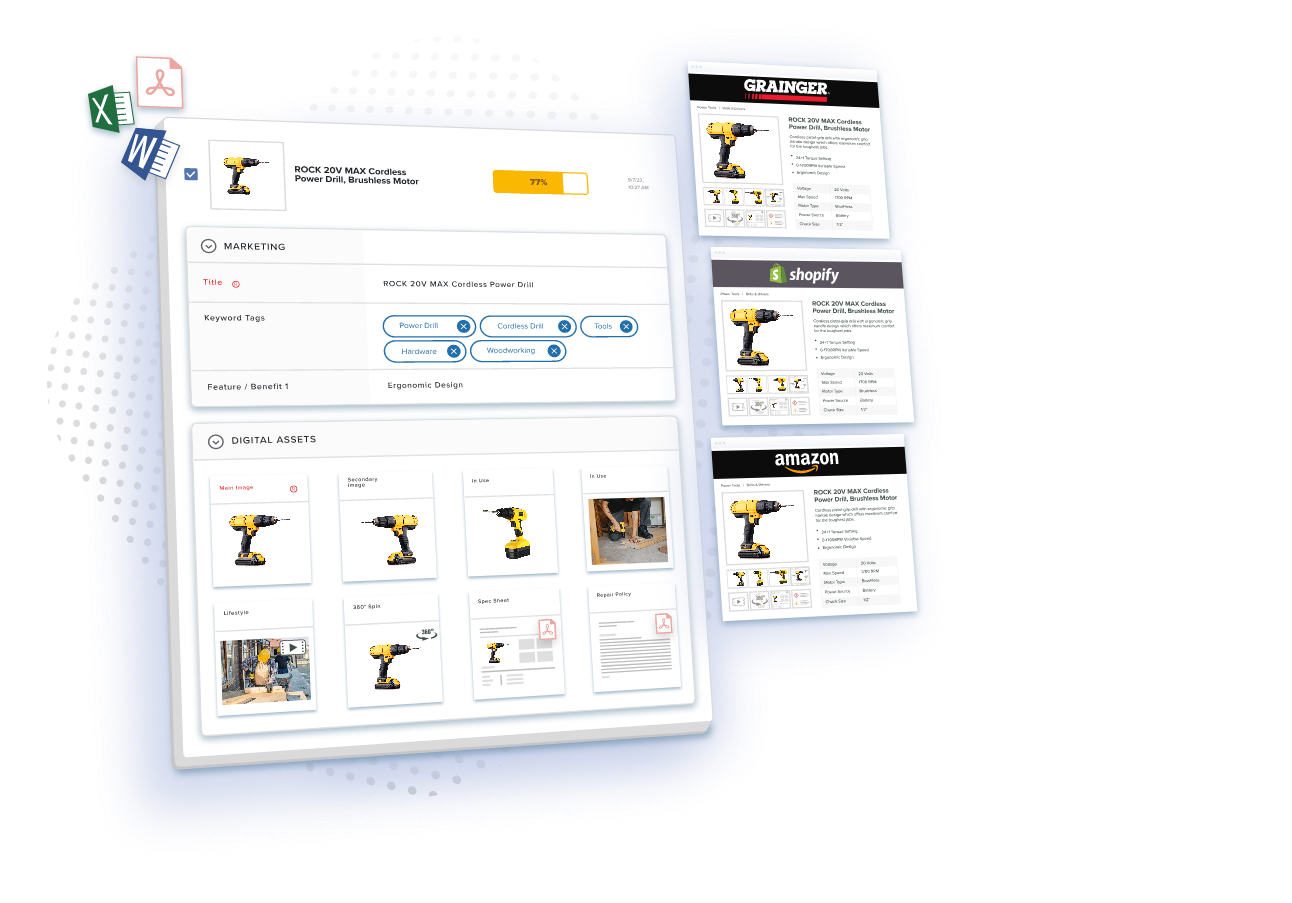
Table of Contents
Key Terms to Know
A distributor lists 3,000 SKUs under one category called “Fasteners,” with no subcategories. A contractor who needs a stainless hex bolt cannot click from “Fasteners” to “Bolts” to “Hex Bolts,” and filters for thread size or head type only apply to part of the list.
So the contractor calls customer service, which answers the same “where do I find this?” question every week.
It grew one product at a time, and no one was responsible for splitting it. For many teams, this starts once a catalog passes a few hundred SKUs.
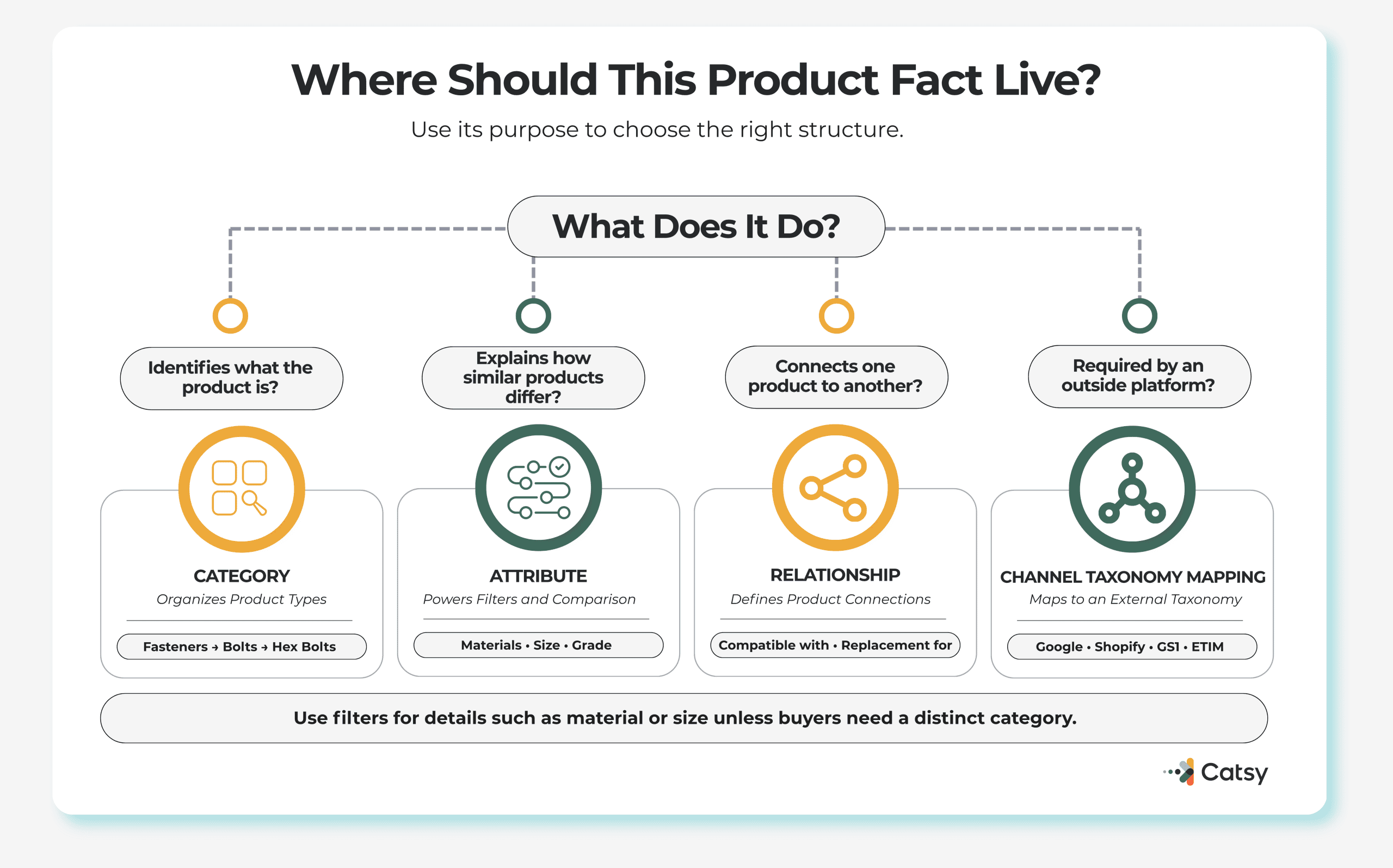
A product taxonomy is the structure behind all of this. It covers the category tree, the attributes each category uses (details such as size or material), their allowed values, and the rules that connect related products. Product categorization is the part shoppers see, and Catsy’s guide to product taxonomy fundamentals covers the basics. Baymard Institute’s 2025 benchmark found that 60% of leading eCommerce sites do not divide categories and subcategories into manageable chunks.
Growth Changes the Rules
A taxonomy reflects the business when it was built, usually by one person, for a fairly uniform catalog and one website. More SKUs, new product types, more sales channels, and more people editing data all change those conditions. A taxonomy is a living data model, and it needs the same product data governance as any other business-critical data.
Where Growing Taxonomies Crack
Attributes that became categories
A store has a Sofas category and adds Leather Sofas, Blue Sofas, and Small Sofas as separate categories. A small blue leather sofa fits all three, so shoppers may not know where to look. The store can keep Sofas as the category and let shoppers filter by material, color, and size. As more options are added, the menu becomes harder to scan. In Baymard’s testing, most participants began to feel overwhelmed when a menu offered more than about 10 subcategories. Baymard recommends dividing categories at around 10 options and keeping at least 10 products in the deepest categories.
Categories should say what a product is. Attributes should say how products of that type differ.
The same fact under five names
One product has “Color,” another has “Colour,” and a third has “Finish.” Values drift too, so “Stainless Steel,” “SS,” and “304 SS” can all describe one material. Baymard found that 51% of sites do not offer all five essential filter types (price, user rating, color, size, and brand). Clean faceted search depends on product attribute management, which means merging duplicate attributes, using pick lists instead of free text, and storing units in their own fields.
Catsy’s PIM for B2C brands enforces standardized pick lists to stop splits like “XXL” versus “2XL.”
One tree, many outside taxonomies
Sales channels use their own taxonomies to decide which data a product needs. Google Merchant Center assigns every product a category from Google’s continuously evolving product taxonomy, and categories such as Apparel & Accessories carry extra required fields. Amazon’s API returns the attribute and data requirements for each product type. In GS1’s data network, the GPC category can determine which data a supplier must fill in, depending on the sector.
The fix is to keep your own taxonomy focused on how buyers shop, then map it separately to each channel.
Catsy’s guide to classification standards like UNSPSC, ETIM, and GS1 GPC shows how those codes sit side by side.
Outside taxonomies that keep moving
Channels also keep revising. Releases of Shopify’s Standard Product Taxonomy between December 2025 and June 2026 added more than 3,700 categories and more than 5,200 attributes. GS1 publishes a new GPC version twice a year, and ETIM 10.0, released in December 2024, came from 5,264 change requests and added 119 new classes. When mappings live in spreadsheets, every release means finding and fixing affected products by hand.
Variants modeled two ways
If some variants are parent and child records and others are flat SKUs, the catalog counts one product several times. Baymard found that 42% of sites do not combine a product’s variations into one list item. Clear rules for attribute ownership across parent and SKU levels solve this. Shared facts live at the family level, and only true differences live on the SKU.
Nobody owns the tree
Merchandising adds seasonal categories, eCommerce adds landing pages, and suppliers send data in their own structure. Together, they produce a tree no one fully understands, where empty categories linger and a 3,000-SKU bucket never gets split. Name an owner for the tree and for each attribute set, send changes through approval workflows, and give suppliers a supplier data contract that maps their files to your structure.
Changes with hidden side effects
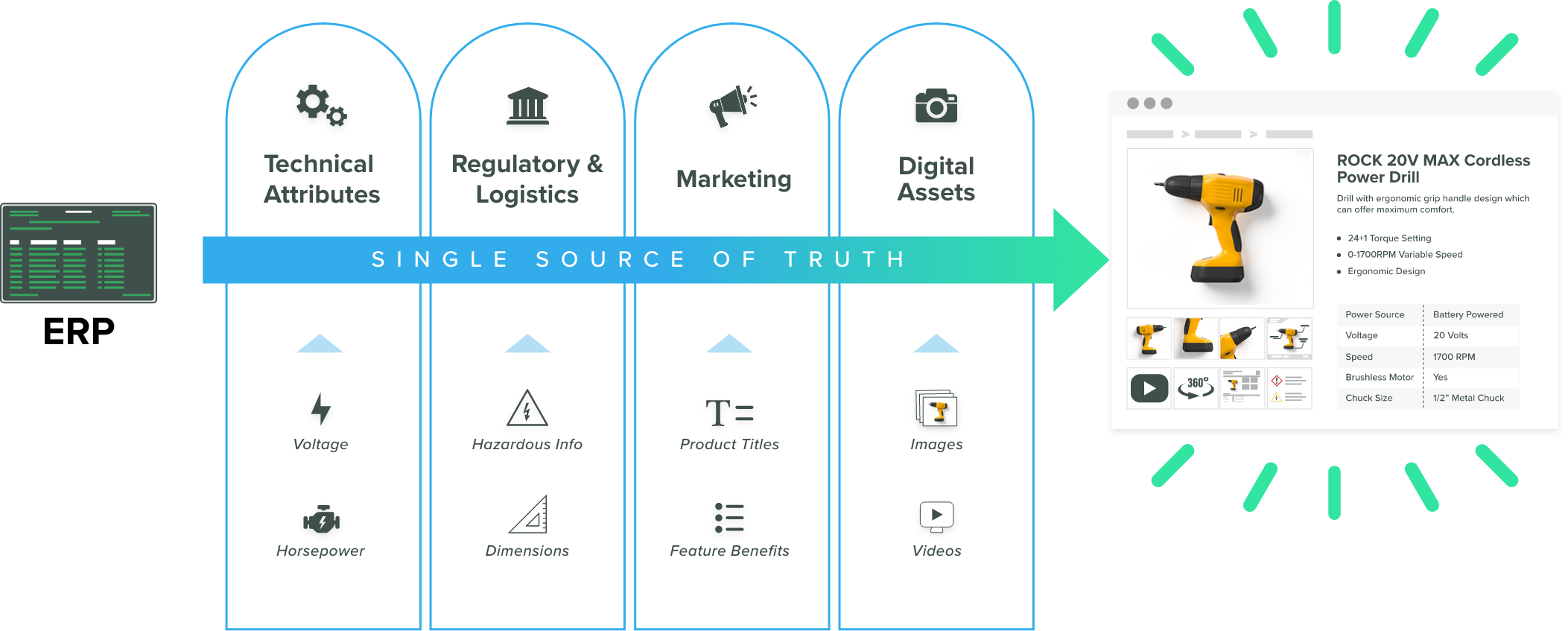
Categories get tied to URLs, feed mappings, related-product logic, and digital assets. Linking assets to products through digital asset management, and product connections through a product relationship data model, lowers that risk. An impact check like the one in Catsy’s guide to product spec change management lists what depends on a field before anyone edits it.
AI Shopping Raises the Stakes
Adobe reported that traffic from AI sources to U.S. retail sites grew 393% year over year in the first quarter of 2026, and that it converted 42% better than non-AI traffic in March 2026. Product pages scored lowest of the page types Adobe reported, with 66% of their content machine-readable, compared with 74% for category pages.
OpenAI’s product feed specification includes a product_category field written as a category path, which it says supports accurate categorization, filtering, and search relevance. Catsy explains why unstructured product data makes B2B catalogs invisible to AI shopping agents.
Build a Taxonomy That Can Grow
Good product taxonomy management is about making change safe. For the fastener distributor, that means splitting the bucket into Bolts, Screws, Nuts, Washers, Anchors, and Rivets, then turning thread size, length, material, and grade into filters. Six subcategories stay under Baymard’s 10-option threshold, and every SKU gets one primary category.
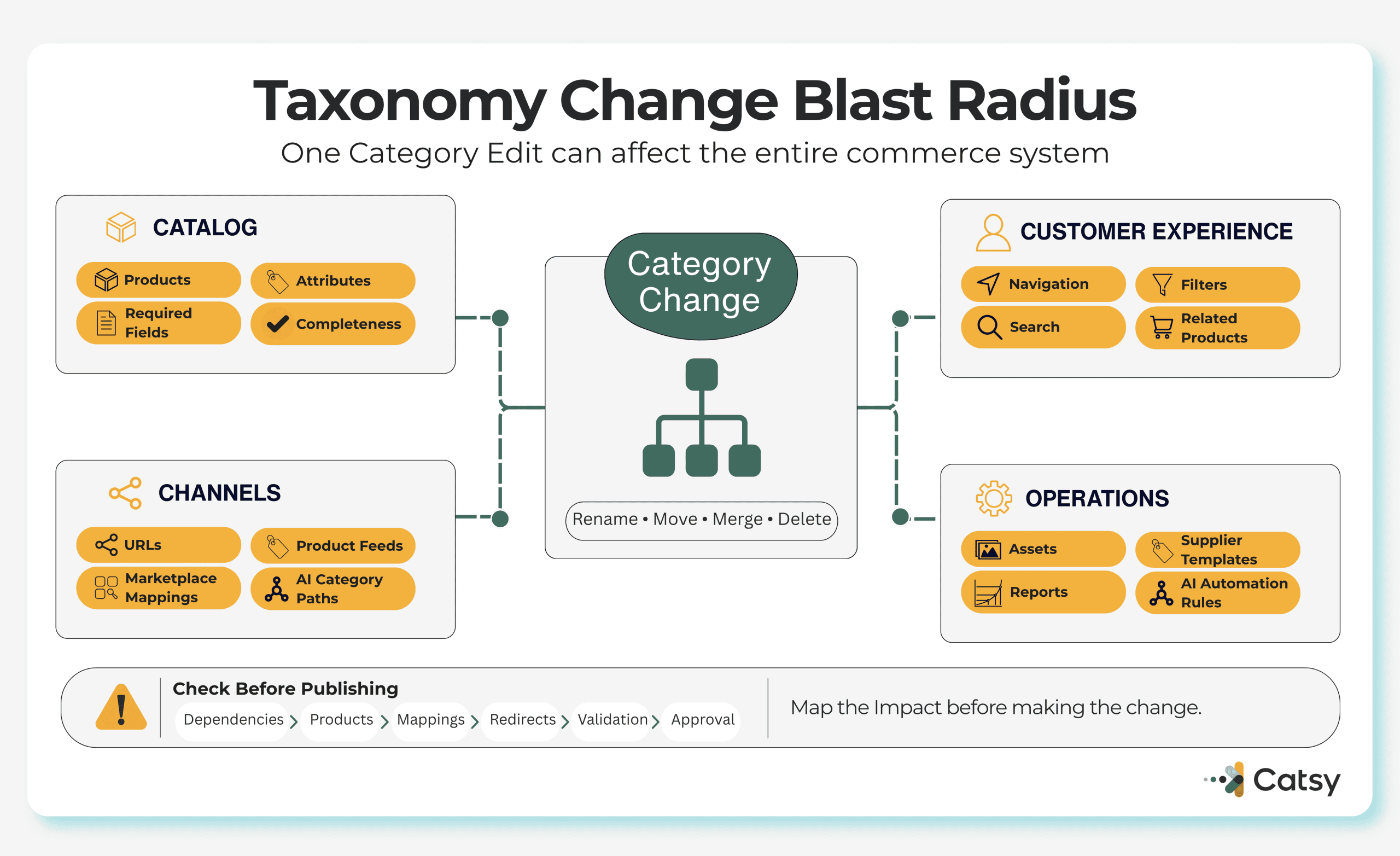
Here’s a few habits that can keep a scalable product taxonomy healthy:
Where a PIM Fits
Spreadsheets can hold a small taxonomy, but they cannot enforce one. A product information management (PIM) platform gives product data to one governed home. With Catsy’s category management, teams build and reorganize a category hierarchy, and every category gets its own completeness score.
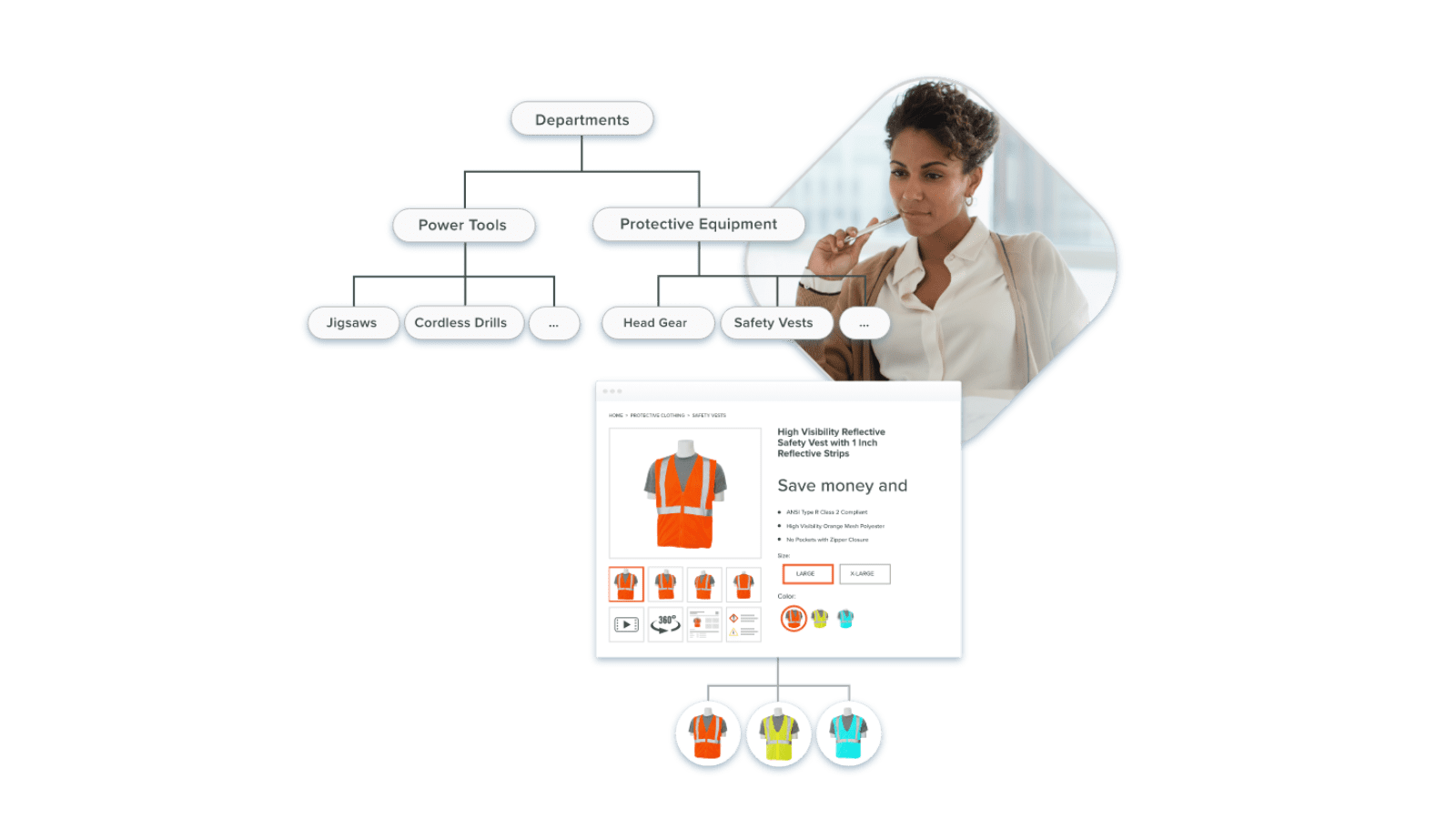
Catsy’s PIM for distributors adds configurable attributes and pre-mapped export templates for each sales channel. Bulk editing, validation rules, and version history support the rest. For the first cleanup of an overloaded category, AI-powered product enrichment can auto-categorize products and fill missing attributes, with people reviewing the output.
A PIM will not choose your categories, but it makes sure your decisions hold.
Key Takeaways
Keep Your Categories From Drifting
Overloaded categories often come with duplicate SKUs. Catsy’s guide to SKU management with PIM covers that cleanup. To see category management on your own catalog, request a Catsy demo.
Request a Demo