Open Source vs SaaS PIM: Which Is Right for Your Product Data?
Compare open source and SaaS PIM by cost, implementation time, security, scalability, and control to find the right deployment model for your catalog.
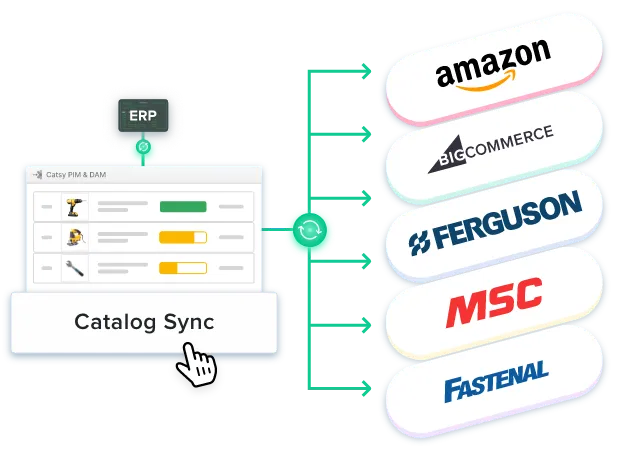
Table of Contents
Choosing between an open source PIM and a SaaS PIM comes down to who does the work. Open source gives your team full control over the code. It also gives your team full responsibility for hosting, security, and maintenance. SaaS hands that work to the vendor, so your team can focus on product data instead of infrastructure. For most manufacturers and distributors, SaaS is the more practical choice. Open source fits companies with specialized needs and the in-house technical resources to support it.
With open source, you get full access to the code. Your team becomes responsible for hosting, updates, security patches, backups, system monitoring, and custom integrations. If something fails before a major catalog launch, vendor support may not be available.
SaaS trades some control over the source code for speed. You get faster deployment and fewer technical demands, because the vendor manages the platform. Your team can focus on product data, workflows, supplier onboarding, and channel distribution instead.
Key Terms to Know
What Does a PIM Deployment Model Actually Control?
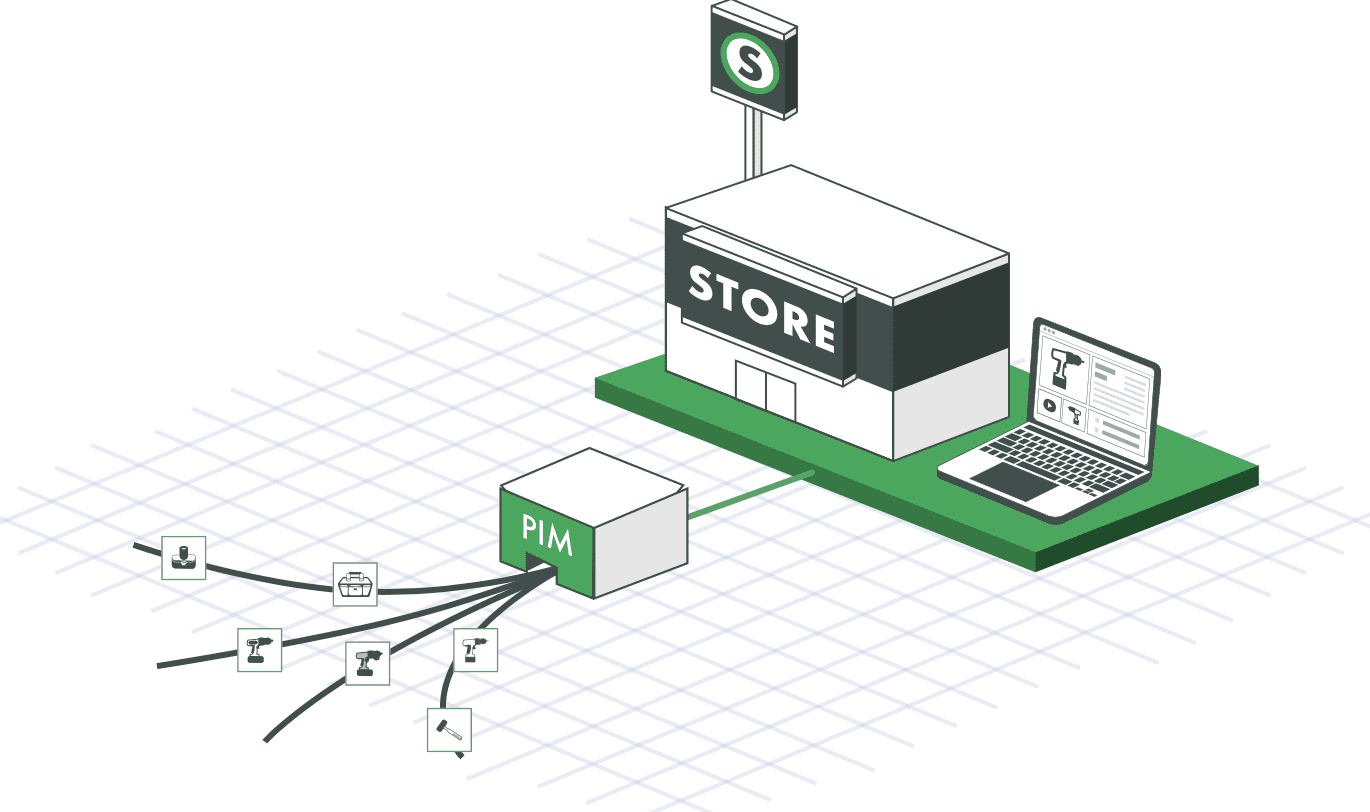
A PIM deployment model decides who runs the software, not what the software does. A Product Information Management (PIM) platform is not the same as your ERP, your CMS, or your DAM. A PIM centralizes product content, such as descriptions, specifications, prices, and images, in one system. Your ERP manages orders, inventory, and finance. Your CMS manages web pages. Your Digital Asset Management (DAM) system stores the actual image and video files. Open source and SaaS are two different ways to run the same category of tool.
From there, teams can distribute accurate and consistent data across every sales channel. Your chosen PIM deployment model decides who manages the underlying system. It could be your organization, or it could be the software vendor.
This matters most for businesses managing thousands of product variants, outdated spreadsheets, and frequent updates to standards such as ETIM and UNSPSC. The biggest challenge is often not deploying the software. It is cleaning and organizing years of inconsistent product data.
What Do You Give Up With an Open Source PIM?
An open source PIM gives your team full access to the code. It also hands your team full responsibility for keeping the system running. You can customize data models, interfaces, and workflows to support complex business requirements. That flexibility helps most if your company uses a heavily customized ERP system or manages intricate product hierarchies.
Complete control also means complete responsibility. Your team must manage the infrastructure and custom features. It must also handle hosting, performance monitoring, backups, and security updates. If something breaks during a critical launch, there is no guaranteed vendor support. Your team may need to rely on Reddit, community forums, or internal developers to find a solution.
Most open source PIMs use an open core model. The basic software may be free, but enterprise security, user permissions, and multi-channel connectors often cost extra. Budget for cloud hosting, development support, and ongoing connector maintenance as well.
What Makes a SaaS PIM Faster to Set Up?
A SaaS PIM is faster to set up because the vendor handles hosting, maintenance, and security. Your team simply logs in through a web browser to manage product data. This makes SaaS practical for companies without dedicated IT resources, and subscription pricing keeps costs predictable.
You cannot modify the source code. Most SaaS platforms still support custom fields, workflows, and pre-built connectors. Before choosing a vendor, confirm its infrastructure, data residency, and certifications, such as SOC 2, meet your security needs.
How Do Open Source and SaaS PIM Compare at a Glance?
Open source and SaaS PIM differ most in who manages hosting, updates, and long-term cost. The table below compares both models across hosting, implementation, cost, maintenance, security, and control.
| Area | Open Source PIM | SaaS PIM |
|---|---|---|
| Hosting | Managed by your company or a contractor | Managed by the vendor |
| Customization | Extensive, including source code changes | Configurable within platform limits |
| Implementation | Usually several months or longer | Usually weeks to a few months |
| Initial cost | Higher setup and development costs | Lower upfront cost |
| Ongoing cost | Hosting, staffing, maintenance, and security | Subscription, onboarding, users, SKUs, and add-ons |
| Updates | Installed and tested by your team | Handled by the vendor |
| Support | Internal team, community, or paid partner | Vendor support |
| Scalability | Designed and maintained internally | Usually built into the service |
| Security | Fully managed by your organization | Shared with the vendor |
| Data control | Direct infrastructure control | Subject to the vendor’s hosting options |
What Does a PIM Really Cost Over Time?
A PIM’s total cost includes far more than its license fee. A complete total cost of ownership calculation must also account for staffing, hosting, and maintenance. It should include security, data migration, and integrations too.
Open source PIMs may be free to download. They still require developers, server infrastructure, backups, updates, and custom connector maintenance. SaaS PIMs involve subscription fees, onboarding, user or SKU fees, premium features, and data cleaning costs.
SaaS typically offers faster deployment and lower upfront costs. Open source shifts more expense onto your engineering team and infrastructure budget instead. Staffing, integration maintenance, and ongoing process work tend to be the largest long-term cost drivers under either model.
How Long Does PIM Implementation Actually Take?
A SaaS PIM can usually launch within a few weeks to three months. Open source projects often take six months or longer, because they require more development and customization.
A realistic implementation timeline depends on more than SKU count. Migrating 3,000 simple apparel products may be quick. The same number of industrial products can take longer. Complex attributes, documents, relationships, and industry standards add time.
In both cases, data preparation takes the most time. This includes cleaning spreadsheets and defining product relationships. It also means connecting ERP or CRM systems, organizing digital assets, and preparing feeds for Amazon or Shopify. Addressing data issues early can speed up implementation significantly.
Is Open Source or SaaS More Secure for Product Data?
Neither model is automatically more secure, since security depends more on who manages it than on which model you pick. Many businesses assume self-hosting is safer than the cloud. Greater control does not always mean stronger security.
With a self-hosted or open source system, your team takes on more security work. You must manage encryption, security patches, access controls, backups, and disaster recovery. Without enough expertise and resources, this responsibility can increase risk. When evaluating security and compliance, compare each option’s responsibilities, certifications, access controls, data residency, backup processes, and disaster recovery capabilities.
SaaS vendors spread the cost of advanced security across many customers. They often hold certifications such as SOC 2 Type II and ISO/IEC 27001. Your team must still manage user permissions and password security on your end.
Which PIM Deployment Model Fits Your Company?
Choose SaaS if you want a faster launch and predictable costs. Choose open source if you have an in-house team ready to run and secure the platform.
| If This Describes You | Choose Open Source PIM | Choose SaaS PIM |
|---|---|---|
| Development resources | You have an experienced in-house development team | You have limited IT resources |
| System complexity | You manage complex or highly customized systems | You want a faster launch |
| Cost predictability | You accept variable, staff-driven costs | You prefer predictable subscription costs |
| Data control | You require strict control over your data and infrastructure | You want the vendor to manage hosting, updates, and security |
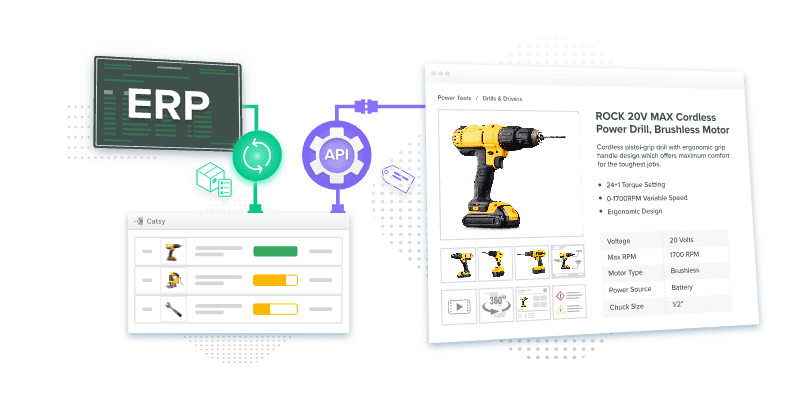
For a manufacturer, the PIM should connect with your ERP and support complex product hierarchies. It should also keep CAD files, safety sheets, and other assets aligned with each SKU.
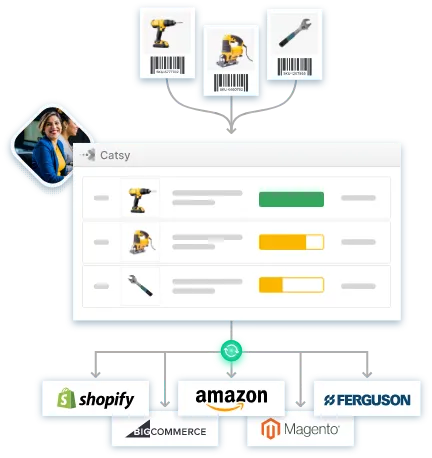
For a distributor, the PIM should automate vendor data onboarding. It should also correct inconsistencies and publish accurate product feeds across every sales channel.
What Questions Should You Ask Before Choosing?
Answer these eight questions about your team, systems, data, and budget before comparing vendors.
If SaaS looks like the better fit, Catsy is one option to evaluate.
Key Takeaways
Ready to See SaaS PIM With Your Own Catalog?
The best comparison uses your real catalog, not a clean sample file built for a demo. Book a free Catsy demo to see how your product data, digital assets, and sales channels could work together in one platform. Or explore Catsy’s product information management system to learn more.