How to Control AI in PIM for Governance and Brand Safety
Learn how manufacturers and retailers govern AI in PIM with approval workflows, MCP permissions, and validation rules that keep product data accurate.
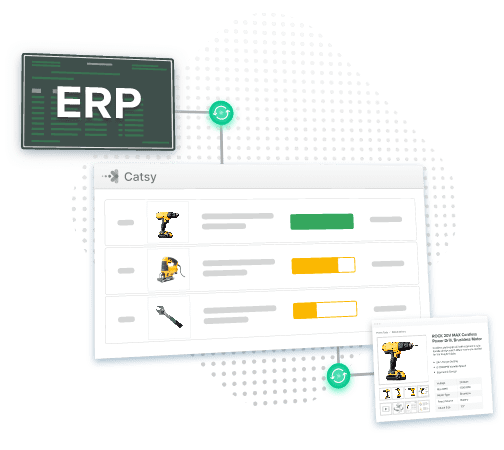
AI governance in PIM is the set of rules deciding what artificial intelligence may write, change, classify, or publish inside your product information management system. This includes the approvals, validation checks, and record-keeping processes that happen before any of it reaches a customer.
Most teams arrive at this sideways. Who would hold a meeting about letting AI into the catalog, right? But somebody uses it to speed up descriptions, a colleague tries it on category codes, and months later, a significant share of what ships to your channels has been touched by a model that nobody was assigned to supervise.
The practical question is not really whether you should allow AI, but whether you could reconstruct today what it changed, who approved it, and what would have caught an incorrect answer.
How AI Got Into Your Catalog
AI in product data used to mean pasting a spec sheet into a chatbot and copying the answer into a field. This did not make spotting mistakes easier. Gartner expects task-specific AI agents to be built into a large share of enterprise applications by the end of 2026, which means that the software you already pay for is learning to act rather than simply suggest.
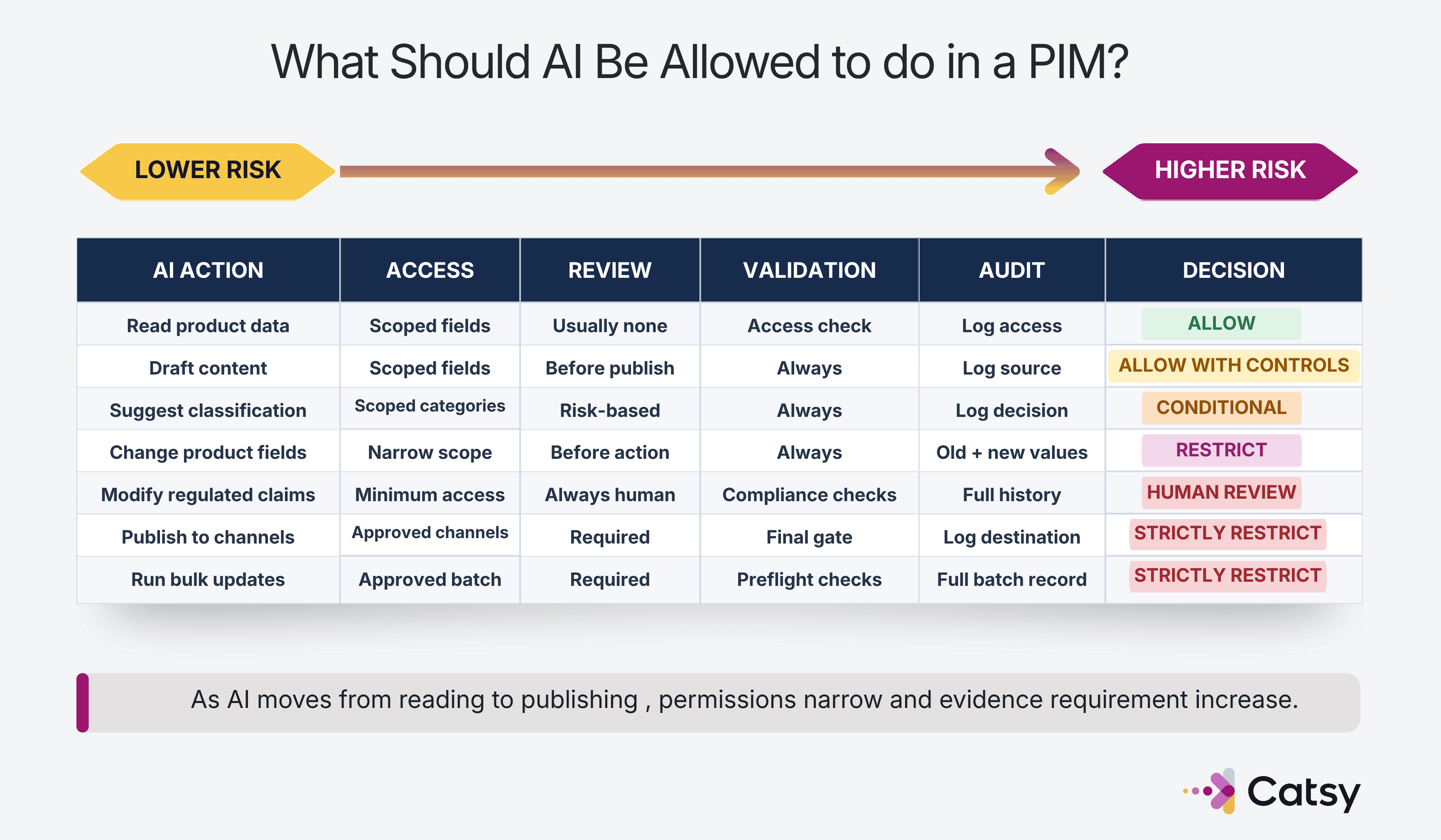
However, supervision has not kept pace. That same study showed that it also expects more than 40% of agentic AI projects to be canceled by the end of 2027 due to reasons like rising costs, unclear value, and weak risk controls.
The stakes are very real and direct because product content is what customers read. A wrong dimension, a classification that removes a required safety attribute, or an unsupervised pricing change does not stay inside the organization. A PIM pushes data to every channel you sell on, which is the point of owning one and also why one bad record can appear everywhere at once.
3 Doors AI Uses to Reach Your Product Data
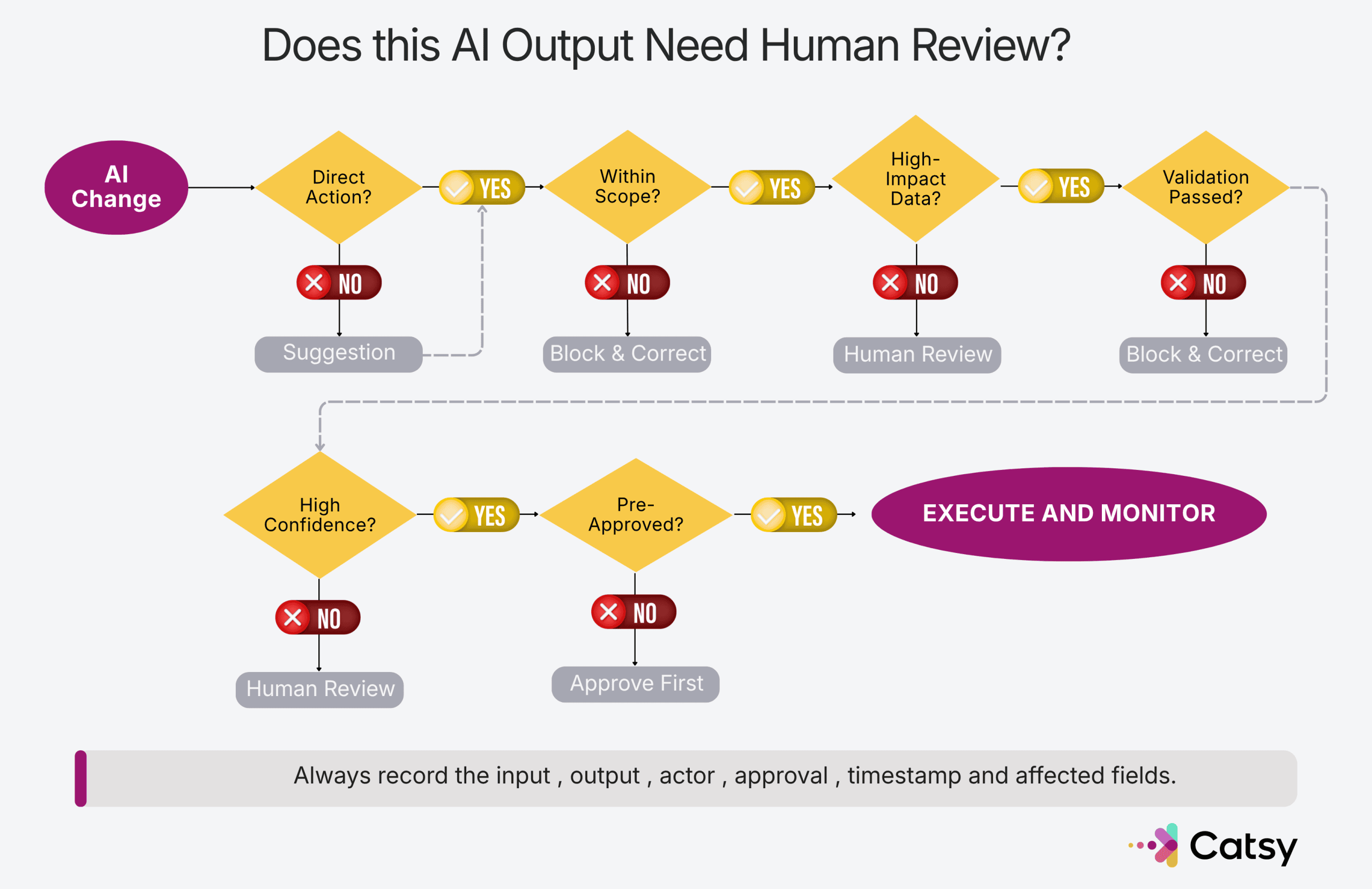
Drafting and enrichment inside the PIM
AI writes a draft, tidies a unit of measure, flags a missing attribute, or proposes a category code, and nothing happens until a person accepts it. Your exposure here concerns quality, not permission.
The Agents are connected straight to your systems
Here, the tool stops handing you text and reaches into the system itself, whether that is the PIM or the ERP, CRM, or storefront it feeds. Once the software writes to a field with no person in the middle, the question is not how well the output reads, but what the agent was permitted to do and whether anyone signs off before it acts.
Shopping agents reading what you already published
The third door is not yours to control. AI shopping assistants and answer engines pull structured product data to compare items, recommend them, and increasingly purchase them for shoppers. McKinsey expects agents to handle a substantial share of consumer commerce by 2030, and whatever is live in your catalog is what they read. There will be no review step on the other side, so the accuracy of your data is critical.
Sorting Suggestions From Actions
Before writing a single policy, split your assistive tools from the active agents. Assistive tools should be proposed but humans should be the ones to decide. Agents act as they reach into systems and change things.
Plenty of companies now borrow structure from NIST’s AI Risk Management Framework. It is a voluntary guide built around four functions: Govern, Map, Measure, and Manage. Behind the terminology are four questions a content team can answer in an afternoon.
- What fields is AI allowed to edit?
- Where is it running right now?
- How often does it mess up?
- What is the exact protocol when a bad record goes live?
ISO/IEC 42001 covers similar ground in a certifiable form, which matters when an auditor expects proof rather than assurances. The EU AI Act also sets legal minimums for higher-risk uses, such as safety claims, and its deadlines have changed. An amendment that took effect in July 2026 sets December 2027 for most high-risk standalone systems and August 2028 for AI built into already regulated products.
In a working PIM, PIM AI governance means several things must be true at once:
- Scoped access. Every AI process is identifiable and confined to particular fields or actions, never given access to the entire catalog.
- A review gate. A person, a validation rule, or both must clear the output before it becomes live data.
- Validation rules with no exceptions. Whatever completeness and accuracy checks block a messy manual entry should block AI content under identical terms.
- An audit trail. It should record what changed, who or what changed it, and who approved it.
- A kill switch. It should be tested and proven to work.
Here Are Approval Workflows That Survive Real Volume
An approval workflow that cannot keep up with AI output gets ignored within a quarter, and the sad truth is that nobody announces it. The AI approval workflows that last retain the familiar draft, review, approve, and publish structure but adjust the level of review according to the risk instead of applying it evenly.
Confidence-based routing makes that workable. The model scores how certain it is, strong suggestions are cleared in bulk, and weak or high-impact ones go to a person. Catsy’s AI-assisted product classification works this way. Its validation rules run on every code regardless of the score, so review effort tracks risk rather than catalog size.
How to Set MCP Permissions Before an Agent Connects
MCP, short for Model Context Protocol, is an open standard released by Anthropic in late 2024 that gives AI tools one consistent way to connect to other systems instead of requiring a bespoke build for each pairing. Its useful property here is that access is requested, not assumed. An agent asks for specific data or tools, leaving a clear line between the model and anything sensitive behind it.
This line only holds if somebody draws and enforces it. So, how should you establish MCP permissions?
- Scope. Define which fields, categories, or channels the agent may read and which it may write to. A classification helper has no business accessing pricing.
- Approval by action. Reading and drafting are relatively inexpensive to get wrong, but publishing and bulk updates are not, so they must wait for a person.
- Logging. Records should be detailed enough to reconstruct what happened, not merely confirm that something happened.
- Revocation. Test the cutoff before you need it because discovering during an incident that nobody knows how to revoke an agent’s access can be very expensive.
Catsy’s PIM MCP implementation checklist covers the build itself: access controls, review points, and testing before you scale.
Brand Safety When AI Writes What Customers Read
Brand safety here has nothing to do with ad placement. Businesses should understand that AI-touched content can damage trust, accuracy, or compliance once it reaches a buyer and that buyer may be an agent rather than a person. And right now, buyers have started double-checking. Forrester’s 2026 business-buying research found AI search tools fast but frequently incomplete or unreliable.
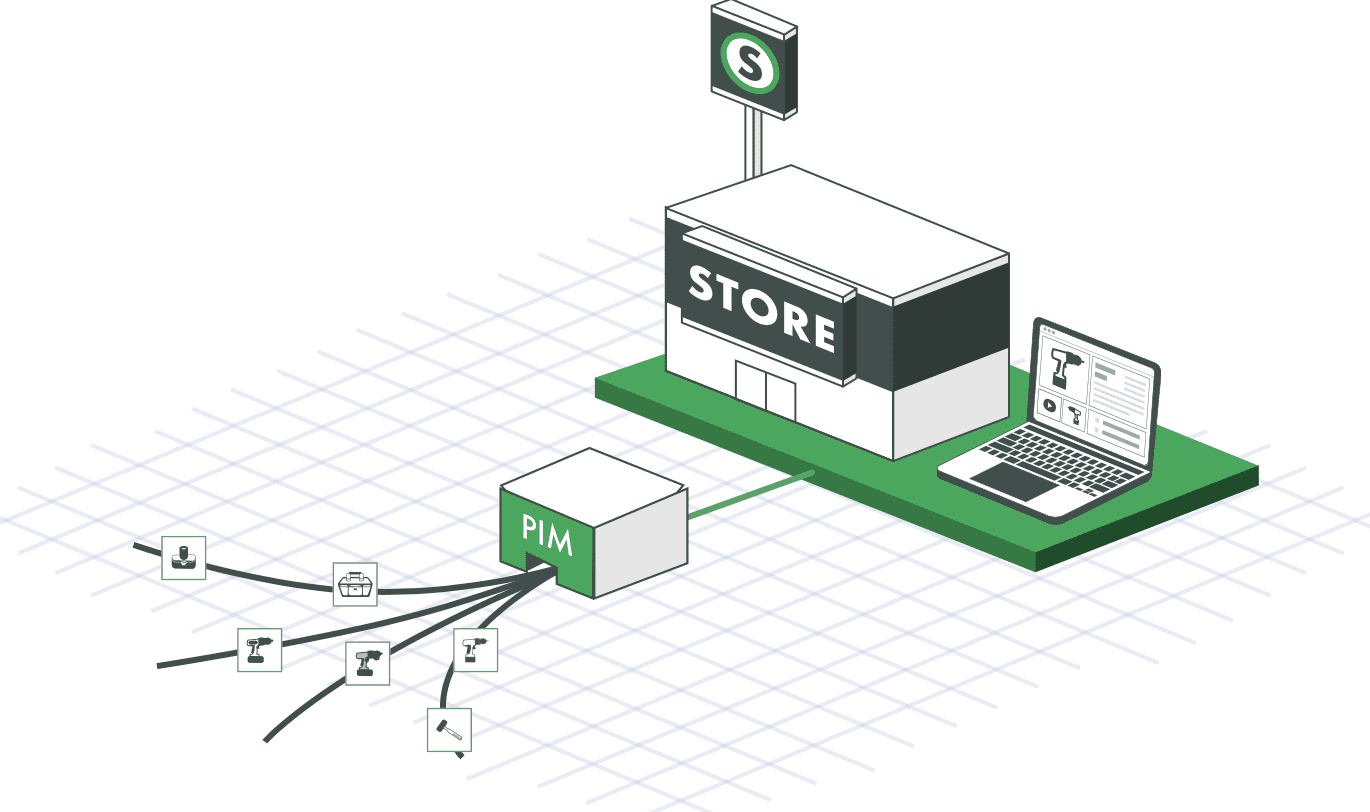
The fix is confidence-based routing. High-confidence, low-impact edits (like fixing unit formats) pass automatically if they clear validation rules. Low-confidence or high-risk edits (like hazard statements or bulk updates) get routed straight to a human reviewer’s queue.
Keep AI out of live channels until validation runs, so the rules that stop an incomplete manual entry apply without exception. Then, write your brand voice and banned claims into the workflow. Lastly, examine how your products are described in AI-generated answers. Governing your own data improves the odds of accurate representation, even though you cannot control what an outside agent says about you.
Before widening what AI may do, test yourself on three questions:
- Can you name every AI process touching product data and identify what each one can access?
- Is there a defined review point before AI-generated changes go live?
- Could you reconstruct six months from now what a process changed and who signed off on it?
Bring AI Under Control Without Slowing Your Team Down
Governing AI mostly means extending the structure you already have.
Catsy’s PIM software enforces role-based permissions, approval workflows, and validation rules before content reaches a channel, whether a person or a model wrote it. These controls support governed AI product data without creating unnecessary bottlenecks. Use our AI Workflow Governance Canvas to map where AI touches your data today, or request a demo to see the controls working with your own catalog.
Key Terms
- AI agent: Software that completes a task on its own, such as updating a field or publishing content, rather than only suggesting what to do. It is also called agentic AI.
- Assistive AI: AI that produces a draft or recommendation that a person must accept before anything changes.
- Audit trail: A stored record of what changed, who or what changed it, and who approved it.
- Brand safety: In product content, the risk that inaccurate, off-tone, or non-compliant material reaches a buyer or shopping agent.
- Confidence-based routing: Sending AI output for human review only when the model’s confidence score is low or the change is high-impact.
- Kill switch: A tested way to pause or cut off an AI process immediately.
- MCP (Model Context Protocol): An open standard that lets AI tools connect to systems such as a PIM through one permission-based interface.
- NIST AI Risk Management Framework: A voluntary US framework organized around four functions: Govern, Map, Measure, and Manage.
- PIM (product information management): A system that stores product data and distributes it to every sales channel.
- Validation rules: Automated completeness and accuracy checks that block content from being published until it passes.
Key Takeaways
- Adoption is outpacing control. Teams often struggle with AI product data because basic risk controls were not established first.
- AI reaches product data in three places: drafting inside the PIM, agents connected to your systems, and outside shopping agents reading what you have published.
- Filter reviews by risk level. Routing every edit to a manual human-review queue creates a bottleneck. Instead, use confidence scores to reserve human sign-off for low-confidence or high-impact edits.
- Override your default MCP permissions. Define field scopes, set required approval gates, log all activity, and test revocation protocols before deploying agents at scale.
- Protect the accuracy of your live catalog by enforcing strict PIM validation rules so the data AI agents ingest remains accurate.