
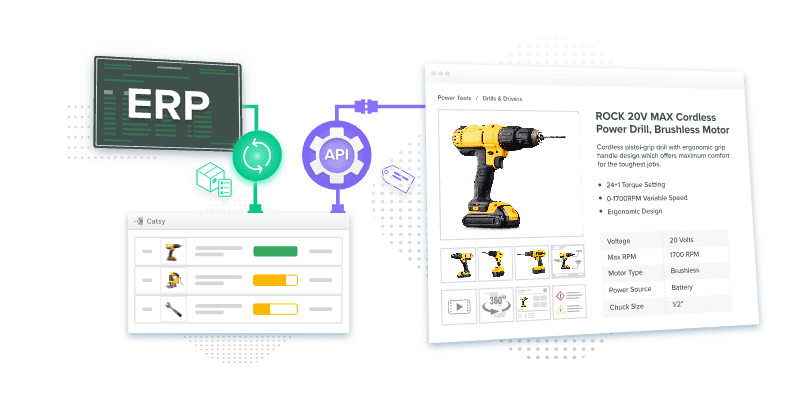
Most manufacturers invested in enterprise resource planning (ERP) systems to manage manufacturing operations, inventory management, and financial management. But when it comes to getting accurate product content to distributors, sales teams, and digital channels, that same ERP system quickly becomes a bottleneck.
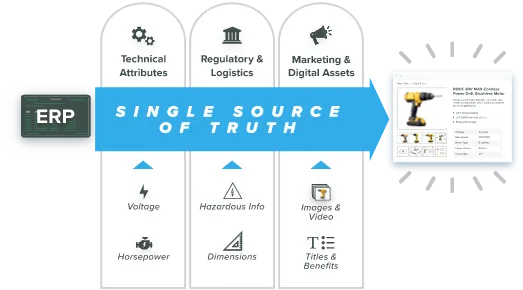
According to research from McKinsey & Company, 93 percent of supply chain leaders are working to make their operations more transparent and resilient, which requires seamless data sharing across the value chain. The best PIM for Manufacturers becomes essential precisely because Product Information Management software creates a single source of truth for complex product data while your ERP continues managing what it does best: core business processes and transactions.
1. Why Your ERP Needs a PIM Partner
Manufacturing ERP systems excel at production planning, materials management, and inventory control. They struggle with technical specifications, marketing descriptions, product images, compliance documentation, and the 50+ attributes distributors need to sell your products effectively. Research shows that 79 percent of industrial manufacturers are prioritizing digital transformation initiatives, yet most are trying to force their ERP to do jobs it wasn’t architected for.
The Functional Divide
Your ERP software handles: shop floor control, production operations, order management, supply chain management, quality control processes, and financial transactions. Your PIM handles: the product content that drives sales and enhances customer satisfaction across every distribution channel. The moment manufacturers understand this is a complementary relationship rather than a competitive one, the integration strategy becomes clear.
2. The Data Syndication Challenge Most Manufacturers Face
When distributors have incomplete or outdated product information, they either don’t promote your products effectively or they publish incorrect specifications — both scenarios cost you sales and damage customer satisfaction. B2B buyers now complete 70 percent of their purchase journey before contacting a sales representative, making accurate online product information mission-critical throughout the distribution network.
What Manufacturers Face Without PIM
Most manufacturing companies run cloud-based or hybrid ERP systems alongside multiple disconnected tools for managing customer relationships, quality management, and content. This fragmentation makes it nearly impossible to maintain a single source of truth for product content — the data that actually determines whether distributors can sell your products effectively.
PIM software becomes your product data hub, automatically syndicating enriched content to distributor portals, digital catalogs, e-commerce platforms, and sales teams. When you update a specification once in your PIM, it flows everywhere automatically — eliminating the manual update cycles that consume team capacity.
3. How PIM Software Complements Your Manufacturing ERP
The Integration Architecture
Your ERP remains the master for: SKU creation, pricing and financial management, inventory levels and raw materials tracking, order management and production processes, shop floor operations, sales order management, and real-time MRP that converts sales orders into production plans using live inventory data.
Your PIM becomes the master for: product names and descriptions, technical specifications and attributes, marketing content and sales copy, product images and videos and CAD files, compliance certifications and safety data sheets, and product relationships and cross-sell recommendations.
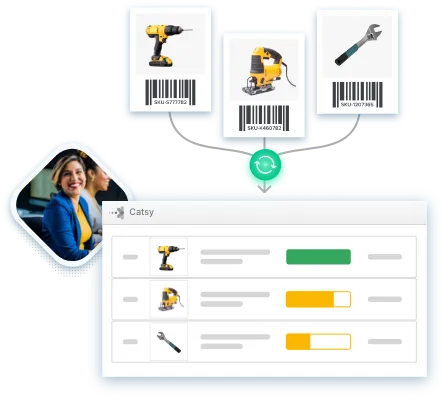
This separation of concerns eliminates duplicate data entry while ensuring each system maintains its area of expertise. The workflow is straightforward: when you create a new product SKU in ERP, that basic record syncs to PIM. Your content team enriches that SKU with everything distributors need — specs, images, documentation, marketing copy. Distributors access enriched product data from PIM while inventory and pricing flow from ERP in real-time.
Major ERP Platforms and Integration Considerations
Manufacturing ERP systems are specifically designed to meet the unique needs of the manufacturing sector. Key platforms manufacturers commonly run include:
Modern manufacturing ERP systems from these providers offer robust API and integration capabilities. Cloud-based ERP makes these connections even more seamless, allowing your PIM to pull transactional data while pushing enriched content back to business operations.
Key Features of Effective PIM-ERP Integration
4. Building Your Digital Showroom: From Factory Floor to Distributor Network
Your distributor network is effectively your sales force. When they have instant access to rich product content, they sell more effectively and require less support from your team. While competitors send PDF catalogs and respond to individual data requests, you can provide distributor partners with a dynamic, always-current product resource. Manufacturers with advanced digital supply chain capabilities grow revenue measurably faster than peers who rely on manual distribution methods.
What a PIM-Powered Digital Showroom Delivers
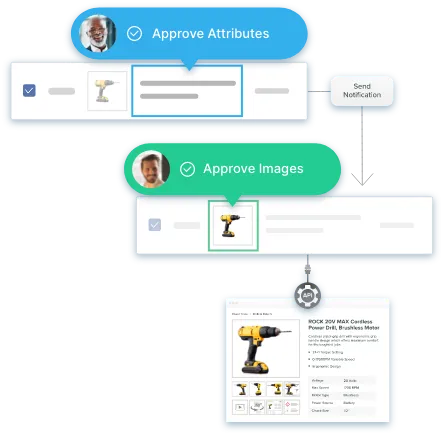
Just as your ERP manages quality control on the shop floor, PIM manages quality control for your product content — ensuring every distributor, marketplace, and sales channel displays accurate, on-brand information. Modern ERP architecture increasingly uses composable “plug and play” modules rather than monolithic systems, making it easier to add PIM as a complementary layer without disrupting existing infrastructure.
5. Measuring ROI: What to Expect from PIM-ERP Integration
PIM implementation requires investment in software, integration infrastructure, and process change. Understanding the return profile helps secure stakeholder buy-in. Implementation timelines typically run 4 to 8 weeks for basic integration, with full enterprise rollouts taking several months to a year depending on complexity, data quality, and the number of systems involved.
Operational Efficiency Gains
Revenue Impact
Strategic and Long-Term Value
Beyond immediate metrics, integrated PIM-ERP infrastructure creates the foundation for advanced capabilities: AI-powered product recommendations, automated compliance reporting, and predictive inventory management based on content engagement. When product content from PIM combines with sales data from ERP, you gain business intelligence you can’t access from either system alone — tracking which products perform best, identifying content gaps that hurt conversion, and making informed decisions about product development.

Key Takeaways

Frequently Asked Questions
ERP systems manage the operational data your business runs on: inventory, orders, pricing, finances, production planning, and quality control. PIM systems focus on product content: specifications, descriptions, images, technical documents, and the marketing information that helps distributors sell. Manufacturers need both. ERP handles core operations; PIM manages the detailed product information that drives sales. The best integration connects the two so transactional data flows from ERP and enriched product content flows from PIM to every channel.
Most manufacturing ERP systems include basic fields for product data, but they aren’t built to manage rich product content at scale. They struggle with image management, multi-channel syndication, approval workflows, and the extensive attribute sets distributors require. When companies force ERP to serve as a content tool, they typically end up with scattered data, repeated manual work, and frustrated channel partners. ERP should stay focused on coordinating supply chains and supporting production and operations, not content publishing.
Basic integration connecting a PIM to most manufacturing ERP systems takes 4 to 8 weeks, depending on system complexity and data quality. During this time, teams map data fields, configure sync processes, and test bidirectional data flow. Many manufacturers begin seeing efficiency improvements as soon as the basic connection goes live. Cloud-based ERP systems typically integrate faster than on-premise systems. Full enterprise rollouts with multiple ERP systems, extensive data migration, and complex distributor syndication can take several months to a year.
Your ERP should own transactional data: SKUs, pricing, inventory levels, raw materials, orders, production schedules, and financial records. Your PIM should own product content: names, descriptions, technical specifications, marketing copy, images, videos, CAD files, compliance certifications, and safety documentation. This clear ownership split prevents duplicate work and lets each system focus on what it does best — a principle that holds for both discrete and process manufacturing environments.
PIM automates how product information reaches your distributor network. Instead of uploading data to each portal manually or answering individual requests, you update product details once in PIM and it distributes updates to every connected channel automatically. This ensures distributors always have accurate, current information while significantly reducing your team’s workload. ERP systems automate things like ordering and inventory replenishment; PIM applies the same automation logic to product content distribution.
Manufacturing companies typically report a 75 percent reduction in time spent managing product data, 90 percent fewer errors across distributor channels, and a 30 percent increase in distributor portal engagement within the first six months. Revenue impact includes a 25 percent lift in online conversion rates and a 40 percent reduction in returns caused by specification mismatches. Most manufacturers reach positive ROI within 12 to 18 months from time savings alone, before counting added revenue from better distributor performance.
No. The right approach is to keep your ERP as the system running your manufacturing operations and add PIM as the complementary content management layer. Modern PIM platforms connect to major ERP systems through APIs and standard integrations. Whether you’re running Microsoft Dynamics, NetSuite, SAP, Infor, Epicor, or another cloud or hybrid ERP, PIM works alongside your existing system rather than replacing it. This approach protects your ERP investment while solving the content distribution challenges it was never designed to handle.
Where to Next?
ERP and PIM are not competing solutions — they’re the two halves of a complete product data infrastructure for modern manufacturing. ERP keeps production on course; PIM keeps your product content navigating accurately to every distributor, channel, and digital touchpoint where buyers make decisions. The guides below cover the integration decisions and platform comparisons that matter most.
Add PIM to Your Manufacturing ERP Stack with Catsy
Catsy’s PIM + DAM integrates directly with your existing ERP system to create the product content layer that completes your manufacturing data stack — centralizing specifications, digital assets, and marketing content, then syndicating automatically to every distributor portal and channel where your products need to be found.
Book a Demo