
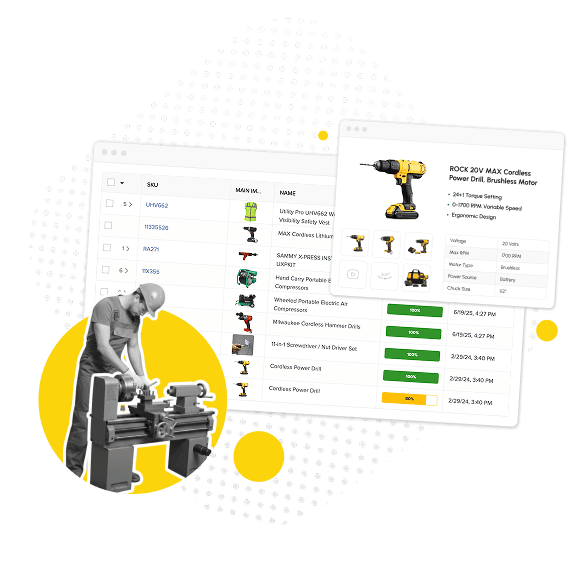
Your manufacturing information system manages production schedules, tracks inventory, and controls the production process — but where does your product data live when distributors need specifications for their websites? When engineering updates a technical document, how long before that change reaches your digital catalogs?
Most manufacturers discover their operational systems excel at production data while product information fragments across spreadsheets, PLM platforms, and email chains. Organizations using proper data management solutions improve data accuracy by 20 percent, yet many still wrestle with disconnected technology that can’t serve today’s digital distribution channels. Distributors list wrong specifications. Marketing can’t launch products on schedule. Sales teams quote outdated information. The solution demands a dedicated platform designed specifically for product information management.
1. Manufacturing Information Systems Are Drowning in Data Silos
Why It Matters
An effective manufacturing information system integrates hardware, software, data, people, and procedures. But one of the most significant challenges in manufacturing data management is data silos: product information becoming isolated within specific departments or systems that don’t communicate.
When the same product exists in multiple versions across these platforms, errors cascade throughout business processes. A specification change in PLM might take weeks to reach distributor catalogs. Teams waste hours tracking down which version is current.
The Real Impact
Research shows that 35 percent of manufacturers cite lack of data availability as a significant obstacle, while 61 percent report that poor data prevents adoption of advanced technology that could improve operational speed. The cost compounds when decision makers receive conflicting reports from different systems, personnel spend hours searching for the right version of documentation instead of focusing on higher-value work, and distributors receive outdated specifications that create customer support issues.
This fragmentation affects every aspect of the business. From raw materials procurement to finished goods distribution, disconnected information systems create inefficiency that traditional manufacturing solutions weren’t designed to solve — because they were designed for production, not commercial distribution.
2. Traditional Systems Can’t Handle Product Information Complexity
The Functional Gap
Traditional manufacturing information systems serve specific operational purposes. ERP systems focus on business processes like inventory management, procurement, and financial transactions. Manufacturing execution systems (MES) work as real-time monitoring systems that track and document the transformation of raw materials to finished goods, supporting resource scheduling, order execution, and production analysis.
MES integration with ERP fosters information flow across departments, enhancing efficiency by up to 20 percent through identifying bottlenecks and automating operational tasks. This is valuable — but none of these systems create the enriched product content that e-commerce platforms, distributor portals, and digital catalogs require. Marketing descriptions, optimized copy, high-resolution images, installation guides, and compliance documentation formatted differently for each channel — that workflow doesn’t exist in MES or ERP.
What This Means for Operations
By 2021, 50 percent of companies had adopted dedicated PIM systems specifically to address this gap between operational data and commercial content. The evolution toward specialized information systems reflects the reality that no single platform can cover everything from production orders to digital selling.
3. Distributor Syndication Requires a Single Source of Truth
The Distribution Challenge
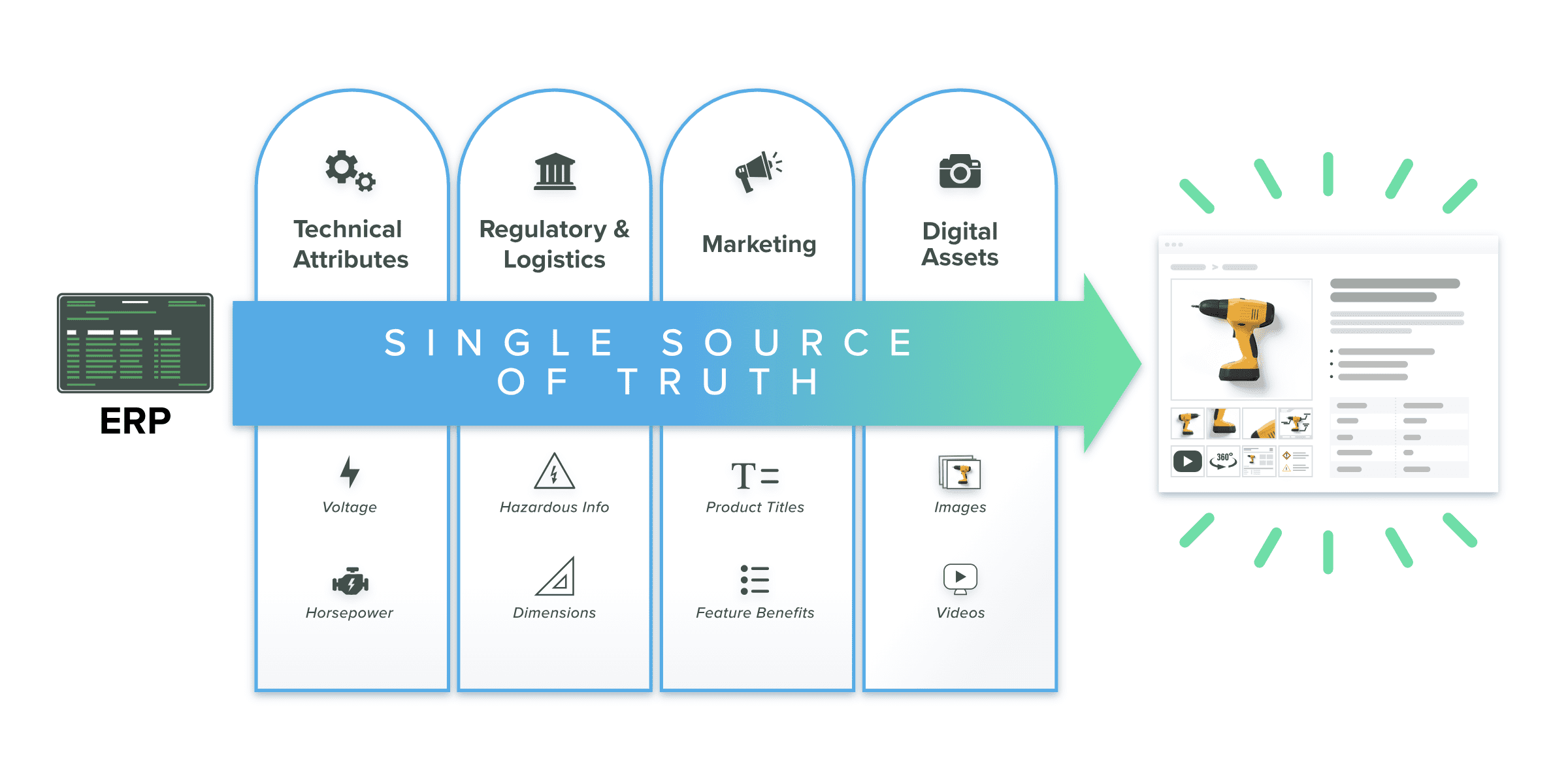
Most industrial manufacturers operate with dozens or hundreds of distributor partners. Each distributor runs different systems with unique data format requirements, attribute structures, and content specifications. Without a central source for product data, consistency becomes impossible to maintain.
Research on product content syndication reveals that 75 percent of leading manufacturers don’t have individual product pages on their websites, and 90 percent have less than half of their published catalog properly documented. This lack of comprehensive product information cascades to distributor channels — where the people actually selling your products can’t find complete specifications.
Why Manual Processes Fail
The PIM Solution for Syndication
Best PIM for Manufacturers platforms create the centralized hub that syndication requires. Rather than maintaining separate data sets per distributor, manufacturers manage one comprehensive product record that automatically formats and distributes to multiple channels. This delivers the same efficiency improvements that manufacturing information systems deliver internally — reduced waste, faster deployment, better control, lower cost from fewer errors — but extended to the distribution network rather than confined to the factory floor.
4. PIM Software Creates the Digital Showroom Manufacturers Need
The Digital Experience Gap
Your manufacturing information system optimizes the production process. But today’s buyers research products online before contacting sales — comparing specifications across suppliers, reading technical documentation, and watching installation videos before requesting a quote. Research shows that 83 percent of shoppers would abandon an e-commerce site if product information is insufficient. Industrial buyers familiar with consumer e-commerce demonstrate similar behavior when distributor catalogs lack complete specifications, quality images, or technical documentation.
Building Your Digital Showroom
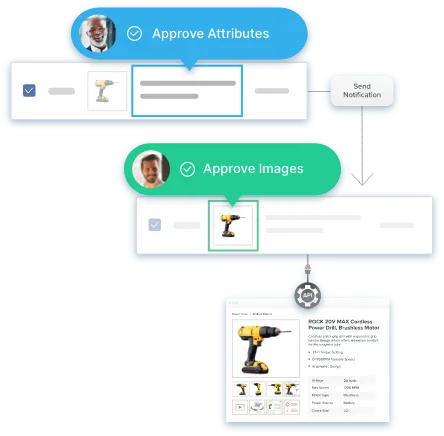
PIM software transforms technical specifications into compelling digital experiences:
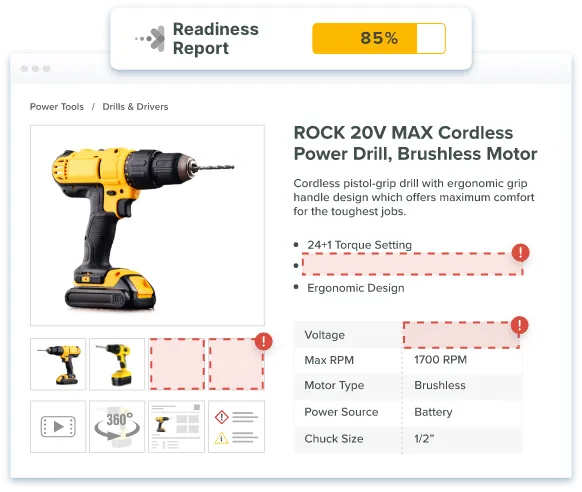
Just as quality management modules within a manufacturing information system flag defects on the production floor, PIM systems validate product content to maintain consistency and accuracy across every channel where your products appear.
5. Why Your ERP and PLM Need PIM to Complete Your Stack
The Integration Architecture
Data integration connects isolated data from various sources to provide a holistic view of operations. PIM software functions as the commercial data layer that connects operational platforms to market-facing channels. MES solutions collaborate with ERP to align business operations with production activities. Adding PIM to this architecture extends alignment to commercial and distribution operations.
How the Systems Work Together
Advanced Integration Capabilities
Maintaining Data Governance and Clear Ownership
Integration doesn’t mean every system manages every data type. Clear ownership prevents conflicts:
Clear ownership with automated synchronization ensures decision-makers and users access current information from their preferred platform — without overwriting each other’s work or creating the version conflicts that data silos produce.

Key Takeaways

Frequently Asked Questions
A manufacturing information system is a platform that helps manage, integrate, and analyze data related to production and operational processes. It integrates hardware, software, data, people, and procedures to give teams real-time visibility and control over manufacturing activities, supporting functions like production planning, inventory management, quality control, and performance tracking. By capturing data throughout the production cycle, it creates a real-time record of how raw materials are transformed into finished goods — essential for regulated industries where traceability records are required.
ERP systems handle transactional and operational data: inventory levels, pricing structures, procurement activities, and financial records. PIM software manages commercial product content: marketing descriptions, technical specifications formatted for customer-facing use, digital assets, and channel-specific formatting. When MES and ERP are integrated, information flows across departments. Adding PIM extends that flow to distributors, partners, and sales channels. Each system plays a distinct role: ERP manages operational data, MES tracks production, and PIM prepares and distributes enriched product information to the market.
Spreadsheets lead to version control issues, offer minimal automated validation, and struggle to manage digital assets. They require manual reformatting for each distribution channel, which adds time and multiplies errors. As catalogs grow beyond a few hundred SKUs and distribution channels expand, spreadsheet management becomes unsustainable. Research shows that organizations adopting dedicated data management solutions see approximately 20 percent improvement in data accuracy, significant reduction in duplicate data entry waste, and better use of resources as automation handles routine distribution tasks.
PIM platforms automate the distribution of product content to distributor partners in the formats they require, removing the manual rework that plagues spreadsheet-based distribution. Distributors receive real-time access to current specifications, complete product information, and quality digital assets — enabling them to operate their channels more efficiently. Just as manufacturing information systems provide a single source of truth internally, PIM extends that clarity to external partners, reducing confusion and minimizing back-and-forth about missing or incorrect information.
Manufacturing-focused PIM systems should provide native integrations or well-documented APIs for PLM (to sync engineering specifications), ERP (to keep pricing and inventory current), and MES (to surface production status and lead times). Integration with distributor networks supports automated syndication to sales channels. Look for bidirectional data exchange with clear governance over which system owns each data type, real-time monitoring of sync status, and the flexibility to expand integrations as your technology stack evolves. Advanced platforms may include AI-driven content optimization and sustainability compliance aggregation.
Basic implementations with straightforward product structures can complete in 8 to 12 weeks. Complex manufacturing catalogs with extensive technical specifications, multiple languages, and numerous system integrations typically require 4 to 6 months. Most manufacturers begin seeing benefits within the first few weeks as initial product data is centralized and organized, with measurable reductions in distributor errors appearing quickly. Plan for proper resource allocation during implementation including data cleansing, personnel training, process documentation, and testing before full deployment. The cost of implementation is typically offset by efficiency gains within the first year of operation.
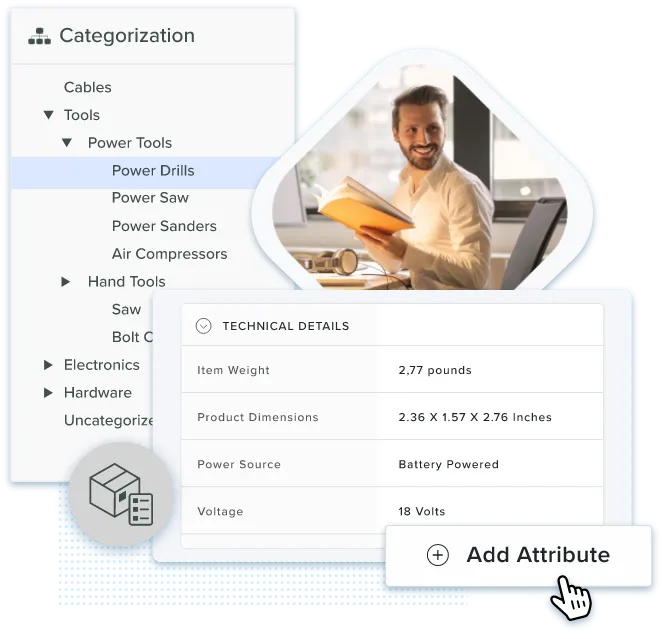
Yes — modern PIM platforms built for manufacturers are designed specifically for complex technical content. This includes detailed specifications, compliance certifications, safety data sheets, regulatory documentation, and engineering requirements. They support extensive custom attributes, complex product relationships, document version control, and structured compliance workflows. These systems can manage materials certifications, track product lifecycle records, and maintain the documentation that regulated industries depend on for audits. Digital asset management features keep technical documents linked directly to product records and synchronized across all distribution channels.
Where to Next?
Manufacturing information systems are powerful at what they’re designed to do. The gap isn’t in production data — it’s in the commercial layer that connects production to distribution. Manufacturers who close that gap with dedicated PIM infrastructure aren’t just improving data quality. They’re building the connected digital thread that lets every distributor, partner, and channel navigate toward their products with confidence.
Complete Your Manufacturing Technology Stack with Catsy
Catsy’s PIM + DAM platform integrates with your ERP and PLM to create the commercial data layer your manufacturing stack is missing — centralizing product content, digital assets, and compliance documentation, then syndicating automatically to every distributor portal, digital catalog, and channel where your products need to be found.
Book a Demo