
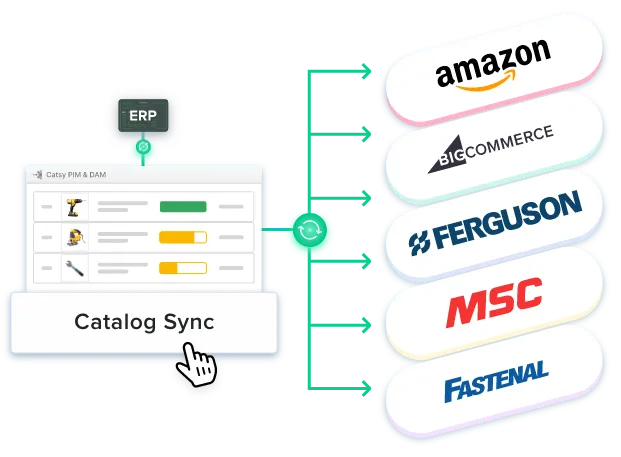
Manufacturing is changing because of enormous growth in data complexity. As operations become more sophisticated, managing product and asset information has become critical for competitive success. The global Product Information Management market is expected to rise from $4.47 billion in 2024 to $20.66 billion by 2032, reflecting how much manufacturers need centralized product data systems.
For industrial manufacturers, the challenge is real. Teams must handle technical specifications, compliance documents, safety data sheets, CAD files, and detailed product attributes — while coordinating with distributors, dealers, and digital sales channels. Without a centralized product data infrastructure, these tasks create bottlenecks that delay product launches, frustrate partners, and reduce revenue.
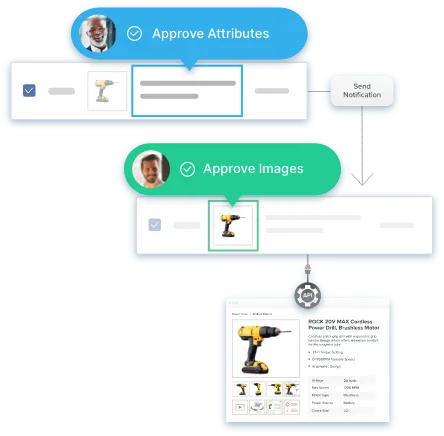
1. The Data Management Challenge in Manufacturing Operations
Why Traditional Approaches Fail
Industrial manufacturers face challenges that set them apart from other industries. Managing product data is harder because they deal with complex products, strict regulations, and large distributor networks. The manufacturing asset management market was valued at $24.1 billion in 2023 and is expected to reach $46.78 billion by 2030, growing at approximately 10 percent annually — driven by the need to manage growing product catalogs and meet demanding distribution requirements.
The core problems teams face:
The Digitalization Imperative
Manufacturing is undergoing rapid digitalization, requiring sophisticated product data management. The COVID-19 pandemic accelerated this transformation, with manufacturers rushing to establish digital operations and streamline product content delivery across channels. This shift is now a competitive necessity: manufacturers who fail to centralize product data risk losing market share to more agile competitors who can get accurate, complete product information to distributors and digital channels faster.
2. How PIM Software Functions as a Product Data System for Manufacturing
Product Information Management is purpose-built for complex product data ecosystems. Unlike ERP systems that handle transactions, or CRM systems that manage customer relationships, PIM centralizes the descriptive, technical, and marketing information that defines your products — and governs how that information flows to every downstream channel.
Essential Capabilities for Manufacturing Teams
How PIM Fits in the Manufacturing Technology Stack
Standard project scheduling tools and task management platforms handle timelines, resource allocation, and team coordination — and manufacturers absolutely need them. But they don’t manage complex product data. PIM fills a different layer: the product content layer between your internal systems and your distribution channels.
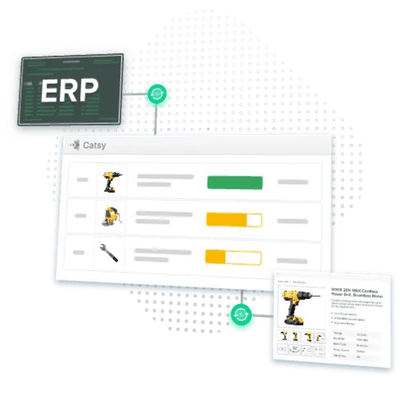
The typical manufacturing stack looks like this: ERP manages transactions, inventory, and cost data. PLM or engineering systems manage design files and change orders. PIM sits as the enrichment and distribution layer — pulling core data from ERP, adding marketing content, technical descriptions, digital assets, and compliance documentation, then pushing complete, channel-ready product information to every external endpoint.
Catsy’s cloud-based PIM solution is designed for manufacturers managing complex product catalogs across multiple distribution channels, with collaboration tools and role-based access that give cross-functional teams visibility into product data without overwriting each other.
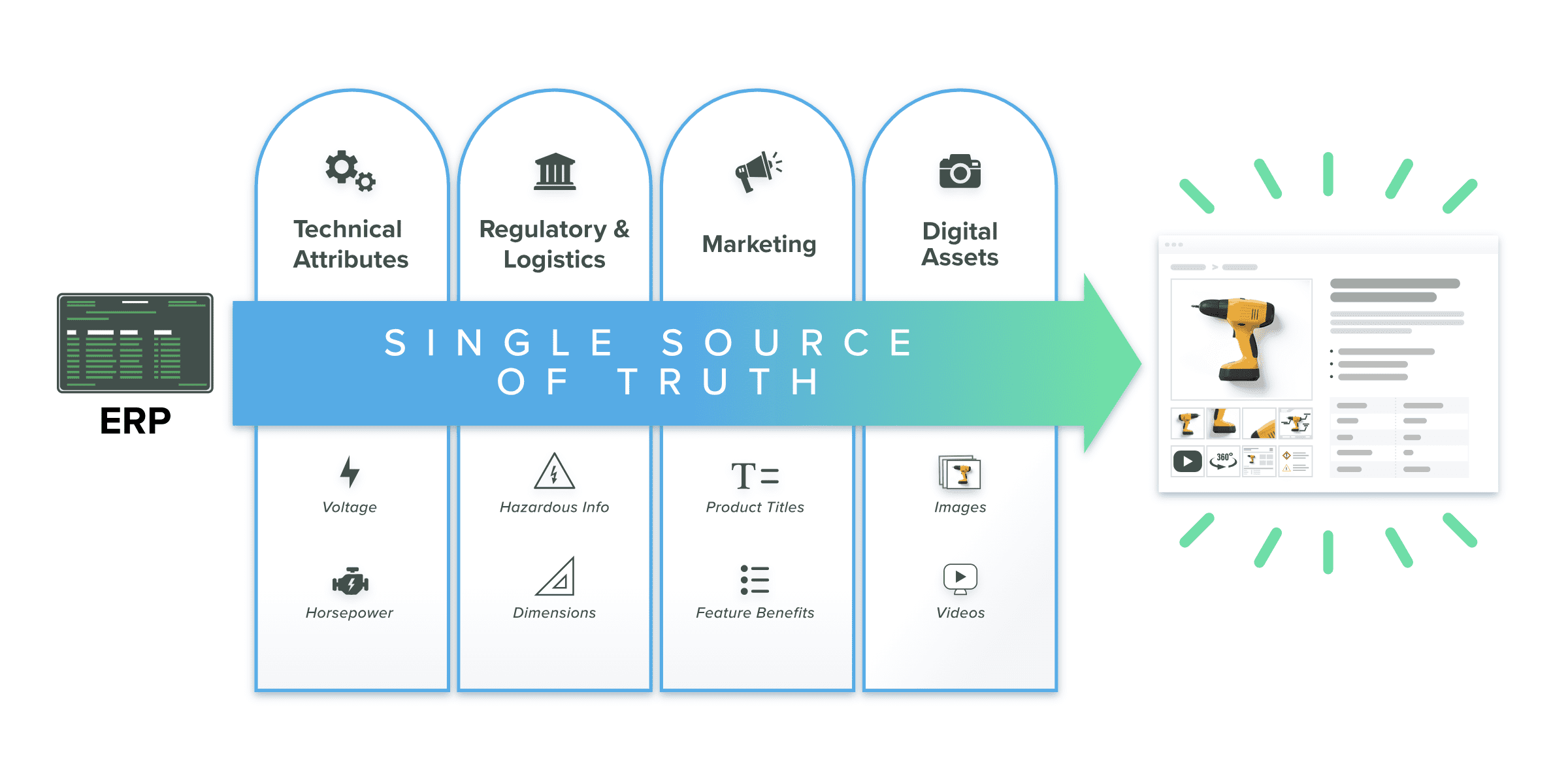
3. Why Manufacturers Need a Single Source of Truth
The Operational Impact of Fragmented Data
A single source of truth eliminates the confusion that occurs when different departments work from different versions of product information. For manufacturers, this means:
The Distributor Coordination Advantage
For manufacturers serving dealer and distributor networks, a single source of truth becomes especially critical. When channel partners receive inconsistent product specifications or outdated pricing, it erodes trust and costs sales. PIM software ensures that every distributor, dealer, and digital showroom receives identical, up-to-date product information through governed channel syndication. This consistency strengthens brand reputation and makes it easier for channel partners to sell effectively.
Enabling Digital Showrooms
Modern B2B buyers expect digital-first experiences. The global B2B e-commerce market is now five times larger than retail e-commerce. Distributors need rich product content to build compelling digital showrooms: detailed specifications, high-resolution images, installation videos, and downloadable documentation all combine to create experiences that convert.
PIM software makes this content readily available for syndication, transforming your product data from an operational burden into a competitive asset. When distributors can self-serve complete, accurate product content, they spend less time asking for clarification and more time selling.
4. Implementing PIM: A Structured Project Plan
Implementing a Best PIM for Manufacturers solution is a cross-functional effort involving engineering, marketing, compliance, and IT. Here’s a realistic four-phase approach:
Most mid-sized manufacturers should plan for approximately 20 weeks from kickoff to full operational status. Manufacturing-specific considerations include managing technical specifications with engineering precision, coordinating with teams reluctant to change established workflows, and ensuring compliance documentation remains current across all channels as the system goes live.
Success requires executive sponsorship, clear communication about the business case, and phased rollouts that demonstrate quick wins — early distributor feedback about improved data quality builds the organizational momentum that sustains the longer implementation journey.
5. Scaling Product Information Across Distribution Networks
Syndication Best Practices
Measuring ROI and Performance
Track these KPIs to quantify your PIM investment and demonstrate ongoing value:
Most mid-sized manufacturers see positive ROI within 12 to 18 months. Returns grow over time as the product catalog expands, more channels are added, and distributor adoption of digital tools increases. The compounding effect of centralized data — where each product enrichment effort multiplies across every connected channel — is what makes PIM a long-term strategic investment rather than a point-in-time implementation.

Key Takeaways

Frequently Asked Questions
PIM (Product Information Management) governs product data: specifications, marketing content, technical documents, compliance certificates, and digital assets, ensuring they’re accurate and distributed to every downstream channel. Traditional project scheduling tools manage tasks, timelines, and team coordination. Most manufacturers need both: scheduling tools to manage work streams and deadlines, and PIM to govern the product content that work produces. They serve different domains and work best in combination, not as substitutes for each other.
Most manufacturing PIM implementations take 16 to 20 weeks from kickoff to full operational status. The phases typically break down as: 4 weeks for data audit and foundation planning, 8 weeks for system configuration, workflow setup, and integration, and 8 weeks for data migration, team training, and pilot syndication testing. Ongoing optimization continues after launch. Catalog size, variant complexity, and ERP integration scope all affect the timeline. Companies that invest in the data audit and governance design phases early typically have smoother migrations and faster time to value.
Yes — integration with ERP, PLM, and other enterprise systems is a core capability of modern PIM platforms. The typical architecture has ERP as the source for transactional data (SKU numbers, pricing, inventory), PLM or engineering systems as the source for design files and specifications, and PIM as the enrichment and distribution layer that adds marketing content, technical descriptions, digital assets, and compliance documentation, then publishes complete records to all external channels. Most platforms offer APIs and pre-built connectors to common ERP and PLM systems to streamline this integration.
Distributors frequently report that inconsistent or incomplete product information slows sales and increases pre-sale support burden. When manufacturers govern product data through a PIM, every distributor receives the same accurate, current information: consistent specifications, current pricing, correct compliance documentation, and rich media assets. Distributors spend less time requesting clarifications and more time selling. They can build better digital showroom experiences because the underlying product content is complete and reliable. This consistency strengthens the manufacturer-distributor relationship and measurably improves channel partner performance.
A comprehensive manufacturing PIM manages: core identifiers (SKU, model numbers, product names), technical specifications (dimensions, materials, performance ratings, tolerances), compliance documents (safety data sheets, certifications, regional approvals), marketing content (descriptions, benefits, use cases, SEO metadata), digital assets (product images, CAD files, installation videos, user manuals), pricing and availability data, and relationship data (accessories, replacement parts, product families). The goal is one governed repository where every stakeholder — internal teams, distributors, and digital channels — draws from the same authoritative record.
Technical specification management requires careful data modeling. Most manufacturers configure PIM to store detailed technical attributes specific to their product categories — load ratings for industrial equipment, electrical specifications for components, material certifications for construction products. Engineering teams typically govern technical data within the PIM with role-based permissions, while marketing and product teams govern commercial content. When a specification changes, all related products update automatically across every connected channel. PIM acts as the distribution mechanism that takes engineering’s approved data and makes it accessible to sales, marketing, and channel partners in the format each needs.
Direct savings come from reduced data entry labor, fewer errors requiring correction, and lower support costs from distributor inquiries. Revenue improvements come from faster time-to-market for new products, better distributor performance, and higher conversion rates in digital channels. Most mid-sized manufacturers report time-to-market reductions of 40–60 percent, data error reductions of 30 percent or more, and measurably higher distributor satisfaction scores. Most see positive ROI within 12 to 18 months, with returns compounding as the catalog expands and more distribution channels are connected to the central PIM record.
Where to Next?
Managing product data in manufacturing is a long-haul operation. The complexity grows with every new product line, every new market, and every new distribution channel. The manufacturers who navigate it without losing control are the ones who invested in the data infrastructure early — before the spreadsheets became unmanageable and before distributor frustration became a retention problem. Catsy’s guides below cover the decisions that matter most when you’re evaluating that investment.
Build the Product Data Infrastructure Your Distributors Deserve
Catsy’s PIM + DAM platform is purpose-built for manufacturers managing complex catalogs across distributor networks and digital channels — one governed source of truth, automated syndication, and complete visibility into product data quality across your entire distribution network.
Book a Demo