
Managing product information across multiple channels doesn't mean compromising on security — but as organizations scale their e-commerce operations and expand into new markets, PIM solution security challenges grow proportionally. Cybercrime is on pace to cost businesses $10.5 trillion annually, a projection that keeps holding up as the deadline it named arrives — securing your product data is essential for protecting customer trust and maintaining competitive advantage.
Here's the tension at the center of this: the features that make PIM systems valuable — centralized access, seamless distribution, deep integration with connected systems — are the same features that create the attack surface you have to defend. This guide covers the five most significant security challenges and the strategies to address each.
1. Understanding PIM Solution Security Challenges
Organizations that experience data breaches now face an average cost of $4.44 million per breach, per IBM's latest research — with some sectors seeing considerably higher impacts. PIM solutions sit at the center of a lot of other systems: when your PIM integrates with an ERP platform, DAM tools, e-commerce sites, and marketplace feeds, each connection is one more door. A Stanford and Tessian study found 88 percent of breaches trace back to human error, not a sophisticated exploit — which is why user management and access protocols end up mattering more than most of the flashier security spend.
Modern PIM Security Challenges Extend Well Beyond Password Protection
Every user account, API connection, and sync process is a potential way in. Add more sales channels and expand the catalog, and the securing-it problem grows right along with it — there's no way around this trade-off. The convenience is the risk. Zero-trust architecture sounds like vendor marketing until you've watched one contractor's stolen password walk an attacker sideways through a company's entire catalog. Then it just sounds like Tuesday.
2. Data Breach Risks and Compliance Requirements
The Growing Threat Landscape
PIM systems face several specific threat categories that security teams need to plan for:
The financial impact goes well past the immediate breach cost. Factor in regulatory penalties, customer notification, legal fees, and the slower-burning reputation damage that affects your commercial relationships with distributors and channel partners long after the incident report is closed.
Navigating Regulatory Compliance
Compliance adds a real layer of complexity here. GDPR violations can reach €20 million or 4 percent of annual revenue, whichever is greater. California's CCPA now runs $2,663 to $7,988 per violation under its 2025 inflation-adjusted schedule. Product information systems often hold personal data through customer reviews, user-generated content, and personalization features — which is exactly the kind of data these laws exist to protect.
Operating globally means meeting several regulatory frameworks at once. GDPR, CCPA, Brazil's LGPD, and a growing list of state privacy laws all share the same core principles: transparency and customer control. Key compliance requirements include:
Building Compliance into PIM Architecture
Effective secure PIM software handles compliance through built-in features, not reactive patches bolted on after an audit finding. Look for role-based access controls, automated consent logging, data retention policies, and privacy-by-design baked into every system function from the start.
3. Access Control and User Management Complexities
Common Access Control Challenges
Most access control problems aren't dramatic. Nobody breaks in through a clever exploit — someone just never got their access revoked, or three people share a login because setting up individual ones felt like a hassle six months ago.
Implementing Robust Access Management
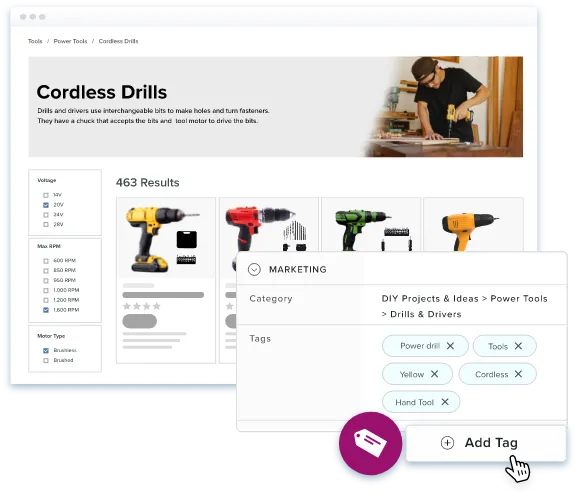
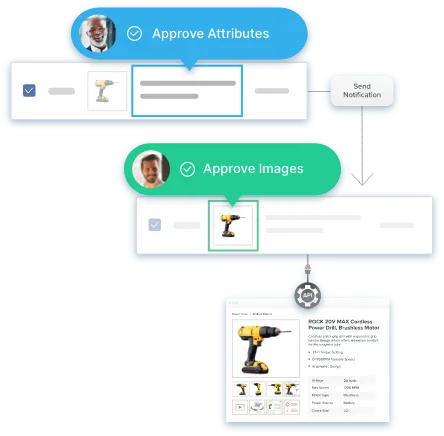
Attribute-based access control defines permissions by role, department, product category, and data sensitivity. Marketing edits descriptions, not pricing. A regional manager sees their region, not the whole catalog. Workflow-based permissions handle the exceptions — a reviewer gets time-limited access to a staging environment during a launch, then loses it automatically, instead of quietly keeping elevated access nobody remembers granting.
Multi-factor authentication is non-negotiable at this point, frankly — a stolen password alone shouldn't get anyone in. Pair it with session management that logs out inactive users and blocks simultaneous logins from different locations, and most of the easy attacks stop being easy.
Monitoring and Auditing Access Patterns
Security doesn't end at permission assignment. According to Verizon's Data Breach Investigations Report, insider threats contribute to a significant share of security incidents — which is why user behavior analysis matters as much as the permission structure itself. Comprehensive logging should capture:
Modern PIM platforms fold AI-powered analytics into this — flagging suspicious behavior patterns and alerting admins before the damage compounds, rather than waiting for someone to notice manually.
4. Integration Security with Third-Party Systems
Common Integration Security Challenges
Securing External Connections
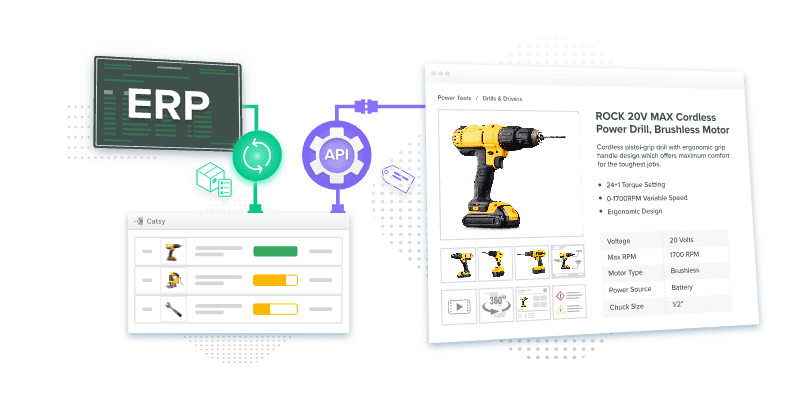
API security protocols use token-based authentication, rate limiting, and encryption for every data exchange — restrict access to specific IP addresses, require certificate-based authentication for anything high-security. Get a Data Processing Agreement signed with every vendor before the integration goes live, not after something goes wrong: security standards, breach notification timelines, liability, your right to audit. A vendor who won't sign one is telling you something. Network segmentation does the rest — isolate the PIM from the rest of your infrastructure so a breach in one place doesn't become a breach everywhere.
Managing Vendor Risk
Your PIM security is only as strong as your weakest integration partner — that's not a cliché here, it's the literal failure mode. Target's 2013 breach, one of the most studied in retail history, started with stolen login credentials from Fazio Mechanical Services, the HVAC contractor that had remote access to manage heating and cooling costs. Not a hacker breaking Target's firewall. A vendor's password, phished two months earlier, sitting unused until someone finally tried it. Forty million card numbers later, nobody was talking about HVAC contracts anymore. That's the scenario "evaluate your vendors" is actually trying to prevent — not a compliance checkbox, a specific unglamorous door nobody thought to lock. Evaluate vendors on:
Treat this as ongoing monitoring, not a one-time assessment. Vendor security postures shift as they change infrastructure, get acquired, or run into new threats of their own.
5. Best Practices for Securing Your PIM Solution
Implementing Layered Security Defense
Choosing the Right PIM Security Features
When evaluating PIM solutions, prioritize platforms that offer:
Cloud-based PIM platforms often end up more secure than on-premises setups, if only because the vendor's whole job is security infrastructure — dedicated teams, SOC 2 and ISO 27001 certifications most individual organizations would struggle to replicate on their own.
Creating a Security-First Culture
Technology alone doesn't solve this. The best security controls in the world don't help if people ignore them, share credentials, or click the wrong link. Build security awareness through:
Continuous Security Improvement
Threats don't sit still. Quarterly reviews, penetration testing, patch management, ongoing metric tracking. None of it's glamorous. It's just the difference between a PIM that stays an asset and one that quietly turns into your biggest liability.

Key Takeaways

Frequently Asked Questions
Weak access controls that let unauthorized users view or edit product data, poorly secured APIs exposed during transfers, insufficient encryption, and missing audit logs that make problems hard to trace after the fact. Human error is the biggest single factor, particularly around phishing recognition and credential management — shared passwords and failing to revoke access for departed employees are the two most common, and most preventable, gaps.
Both laws protect customer data that often ends up in a PIM through reviews, user-generated content, or personalization features. That means clear consent before collecting personal data, honoring deletion requests, encrypting and access-controlling that data, keeping detailed records of how it's handled, and notifying regulators and affected people promptly after a breach. The penalties aren't hypothetical: GDPR fines can reach €20 million or 4 percent of annual revenue, and CCPA violations now run $2,663 to $7,988 per incident under the 2025 inflation-adjusted schedule.
Role-based access control, multi-factor authentication, activity logging with timestamps and user attribution, automated backup and recovery, encryption at rest and in transit, secured third-party APIs, and built-in GDPR/CCPA support. Zero-trust architecture — verifying every request regardless of network origin — is increasingly the baseline rather than a premium feature.
Attribute-based access controls that match permissions to actual responsibility, rather than broad tiers, do most of the work here. Single sign-on simplifies authentication without weakening it. Automated workflows cut down the manual data handling that introduces both error and exposure. Regular access reviews clean up permissions people no longer need. Done well, none of this creates friction — the security just lives quietly in the architecture instead of sitting on top of it as a separate policy people have to remember.
The average global breach cost is $4.44 million, with financial-sector breaches running notably higher, around $5.56 million per incident, per the same IBM report. Those direct costs get compounded by regulatory penalties — GDPR up to €20 million or 4 percent of revenue, CCPA at $2,663 to $7,988 per violation — plus customer notification, legal fees, brand remediation, and the harder-to-quantify cost of partners who start second-guessing your data governance.
Quarterly, minimum. Immediately after a major system change, a departure with PIM access, or any security event — don't wait for the calendar. And quarterly reviews should sit on top of continuous automated monitoring, not replace it.
Often, yes. Leading cloud providers invest heavily in security infrastructure, run dedicated security teams, hold certifications like SOC 2 and ISO 27001, push automatic updates, and benefit from threat intelligence pooled across their whole user base — advantages most individual organizations, especially ones without a dedicated in-house security team, can't fully replicate on their own. The real work is evaluating each provider's specific certifications and track record rather than assuming "cloud" automatically means "secure."
Where to Next?
Securing your PIM means keeping product data accurate, governed, and protected — without piling on so much friction that people route around the system to get their job done. The right platform builds security into the architecture instead of bolting it on afterward. The guides below cover what to look for and how to build the data infrastructure that supports both efficiency and governance.
Explore Catsy's Secure PIM + DAM Platform
Catsy's PIM + DAM is built with enterprise security in mind — role-based access controls, comprehensive audit logging, encrypted data handling, and compliance-ready architecture that protects your product data at every stage from creation to syndication.
Book a Demo