
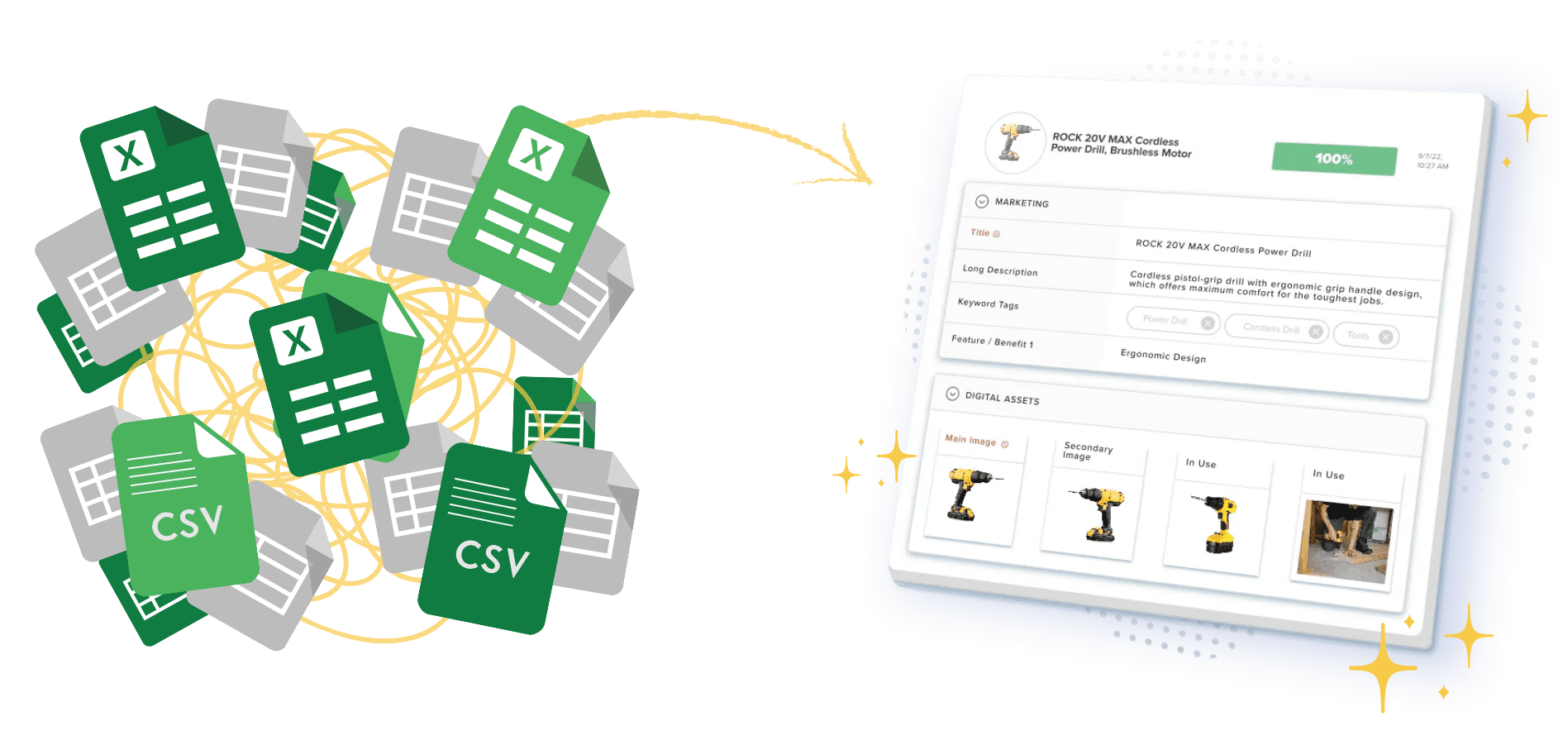
Consider these two common scenarios: First, a shipment arrives late — not because of a shipping delay, but because a spec changed three weeks ago and production never got the memo. Secondly, a launch slips because marketing is working off last month's product file. While neither of these looks like a logistics failure on paper—Both are.
Your supply chain depends heavily on having the correct product data at every step, from sourcing through delivery. When that data lives in five disconnected systems instead of one, the whole chain slows down to the speed of whoever has the oldest file. Product Information Management (PIM) is what fixes that — not by adding another system, but by removing the four or five you didn't need. A PIM is coordinated centralization to eliminate errors.
1. How Product Data Quality Drives Supply Chain Performance
When product details are wrong, performance suffers even when everything else is running fine. Supply chain managers plan schedules and hit deadlines based on the data in front of them. Feed them outdated or conflicting information and the mistakes aren't a surprise — they're the expected outcome. Manual entry makes this worse: small inaccuracies don't stay small once they propagate and cascade across an interconnected data chain.
Good data brings a kind of quiet stability most teams only notice in its absence. Costs from bad data rarely show up as one big failure — they show up as a dozen small ones: rework here, a delay there, a customer complaint that traces back to a spec mismatch nobody caught until the product was already on a truck.
Why This Is a Supply Chain Problem, Not Just a Content Problem
2. Breaking Down Data Silos Across the Value Chain
Silos create mismatches that slow supply chains and make coordination harder than it should be. When teams can't fully trust the data in front of them, they hesitate. They double-check things that shouldn't need double-checking. Errors that should get caught at the source instead cascade downstream, where they're far more expensive to fix.
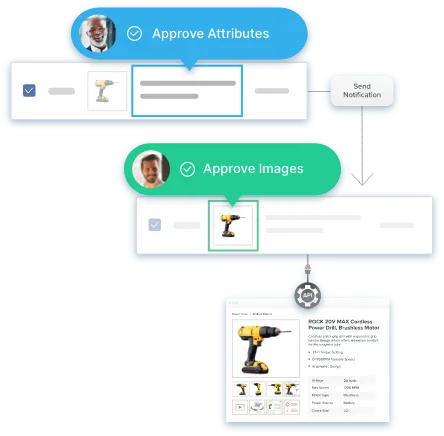
PIM software removes the silos by putting every team on the same system. When procurement, production, and marketing are pulling from the same governed source, collaboration stops requiring a verification step first.
What Silo Elimination Looks Like in Practice
3. Reducing Operational Costs Through Centralized Information
PIM addresses this at the source rather than downstream. Centralize the data, automate the workflows that used to be manual re-entry, and the error rate drops — along with the time spent fixing errors that shouldn't have happened in the first place.
Where the Savings Actually Show Up
4. Accelerating Time-to-Market With Real-Time Visibility
Stuck in silos, that agreement takes days. Centralized, it's immediate: everyone's already looking at the same record, so launches stop waiting on handoffs that shouldn't exist in the first place.
Supporting Multiple Sales Channels Without Adding Complexity
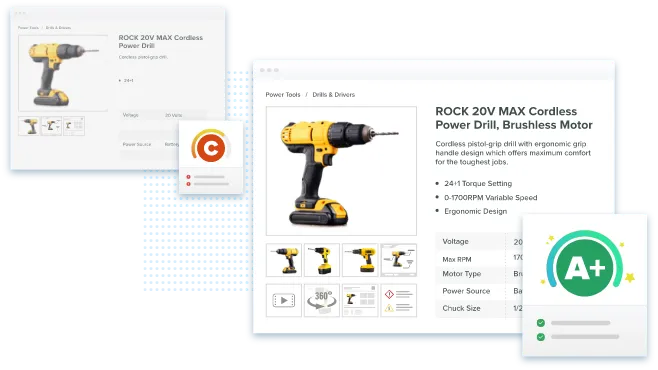
Products now move through online stores, distributors, and marketplaces at the same time, and each channel wants that data in a slightly different shape. Customers don't care about any of that — they just expect consistency wherever they encounter your brand. Automated syndication is what makes that possible: update once in the PIM, and it flows to every connected channel in the right format without anyone re-entering it by hand.
Where Digital Assets Fit Into This
Images, spec sheets, certifications, manuals — these get treated as a marketing concern, but they're a supply chain concern too. When a DAM lives inside the PIM instead of alongside it as a separate tool, assets stay tied to the correct product record automatically. Nobody's hunting for "the current version" of a spec sheet at 4pm before a shipment goes out.
5. Building Supply Chain Resilience in Volatile Markets
Centrally managed data means teams can assess alternatives quickly, update channels without confusion, and communicate changes to partners and customers with confidence instead of a scramble to confirm which file is actually current.
Data Governance Is the Part People Skip, and Shouldn't
A PIM implementation without governance loses value quietly over time — inconsistent updates, unclear ownership, exceptions that pile up until nobody remembers why they exist. Governance is what defines who owns which data, how updates get approved, and what a product record has to meet before it reaches anything downstream. It's the unglamorous part of a PIM rollout, and it's usually the part that determines whether the tool is still delivering value in year two.
Metrics Worth Tracking
Where PIM Fits Alongside ERP and PLM
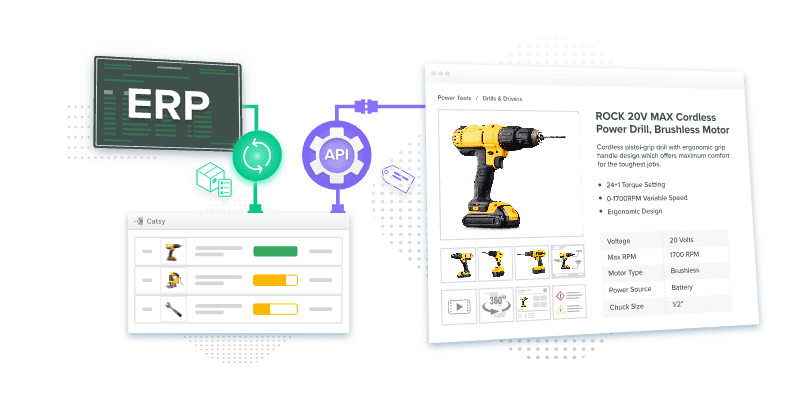
The architecture is straightforward once you see it laid out: ERP owns transactional data — pricing, inventory, order management. Engineering or PLM owns specifications and design files. PIM owns commercial product content — enriching it and distributing it to every downstream channel. Everyone draws from the same governed source, which is the whole point.

Key Takeaways

Frequently Asked Questions
It gives every team a single trusted source for product data, so decisions happen without the reconciliation delay. The measurable result: fewer errors, faster launches, lower returns, reduced cost throughout the chain.
By replacing manual entry and multi-system maintenance with one governed repository. A spec changes once, and it flows automatically everywhere it needs to — no copying, reformatting, or version-chasing required.
Because every stage depends on it. Wrong dimensions affect storage. Bad certifications delay approvals. Outdated descriptions generate returns. Each error creates a ripple that costs real time to trace back to its source.
Yes — mostly by removing the handoff delay, not by speeding up any single step. When everyone's looking at the same current data, there's nothing left to wait on.
It's a real mechanism, not just a sales line — lower returns, fewer rush shipments, less reconciliation labor, faster distributor onboarding. The savings compound as the catalog and channel count grow, which is exactly when manual processes start breaking down anyway.
Product images, technical documents, certifications, and installation manuals directly affect how products are sold and supported. Managed inside an integrated PIM + DAM, they stay tied to the correct product record and update automatically when specs change — no more version confusion or file-hunting when outdated assets end up shipping with a product.
Response speed during a disruption comes down to how fast teams can access accurate data and assess alternatives. PIM gives teams immediate access to complete, current product data — specs, supplier relationships, compliance documentation — enabling faster decisions and clearer communication to partners and customers about what's changing.
Where to Next?
Supply chain efficiency is ultimately a data problem. The organizations navigating market volatility and multi-channel growth well are the ones whose product data is accurate, governed, and flowing cleanly to every system that depends on it. The guides below cover the integration decisions that matter most when you're building that foundation.
Centralize Your Product Data. Strengthen Your Supply Chain.
Catsy's PIM + DAM platform creates the single source of truth your supply chain teams need — accurate product data, governed and distributed automatically to every ERP, marketplace, distributor portal, and sales channel in your network.
Book a Demo