
Shopify · PIM Implementation

How to Successfully Implement a PIM in Your Shopify Store

Modern PIM systems are designed for business users. Daily operations typically require no coding knowledge.

By Ceejay S Teku  ·  April 1, 2026
pim-catsy-hero-multi-stores-shopify-onesource
What You'll Learn
Strategic Planning:** How to assess multi-store requirements and define implementation objectives |
Data Preparation:** Best practices for data cleansing and structuring complex product data |
System Selection:** Key features to evaluate when choosing the best PIM software |
Integration Excellence:** Step-by-step Shopify integration ensuring data synchronization |
Performance Optimization:** Proven strategies to maximize ROI and maintain consistent product data |

1. Understanding Shopify PIM Implementation Requirements

Clear requirements prevent costly mistakes. The right PIM system must handle your current complexity while scaling for growth.

Most Shopify PIM implementations take between 3 to 6 months from planning to launch. Phased approaches that launch with core functionality first can reach initial deployment in just 12 to 16 weeks.

The reality is that most ecommerce businesses discover existing product data contains 40 to 60 percent incomplete records and 25 to 35 percent duplicates.

Document your market requirements, product complexity, operational needs, and current workflows before selecting a platform.

2. Preparing Your Product Data for Migration

Clean, centralized data is the foundation. Migrating incorrect data automates problems at scale. Successful implementations spend 35-40 percent of project time on data preparation.

Start with a comprehensive data audit to identify all sources and assess quality. Establish data governance with templates for product descriptions, standardized technical specifications, and taxonomy. Then proceed with data modeling and enrichment — merge duplicates, enrich incomplete records, validate technical data.
pim-dam-shopify-multiple-store-sync

3. Selecting and Configuring Your PIM System

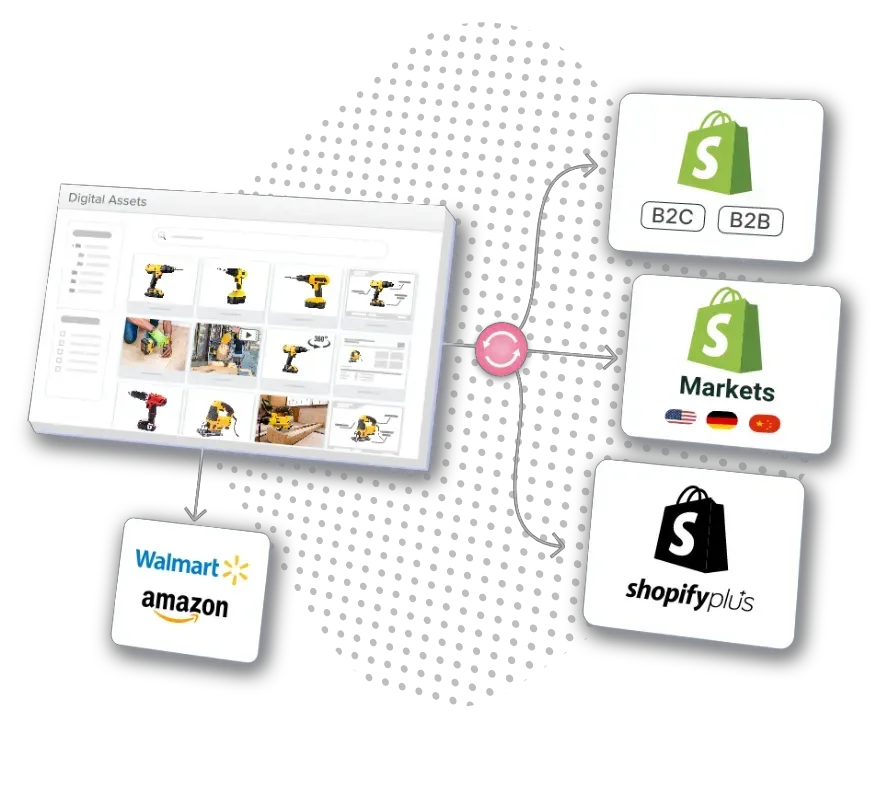
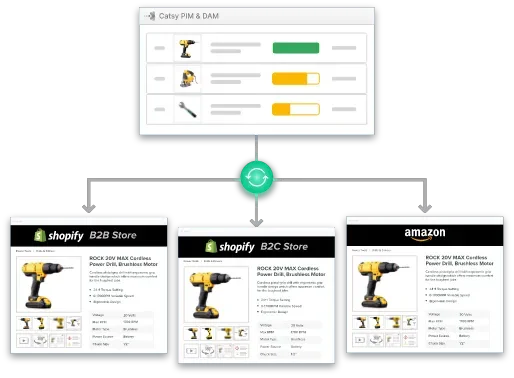
The right PIM solution scales with growth. Essential PIM capabilities include native Shopify integration eliminating custom development, multi-channel syndication distributing to multiple sales channels automatically, digital asset management for unified image and video management, and data synchronization maintaining data consistency.

The global PIM market grows from $3.67B (2023) to $20B+ by 2032. Implementing a PIM can lead to a 40 percent faster time-to-market for new products.

4. Executing the Integration Process

Shopify PIM integration execution determines whether implementation takes weeks or months. Map standard fields like product descriptions and prices with direct mapping. Custom attributes like technical specifications become Shopify metafields. Digital assets like images need proper associations and alt text.

Select 50-100 products representing full complexity for pilot testing. Document every data error, mapping issue, and workflow problem discovered. Hourly syncs are recommended for merchants managing multiple channels.

5. Optimizing Post-Implementation Performance

Success is measured by ongoing performance. Real PIM value emerges through continuous optimization. Track time-to-market for product launches, data accuracy percentage for complete technical specifications, manual effort reduction, and customer experience metrics related to accurate product data.

Establish data governance with clear ownership, approval workflows, and validation rules. Schedule quarterly reviews assessing product details completeness, image quality, and inventory management alignment.

Key Takeaways

·Audit product data quality across all sales channels before selecting PIM software
·Invest 35 to 40 percent of time in data cleansing and data governance to prevent data errors
·Choose the best PIM software with native Shopify integration and robust capabilities
·Test Shopify PIM integration with pilot products to identify data mapping issues early
·Monitor data accuracy, reduce manual effort, maintain consistent product data through governance
Book a demo with Catsy

Key Takeaways

Audit product data quality across all sales channels before selecting PIM software
Invest 35 to 40 percent of time in data cleansing and data governance to prevent data errors
Choose the best PIM software with native Shopify integration and robust capabilities
Test Shopify PIM integration with pilot products to identify data mapping issues early
Monitor data accuracy, reduce manual effort, maintain consistent product data through governance
content/uploads/2025/08/Heading-2000-x-200-px.png)](https://catsy.com/request-demo)

Frequently Asked Questions

How long does Shopify PIM implementation typically take?

Usually between 3 to 6 months from planning to launch. Phased approaches that launch with core functionality first can reach deployment in 12 to 16 weeks.

Can I use Shopify’s native product management instead of a PIM?

Shopify’s native tools work for single stores with simple product data. Once you grow beyond a few thousand SKUs or operate internationally, a dedicated PIM becomes essential to maintaining data consistency.

What’s the typical ROI for Shopify PIM integration?

Most ecommerce businesses see ROI within 6–12 months through reduced manual effort, improved data accuracy, and faster expansion. Companies report 50 percent time savings eliminating manual data entry.

How does a PIM solution handle product data for different sales channels?

Modern PIM tools centralize all the data while automating channel-specific formatting. Set base product information once, and the system manages variations for each channel automatically.

What happens to existing product data during PIM implementation?

Existing product data imports into the PIM during migration, then undergoes data cleansing and enrichment. Most implementations maintain your Shopify storefront live throughout.

Can PIM software integrate with systems beyond Shopify?

Yes – enterprise PIM capabilities include integration with inventory management, CRM, ERPs, marketplaces, and marketing platforms.

Do I need technical expertise to use a PIM system instead of the CSV method?

Modern PIM systems are designed for business users. While initial setup may benefit from IT involvement, daily operations typically require no coding knowledge.

Implement PIM in Your Shopify Store the Right Way

Catsy connects directly to Shopify with pre-built templates and a structured implementation process — so you're live with clean, complete product data in 10 to 14 weeks, not months.

Book a Demo