
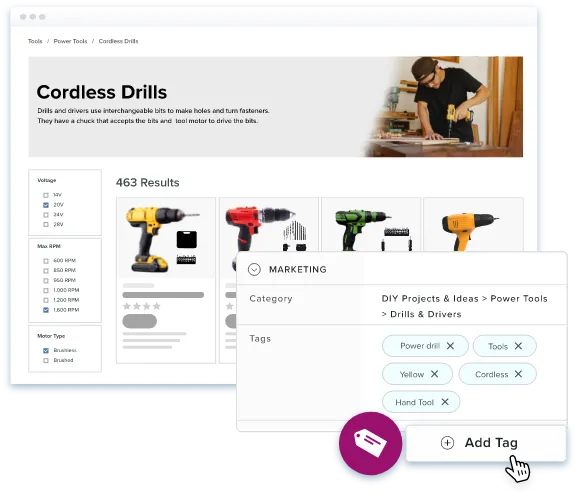
Your product catalog is incomplete. You know it, your customers feel it, and your competitors are capitalizing on it.
Missing specifications. Outdated descriptions. Gaps in technical details. These aren’t just minor inconveniences — they’re conversion killers. Research shows that 30 percent of shoppers abandon their carts due to insufficient product information, and over 80 percent of top online retailers now use web scraping tools to stay competitive.
A free intelligent product data scraper is a game-changing solution that automatically fills data gaps, enriches product listings, and keeps your catalog competitive. Instead of manually hunting down specifications, AI-powered tools can extract, verify, and populate your product data in minutes.
1. What Is a Free Intelligent Product Data Scraper?
A free intelligent product data scraper is an AI-powered tool that automatically extracts website data from across the web and enriches your existing catalog with accurate, up-to-date information.
The Technology Behind Intelligent Scraping
Modern web scrapers combine three core technologies: web crawling engines navigate complex sites and identify relevant data; natural language processing interprets unstructured content and extracts meaningful specifications; and data validation algorithms cross-reference information from multiple sources to ensure accuracy.
Data You Can Extract Automatically
2. How Product Data Scraping Technology Works
Stage 1: Source identification. The data scraper maps trusted sources relevant to your product categories — manufacturer websites, industry databases, competitor catalogs, and marketplace listings.
Stage 2: Data extraction. The scraper navigates source pages and extracts structured data. Modern scraping tools can handle dynamic content and maintain extraction accuracy even when sites update their design.
Stage 3: Validation and enrichment. Raw data undergoes quality checks. The system removes duplicates, resolves conflicts between sources, and standardizes formatting.
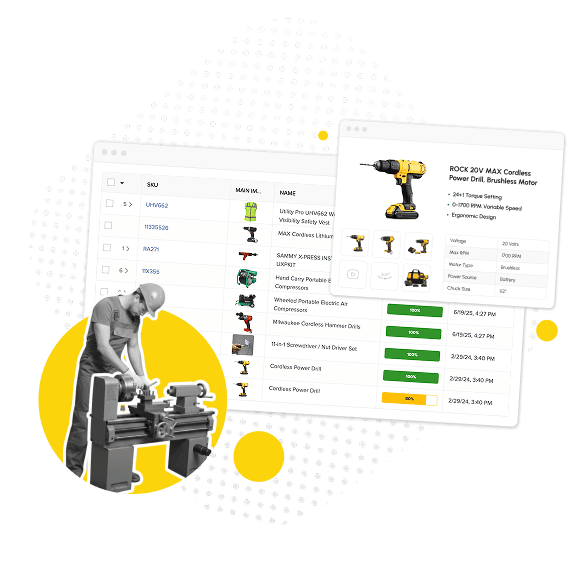
Stage 4: Integration and deployment. Validated data flows directly into your PIM software, triggering review workflows if needed and updating product pages across all channels simultaneously.
3. Key Features and Capabilities
Auto-Fill Missing Specifications
The most immediate value comes from completing incomplete product records. Specification completion automatically identifies gaps in your catalog — missing dimensions, absent material specifications, incomplete technical details — and sources that information from manufacturer databases and trusted industry sites.
Competitive Intelligence Gathering
Dynamic pricing tracking monitors pricing across multiple channels and geographic regions. You’ll know immediately when a competitor adjusts their strategy. Availability monitoring tracks stock status for competing products. Feature comparison automatically builds competitive matrices showing how your products stack up against alternatives.
Real-Time Updates and Monitoring
Automated refresh cycles can run daily, weekly, or on-demand depending on your industry’s pace of change. Change notifications alert you when important information shifts. Version tracking maintains history of all data changes.
4. Implementation Strategies for Maximum ROI
Start with High-Impact Categories
Don’t try to enrich your entire catalog overnight. Identify priority products based on sales volume, profit margin, or strategic importance. Focus on data gaps that actively hurt conversion. Target competitive categories where detailed comparisons influence buying decisions.
Establish Data Governance
Define validation rules that determine which extracted data flows directly into production versus requiring human review. Assign data stewards who own specific product categories. Create escalation paths for handling anomalies.
5. Choosing the Right Solution for Your Business
Standalone free data scraper tools offer flexibility and lower initial costs. They excel at specific extraction tasks but require integration work, lack comprehensive data governance, and don’t provide multichannel distribution.
Integrated PIM solutions combine web scraping with complete product data management. Platforms like Catsy’s data enrichment tools provide end-to-end workflows from data collection through channel publication — seamless data flow, built-in governance, automated distribution, and comprehensive audit trails.
