
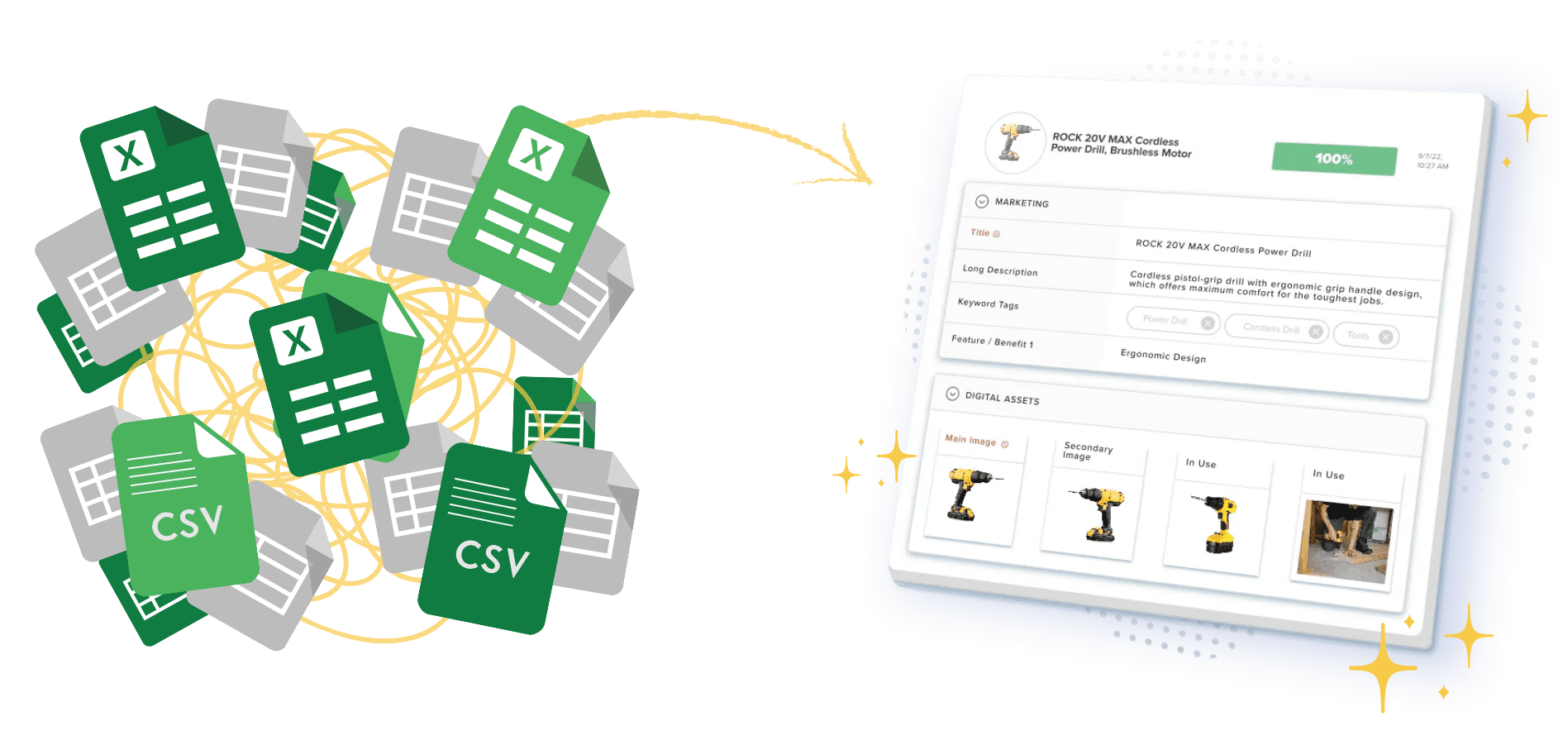
If you don’t have a good system in place for data management, here’s what tends to happen:
Sound familiar? You’re stuck in the gap between two systems. Product lifecycle management (PLM) handles how products get built. Product information management (PIM) handles how they get sold. Most teams learn the difference between PIM vs PLM only after the gap starts costing them real money: wasted payroll hours, botched listings, and launch windows that just breeze by.
In this guide, we’re going to look at which system does what, the key differences that matter, when you’ll need one or both, and where DAM fits in to the equation. Just straight talk, no filler.

What Is Product Lifecycle Management (PLM)?
Product lifecycle management (PLM) is software that tracks one of your products from its first sketch to the design, engineering, manufacturing, and launch. It’s internal facing – your customers never see it. PLM exists so that your manufacturing teams, your engineering crew, research and development, and marketing stop losing track of what’s current.
Before PLM software was around, product development data lived everywhere. Design files were hidden on someone’s laptop, and email chains with outdated attachments from three years ago got forwarded yesterday. PLM fixes this with a centralized repository. There’s one place for every version of every single document.
So what does a PLM software solution manage? Well, for starters:
The core capabilities of a PLM solution are version control, internal collaboration workflows, and full tracking of the whole product development process – from initial concept to delivery!
Here’s a quick example:
PLM systems matter most in industries like:
These industries have a unique challenge: product quality depends on engineering precision.
What Is Product Information Management (PIM)?
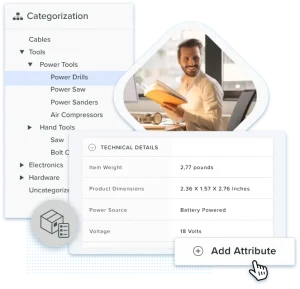
Product information management (PIM) is software that pulls all of your product data into one place, cleans it up, and pushes it out to every sales channel you use. PLM is the internal system, and PIM is the external one. It controls everything your customers see.
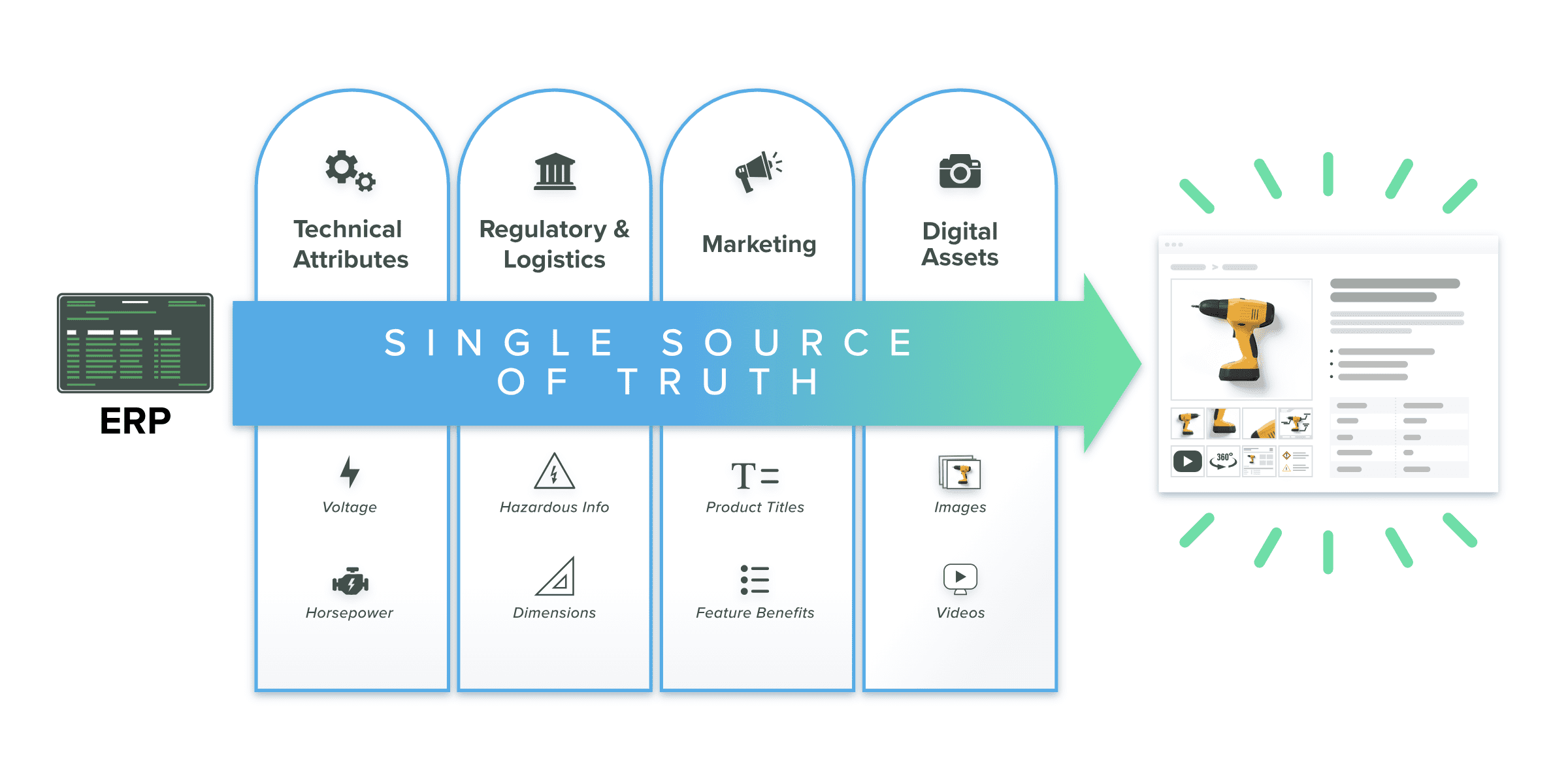
PIM gives each of your teams like marketing, e-commerce, and sales just one source of truth for product descriptions, specs, pricing, images, and videos. They will immediately see a benefit as they’ll no longer maintain separate spreadsheets for Wayfair, Shopify, eBay, Amazon, and a dozen other partners. Your PIM system holds one master record and formats it correctly for each channel. If you change a product dimension once, it’ll update everywhere! There’s no more chasing down which spreadsheet has the right number.
So what does it manage? Here’s a list:
A modern PIM system can handle the manual tasks that eat your team’s time, so your crews can focus on writing better product content and launching into new sales channels.
Going back to the furniture example, the accent chair is ready to sell! So how does PIM vs PLM come in? Well, PIM is where the teams write descriptions, upload photos, set pricing for each channel, and format listings for Shopify, Amazon, and Wayfair. Without PIM, every channel gets updated by hand. That’s error-prone and time consuming.
PIM vs PLM: Key Differences Explained
PLM is for building products. PIM is for selling them. Here’s how they compare:
| Dimension | PLM | PIM |
|---|---|---|
| Primary focus | Product development and engineering | Product marketing and distribution |
| Core users | R&D, engineering, manufacturing, compliance | Marketing, e-commerce, sales, product managers |
| Data types | CAD files, BOMs, technical specs, change orders | Descriptions, attributes, pricing, images, videos, SKU data |
| Lifecycle stage | Concept → Design → Manufacturing → Launch | Launch → Marketing → Distribution → Channel updates |
| Key integrations | CAD software, ERP, supply chain tools | ERP systems, DAM, e-commerce platforms, marketplaces |
| Business outcome | Faster development, better quality, lower production costs | Accurate content across channels, faster time to market |
The table tells the story at a glance, but there are three differences that cause the most confusion and the most mistakes.
Internal vs. External Focus
First, note that PLM serves your internal teams: engineers, designers, quality assurance, and your manufacturing partners. They’re the ones building the product.
Conversely, your PIM serves your external-facing teams like your sales reps and your product managers. They’re the ones selling the products.
PLM users very rarely talk to customers, and PIM users rarely talk to the factory. They’ve got different data and different timelines – they’re different worlds! This is why one team’s must-have feature is irrelevant to the other, and why cramming both jobs into one system always disappoints someone.
Different Data, Different Lifecycle Stages
PLM handles complex product data like engineering specs, design files, and compliance docs across the product lifecycle from concept to manufacturing. PIM handles product content like descriptions, images, and pricing from launch through ongoing channel updates. The data types have almost nothing in common, which is why one system can’t do both well. An engineering change order and a lifestyle product photo serve completely different purposes.
The Handoff That Makes or Breaks Your Data
Once engineering locks specs into the PLM, that data needs to go through your ERP to PIM for enrichment and distribution. This is where most companies run into data silos. Specs get lost and formats break. Teams are duplicating efforts because nobody knows which version is current.
The right flow is PLM to ERP to PIM to sales channels – clean, automated, with no re-keying. Most companies aren’t there yet; the bigger your product catalog, the more the disorganization hurts.
When You Need PLM, PIM, or Both
Forget about the technical definitions for just a minute. Instead, think about where your team’s pain actually lives. That’ll tell you which system matters.
Some companies’ images matter just as much as their product data, like in the instance of a fashion brand with seasonal collections, or furniture retailers with lifestyle photos. A PIM with native DAM capabilities means you don’t need to buy (and spend time integrating) a separate asset system! Platforms like Catsy can handle both your product specs and your creative assets in one solution.
Common Mistakes
A Worked Example
A home goods company designs a table lamp. PLM tracks the engineering specs, like the BOM (bill of materials), wiring compliance certifications, and supplier tooling drawings. Once the design is approved, data can move to the ERP for costing and for inventory planning.
Then, PIM takes over. Marketing teams write descriptions and uploads lifestyle photos of this lamp in three different room settings. They add SEO titles and format listings for Shopify and Wayfair. Amazon wants bullet points and specific image dimensions. Wayfair needs a different category taxonomy.
PIM handles this – all from just one record.
Where DAM Fits in the PIM vs PLM Picture
After the question of PIM vs PLM clicks, the next question always follows: who manages the product images, lifestyle photography, and marketing videos? PLM handles your engineering files and PIM’s got your product data – but the visual assets need a home, too! For many brands, those visuals are the front-line salespeople.
Digital asset management (DAM) stores and organizes images, videos, documents, and brand materials before distributing it to channels.
Three Ways Companies Handle Digital Assets
For visual-first brands like fashion and beauty, images drive conversions just as much as data drives accuracy. An integrated option makes the most sense.
| Separate DAM | PIM with Basic Media | Integrated PIM+DAM |
|---|---|---|
| Best-of-breed flexibility | Simple setup | Single platform |
| Integration overhead | Limited depth | Shared workflows |
| Dual licensing costs | Teams outgrow it fast | Unified governance |
| Second vendor to manage | No advanced search or rights mgmt | One approval workflow |
For more on how these compare: PIM vs DAM: What’s the Difference?