
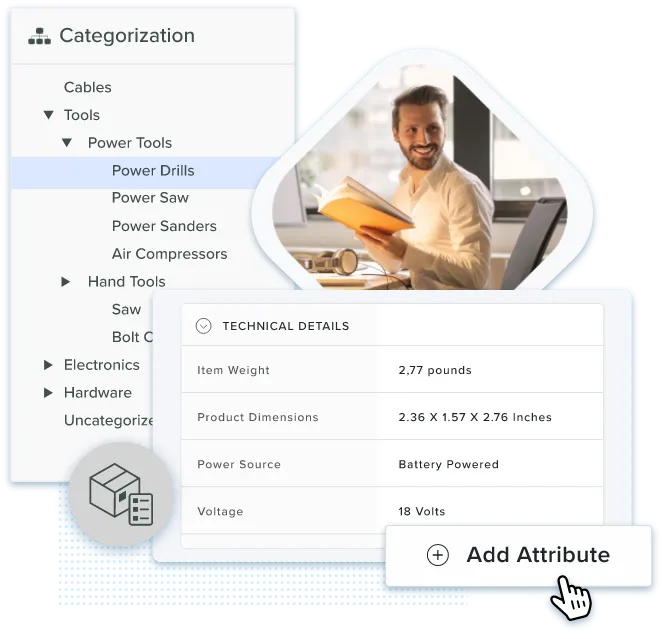
Managing collections across multiple Shopify stores — each serving different countries with unique currencies, languages, and units — quickly becomes unsustainable. When you manually update collections across stores in the US, UK, Europe, and Asia, you’re duplicating manual work and introducing inconsistencies that damage sales and customer trust.
Shopify smart collections offer a powerful tool for automation, but reveal limitations when operating at scale across borders. That’s where Product Information Management (PIM) becomes vital. With cross-border B2C e-commerce projected to reach $7.9 trillion by 20301 and 92% of shoppers preferring prices in local currency2, multi-store complexity demands centralized solutions.
1. Why Manual Collections Fail Multi-Store Operations
Consider a beauty brand selling across North America, Europe, and Asia Pacific. An “Under $50” collection in your US store becomes “Under £40” in the UK, “Under €45” in Germany, and “Under ¥7,500” in Japan. Each store requires separate rules, but the underlying catalog must maintain consistency.
When you update product tags, adjust price tiers, or modify stock availability, those changes must propagate across every store. Without centralized control, you’re dedicating resources to manual updates or accepting that stores fall out of sync.
2. How Smart Collections Work Across Multiple Currencies
Smart collections automatically include matching products based on selection conditions you define, supporting up to 60 conditions per collection. These conditions target product tags, product title, vendor, price, weight, stock status, and variants.
Price-based rules require currency-specific conditions. A “$0–$50” range in USD translates differently across currencies. European markets use “€0–€45” while UK stores use “£0–£40” — market-appropriate ranges maintaining equivalent value.
Tag-based organization enables consistency. Using product tags like “summer-2025” or “waterproof” creates language-agnostic structures across stores. When you create smart collections using tags, you maintain consistency without language barriers.
Inventory conditions need regional alignment. Collections filtering for stock availability must account for regional fulfillment. A particular product might be available in your US warehouse but out of stock in Europe, requiring separate collections to display accurate availability.
3. The PIM Solution for Automating Global Product Organization
Product Information Management fundamentally changes multi-store operations by centralizing your catalog in a system designed for complexity. Rather than managing data within each Shopify store, you maintain it in the PIM and syndicate outward with regional adaptations applied automatically.
Gartner estimates that poor data quality costs organizations an average of $12.9 million per year3 — a cost that traces directly back to information that isn’t accurate or consistent across systems. Centralizing that data in a PIM addresses the root cause. For multi-currency Shopify operations, this means smart collections update simultaneously across regional stores the moment underlying data changes.
The architecture: Define your master catalog in the PIM with all attributes, classifications, and taxonomies. Add a “winter-2025” tag to a product, and that tag propagates to all connected stores automatically. Adjust pricing, and currency conversions happen based on established rules, with collections based on price automatically reflecting changes.
4. Setting Up Automated Collections with PIM Software
Step 1: Establish centralized taxonomy. Define your master organizational structure in the PIM. Create tag schemes supporting both universal and regional needs. Universal tags like “category:outerwear” work across markets. Regional tags like “sizing:metric” enable market-specific collections.
Step 2: Configure regional pricing and conversion rules. Establish conversion rules and market-specific strategies in your PIM. Your PIM should manage currency conversion and unit conversions automatically. These conversions ensure smart collections using weight or dimension criteria work correctly.
Step 3: Map smart collection conditions to PIM attributes. Identify which selection conditions you’ll use and ensure your PIM maintains corresponding data. Creating collections based on price ranges requires current pricing in all currencies.
Step 4: Configure automated syndication workflows. Set up your PIM to automatically push data changes to connected Shopify stores. Configure validation rules preventing inconsistent data from reaching stores.
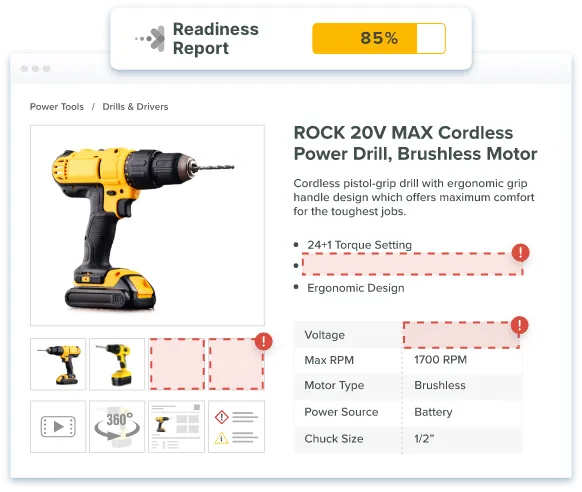
Step 5: Test cross-store collection consistency. Before fully automating, verify changes in your PIM produce expected results across connected stores. Check that product title translations appear properly, image assets display correctly, and descriptions render correctly.
5. Scaling Multi-Currency Operations with Centralized Data
With centralized data and automated syndication, expanding into additional markets becomes configuration rather than reconstruction. Adding a regional Shopify store means connecting to your existing PIM and defining market rules — not manually recreating your entire catalog.
Cross-border e-commerce is projected to grow 28.3% faster than domestic through 20304, creating substantial opportunities for merchants prepared to operate at global scale. The infrastructure you build today determines whether you can capture that opportunity.

Key Takeaways

Frequently Asked Questions
Smart collections automatically include matching products based on selection conditions you define — such as product tags, price ranges, or stock status. Unlike manual collections where you choose which products to include individually, automated collections dynamically update as products match or stop matching your criteria. Shopify supports up to 60 selection conditions per collection.
Not directly. Each Shopify store maintains its own collection structure, so you must create collections separately per store. However, you can use consistent underlying logic — like product tags or categories — while adapting currency-specific conditions like price ranges. PIM software enables you to define collection logic once and automatically apply it across stores with appropriate regional adaptations.
PIM systems connect to Shopify’s API and maintain separate connection configurations for each store. When you update data in the PIM, the system syndicates changes to all connected stores according to established rules, including applying currency conversions, regional pricing strategies, and market-specific attributes.
When you update pricing in your PIM, changes propagate to all connected stores with appropriate currency conversions applied. Smart collections using price-based conditions automatically reevaluate products based on new pricing. Products moving above or below collection thresholds are added or removed automatically.
Both approaches work, but the architecture differs significantly. Shopify Markets enables multi-currency support within a single store, simplifying management but providing less flexibility for market-specific customization. Separate stores give you complete control over each market’s experience including unique collections and localized descriptions. PIM software makes managing multiple stores sustainable by centralizing data.
Use language-agnostic identifiers in your PIM for core organizational structures. Product tags, SKUs, and category codes should work across markets regardless of language. Store translated descriptions, collection names, and marketing content as separate attributes that syndicate appropriately per market.
Yes, when your PIM integrates with inventory management systems. Smart collections can filter based on stock status, showing only products available in specific regional fulfillment centers. As inventory levels change, collections automatically update across affected stores.
Where to Next?
AI is no longer a future consideration for product information management. It is already reshaping how manufacturers and distributors enrich content, govern data quality, and scale across channels without adding headcount. Catsy’s connected PIM and DAM platform handles the complexity of large, multi-channel catalogs. When you are ready to go deeper, our guides below walk through the decisions that matter most before you commit to a platform.
Keep Collections Consistent Across Every Shopify Storefront
Catsy’s PIM integrates directly with Shopify to centralize product attributes and automate collection rules — so multi-currency and multi-country stores stay in sync without manual updates.
Book a Demo