
Selling across multiple Shopify stores in different countries gets complicated fast. It isn’t just about translating product pages or adjusting currencies — you’re dealing with local rules, customer expectations that shift market to market, and the constant need to keep your brand feeling consistent everywhere. When you add Shopify combo products into the mix, things can spiral quickly.
At the same time, the upside is real. Well-designed bundles can raise average order value by 10 to 30 percent, and some retailers have seen lifts as high as 55 percent. For merchants running international, multi-store Shopify setups, smart bundling can become a genuine competitive edge. The hard part is keeping everything in sync — product data accurate, prices sensible locally, and inventory right across every store. Trying to manage all of that with spreadsheets usually leads to mistakes and a lot of frustration.
1. What Are Shopify Combo Products?
Core Concept
Combo products combine multiple items from your Shopify store into one offering. When customers purchase the bundle, they receive all components together, often at a discounted price compared to buying items individually. When customers see a bundle priced lower than the sum of its parts, they perceive greater value. According to Shopify’s official documentation, bundle products work across online store channels, Shop, and Shopify POS.
Why Store Owners Prioritize Bundles
Bundle Types for Different Strategies
Key Features That Increase Profits
Bundles can also clear stagnant inventory by pairing slow-moving items with popular products, improving overall inventory turnover. Since combo products behave like regular Shopify products, you can organize them into collections and apply them across all the same sales channels as any individual product.
2. Why Combo Products Drive International Sales
The Localization Imperative
Research consistently shows 76 percent of consumers prefer purchasing when product information appears in their native language, and 40 percent of global customers refuse to buy from websites without their native language. This extends directly to how you present bundle offerings. By strategically merging products into localized bundles, you enhance the shopping experience and streamline operations across all international touchpoints.
Currency and Pricing Complexity
When running a Shopify business across multiple countries, combo product pricing becomes intricate:
Systems of Measurement
International combo products require measurement localization. Your bundle must show appropriate units per market:
The Multi-Store Data Challenge
Store owners managing separate Shopify storefronts face a familiar set of headaches: duplicate product entries across accounts, inconsistent bundle configuration across markets, version control issues when updating component products, and complex inventory management across warehouses. This is where centralized product information infrastructure becomes critical — enabling you to boost revenue while maintaining operational efficiency.
3. How to Create Combo Products on Shopify
Method 1: Shopify Bundles App (Native)
The free Shopify Bundles app provides basic functionality to create a bundle directly from your Shopify admin. Install it from the App Store, then follow these steps:
Limitations for multi-store operations: No cross-store synchronization, manual duplication required for each regional store, no built-in currency or measurement conversion, and limited advanced bundling features for international products.
Method 2: Third-Party Apps
Several bundle apps extend combo functionality beyond Shopify’s native tools. Popular options include Combo Wise for mix-and-match with quantity breaks, Webkul Bundle Product for fixed and variable quantity options, Bold Bundles for advanced bundling with upselling features, and Easy Bundle Builder for visual bundle creation. Key capabilities across these apps include automatic inventory sync across individual items, AOV optimization tools, promotional deal builders like “Buy X, Get Y,” visual bundle displays that highlight savings, and brand customization to match your store’s theme. Many offer a free trial period before committing.
The Product Data Management Solution
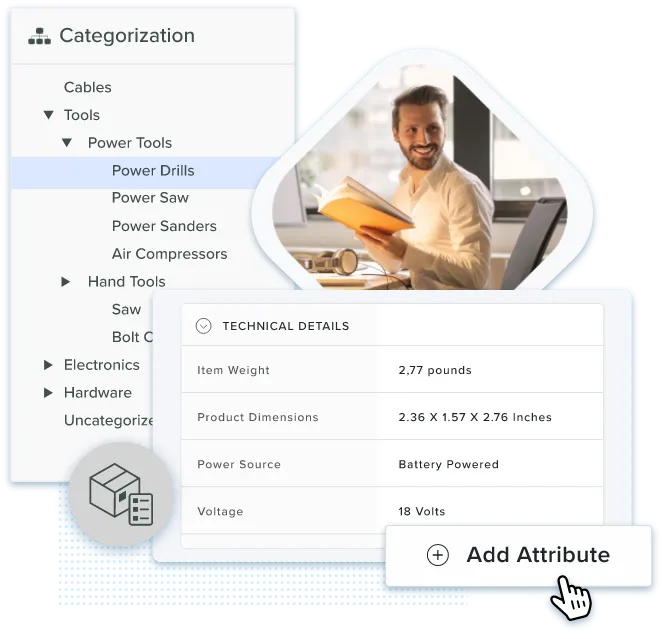
For merchants running multiple international stores, the real solution involves centralizing product information before it reaches Shopify. The best PIM for Shopify provides:
4. Managing Combo Products Across Multiple Markets
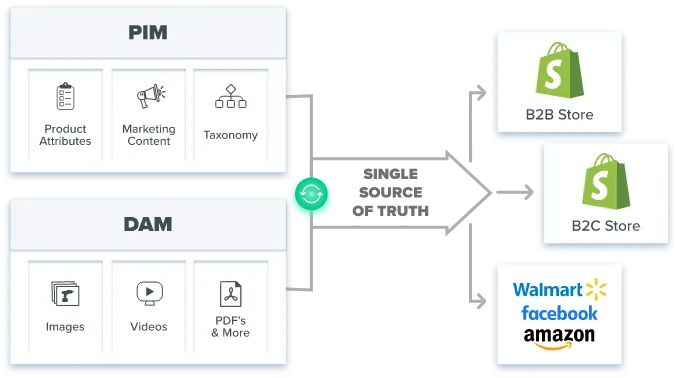
Single Source of Truth Architecture
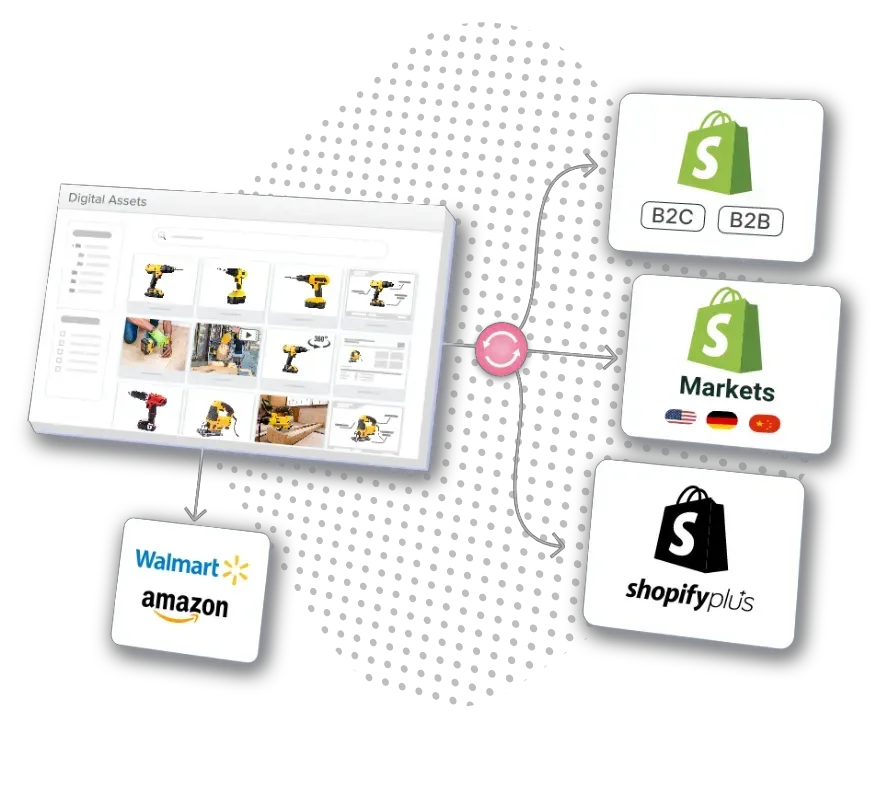
When you manage five Shopify stores across five countries, updating a bundle shouldn’t mean five separate update processes. Modern Product Information Management systems enable inheritance models where you define the base bundle structure at the parent level, inherit common attributes to all market variants, and override specific attributes per region without duplication.
A “Tech Starter Bundle” at $599 USD base price might become £479 GBP for UK customers with English (UK) descriptions and metric measurements, and €549 EUR for German customers with a German-language description — all managed from one master record, not three separate product entries.
Inventory Tracking Synchronization
Multi-location inventory grows complex when bundle components live in different regional warehouses. Customers expect accurate stock levels, which requires:
Regulatory Compliance
Different markets impose different requirements on bundle products. EU Digital Product Passports may require detailed sustainability data for electronics bundles. Many countries mandate specific primary measurement units. And nearly 80 percent of international buyers strongly prefer browsing in their native language, directly impacting conversion. A robust PIM system ensures compliance data travels with combo products to every market automatically.
5. Best Practices for Multi-Store Combo Products
Start With Market Research
Before creating custom product bundles for multiple markets, analyze purchasing patterns per region: review which complementary products customers buy together, identify regional preferences (winter gear bundles won’t sell in tropical markets), and study competitor bundle deals to understand local expectations. Validate your pricing strategy by researching local market price sensitivity, calculating acceptable discount levels per market, and testing discount code effectiveness versus automatic discounts.
Design for Localization From Day One
Leverage Technology Correctly
Rather than cobbling together disconnected app solutions, invest in centralized product data infrastructure that connects to all your Shopify instances. This eliminates manual data entry and reduces errors. Automate repetitive tasks: currency conversion using live exchange rates, measurement unit conversions across markets, inventory management synchronization, and price update propagation to all stores. Monitor bundle performance by market, identify which bundles resonate in specific regions, and adjust offerings based on data.
Test Before Scaling
Optimize the Customer Experience

Key Takeaways

Frequently Asked Questions
People use the terms interchangeably, but there’s a practical distinction. A combo product is one item with its own SKU and product page that packages several products together. A bundle can also refer to a “frequently bought together” setup where separate items get added to the cart. If you’re selling in multiple countries or running more than one store, true combo products with their own SKU are usually easier to manage for inventory tracking and pricing.
You can, but doing it manually gets messy fast. A better approach is using a PIM system. You set up the bundle once, then adjust pricing, descriptions, and details for each market from one central record. That way you stay in control without repeating the same updates across every store.
That’s where real-time syncing matters. When someone buys a bundle, each component needs to be deducted from inventory at the right warehouse. PIM systems handle this automatically so you don’t oversell or run into stock issues in specific regions.
Static conversions don’t hold up for long. Exchange rates shift, and margins can slip quickly. The smarter setup updates pricing automatically based on current rates while still maintaining prices that feel natural to customers in each country — local rounding conventions and all.
Basic translation tools help but aren’t always enough. Good localization adjusts the wording so it actually resonates in each market. PIM tools help manage translations, keep everything organized by market, and make it easier to collaborate with professional translators when needed.
That’s up to you. Most stores offer both options. Customers can buy items individually or grab the bundle at a discount. That flexibility is particularly helpful when different regions prefer different buying patterns, or when you want to test bundle uptake without removing individual product listings.
You can set rules that pause bundle sales when any component drops below a threshold, and configure alerts before inventory runs out. In multi-store setups, this works per region — so a stockout in one warehouse doesn’t create backorder problems for customers in another market.
Where to Next?
Managing combo products across international Shopify stores is one of those challenges that looks manageable at two stores and overwhelming at five. The merchants who scale successfully don’t do it by working harder — they do it by building the right data infrastructure early. One source of truth. Automated localization. Real-time sync. That’s what keeps a multi-market bundling strategy on course.
Manage Your Shopify Bundles From One Central Source
Catsy’s PIM connects directly to all your Shopify stores and automates combo product syndication across every market — pricing, localization, inventory sync, and all. Build the bundle once. Sell it everywhere.
Book a Demo