
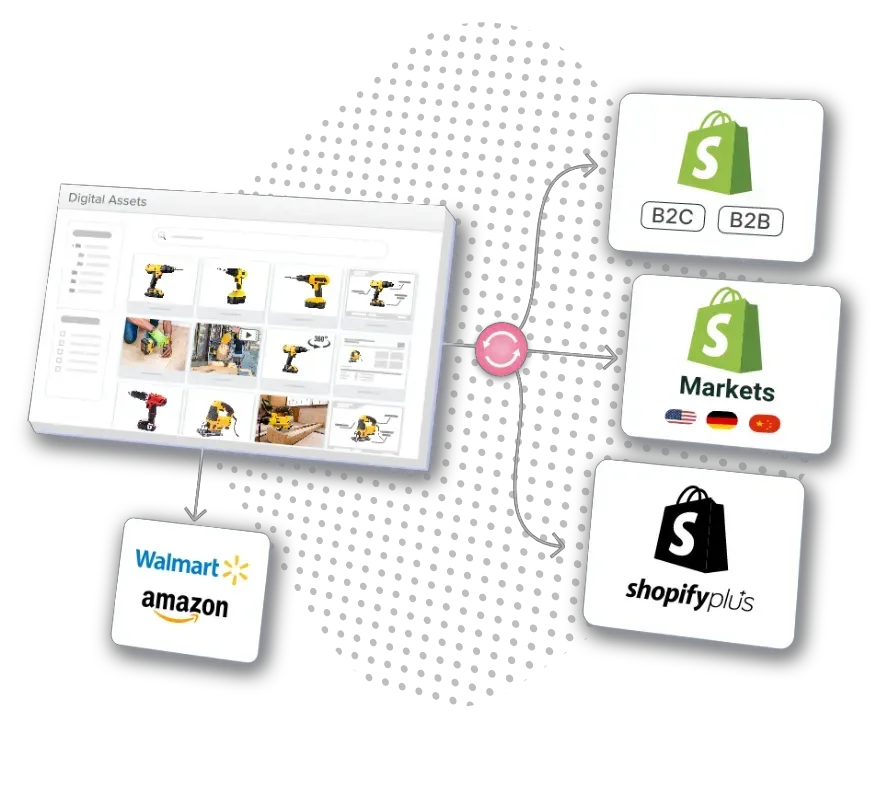
Managing product information across multiple Shopify stores is exponentially more difficult when you’re selling across countries, currencies, and languages. The Shopify Product API offers powerful tools for programmatic catalog management, but without the right infrastructure, merchants quickly discover that manual API workflows create more problems than they solve.
According to Shopify’s research, global ecommerce now accounts for 20.5 percent of worldwide retail sales, with global B2C ecommerce projected to reach $9.8 trillion by 2033. As merchants expand internationally to capture this growth, the complexity of managing product catalogs through API requests increases dramatically — making centralized Product Information Management essential for sustainable operations.
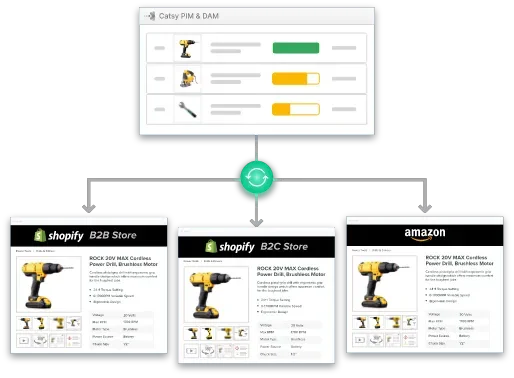
1. Understanding Shopify Product API Challenges for Multi-Store Operations
The Shopify Product API, part of both the Admin GraphQL API and REST API, lets developers manage a store’s catalog, including products, variants, pricing, and inventory. It uses standard HTTP methods — GET, POST, PUT, and DELETE — to work with product data. This works well for a single online store. For businesses managing stores across the US, EU, UK, and Asia-Pacific simultaneously, things become significantly more complex.
Authentication and access token management
Creating a new product via the Shopify Product API requires a private app in your Shopify account, an API key, and an X-Shopify-Access-Token to authorize requests. Managing these credentials across multiple stores adds administrative overhead — each storefront requires separate authentication. Coordinating authentication across 5–10 international stores quickly becomes unwieldy.
Rate limit constraints impact multi-store workflows
Rate limits on the Shopify Product API restrict the number of API requests that can be made in a given timeframe, creating bottlenecks for stores needing frequent updates. A product specification update in your primary US store needs propagation to UK, German, and Australian storefronts — each requiring separate POST, GET, or PUT requests to the Admin API, each consuming your rate limit allocation.
Updating the product title for a single variant across seven stores requires seven separate API calls. Multiply this by hundreds of SKUs, and performance optimization becomes critical in balancing request frequency to prevent exceeding API call limits.
Complex variant management multiplies operational burden
The API allows handling of complex product variations, including up to 2,000 variants via the GraphQL interface. However, managing complex product variants, options, and associated metadata requires careful planning to maintain data integrity across multiple storefronts. Each product can have up to 3 options, and each option value can be up to 255 characters. A single formatting error in your POST method call can prevent product publication across all target stores, requiring you to retrieve the product’s ID and resend the request — multiplying troubleshooting time across your entire store network.
Manual localization creates inconsistency
Without centralized control, merchants often resort to copying and manually translating product details for each storefront through the Shopify Admin dashboard. Verifying each update across multiple stores for every change creates unsustainable operational overhead. Shopify’s REST Admin API is also being phased out in favor of GraphQL for new features, adding another layer of complexity for merchants managing multiple stores.
2. Why Manual API Management Fails at Scale
Merchants often begin their multi-store journey with custom scripts making direct API requests to the Admin API. Managing two stores seems feasible. At five stores across three countries, the system starts showing strain. By ten international storefronts, manual API management becomes unsustainable.
The multiplication problem with API calls
Every product update requires multiplication across your store network. One product description change × seven storefronts × four languages = 28 individual PUT requests to update existing products. When updating a product, you only need to include the fields you want to change in the JSON payload — but tracking which fields changed, across which stores, at which times quickly overwhelms manual processes.
Deletion requires careful coordination
To delete a product using the Shopify Product API, you first need to obtain the product’s ID by making a GET request to the products endpoint, then send a DELETE request to the endpoint for that specific product. When deleting products across multiple stores, you must consider the implications on inventory and orders to prevent disruptions. Coordinating these safeguards across international storefronts without centralized management creates real operational risk.
Data validation and error handling complexity
After sending an API request to create new products, you need to manage the response to check for errors such as invalid data or rate limits. The product details must be structured in JSON format, including attributes like title, vendor, product type, tags, variants, and images. Effective error handling is crucial — and this testing must be replicated across every storefront in your network, multiplying QA overhead.
Version management and platform evolution
Staying adaptable by tracking API changes and version updates is important for maintaining functionality. As Shopify evolves its platform, maintaining custom integration scripts requires constant developer attention that could be better spent on revenue-generating features. Research shows that companies using PIM get products to market four times faster than those managing data manually through repeated API requests.
3. Centralizing Product Data with PIM Software
Product Information Management (PIM) software acts as a centralized repository and orchestration layer that sits between your product data sources and your online store instances. Your PIM manages authentication, formats JSON data correctly, and handles access token rotation without manual intervention.
How PIM transforms multi-store API management
Modern PIM platforms pull data from various sources, enrich it centrally, then push it to all sales channels through their respective API endpoints. For merchants exploring headless commerce, PIM systems can syndicate to both Admin API (for backend management) and Storefront API (for customer-facing experiences) simultaneously.
4. Managing Multi-Currency, Multi-Language, and Regional Variants
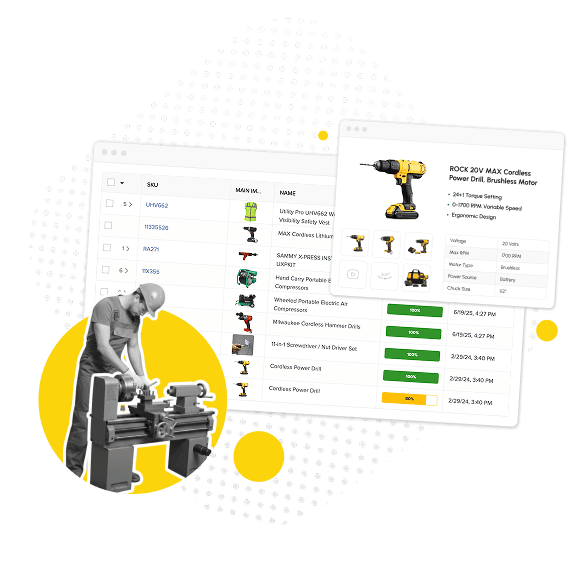
Your base product record contains universal information — SKU, manufacturer part number, material composition. Locale-specific attributes layer on top: German product descriptions for your DE store, metric measurements for EU markets, region-specific pricing rules. This prevents maintaining seven completely separate product records requiring seven sets of API calls.
Dynamic pricing and currency automation
Language translation workflow integration
Managing product content in multiple languages requires translation workflow support. Modern PIM platforms integrate with translation services to streamline multilingual content creation while maintaining translation memory for consistency. Research shows that 40 percent of customers refuse to purchase from websites in non-local languages — making systematic localization through API management a revenue imperative, not a convenience.
5. Automating API Workflows for Cross-Border Success
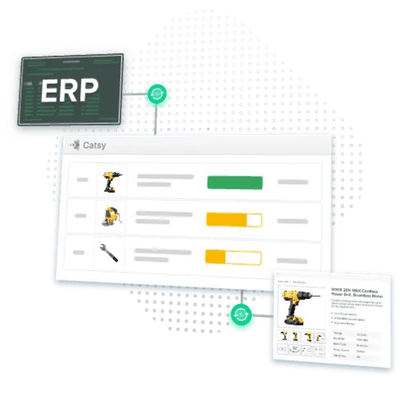
Once you’ve centralized product data in a PIM system, the next frontier is intelligent automation that responds to business events without manual intervention or custom scripting.
Event-driven product syndication
Intelligent API retry and error handling
Network issues happen. The Admin API might temporarily throttle requests during high-traffic periods. Robust PIM platforms implement intelligent retry logic — backing off and retrying failed GET, POST, or PUT requests without data loss. If a POST request to create products fails due to temporary API unavailability, the PIM queues the request for retry with exponential backoff, ensuring eventual consistency.
Scheduled batch operations
Workflow orchestration for team collaboration
Shopify Plus merchants can operate up to 10 storefronts per account, but only centralized management that automates API workflows makes this scalable and profitable — without overwhelming your development resources or requiring your team to navigate the steep learning curve that manual API management demands.

Key Takeaways

Frequently Asked Questions
The Shopify Product API lets developers manage a store’s products — adding, updating, or retrieving products along with details like prices, options, and inventory. It is part of Shopify’s Admin API and works by sending requests over the internet. Developers use GET to view data, POST to create something new, PUT to make changes, and DELETE to remove items. To connect safely, they use an API key and an access token from a private app.
Each store requires its own private app in the Shopify Admin API section with a separate API key and access token, using the X-Shopify-Access-Token header to authenticate requests. Tools like Postman can help test authentication. When working with multiple stores, tracking separate credentials for each is one reason many merchants use PIM systems, which centralize credential management and automate authentication across their store network.
The biggest challenges are rate limits that slow high-volume updates, managing product IDs across different stores, errors from incorrectly formatted data, and the learning curve for those new to APIs. When you delete products you need to consider the impact on inventory and past orders. These challenges compound as you add more stores, which is why centralized management makes such a significant operational difference.
PIM software uses the Shopify Product API as a bridge to keep data in sync across all connected stores. The PIM maintains your master product catalog and uses automated workflows to send updates where they need to go — POST requests to create products, PUT requests to update them, and DELETE requests to remove discontinued items. It also manages access tokens for each store, validates data before sending to avoid errors, and retries requests if something fails.
Yes — the Shopify Product API supports dynamic pricing updates and can automate product titles, descriptions, and images across localized stores. However, managing multiple currencies and languages effectively across many markets requires centralized rules. The best PIM for Shopify provides this control by automatically applying localization rules and generating properly formatted POST or PUT requests with updated data for each regional store.
The Shopify Admin dashboard provides a visual, manual way to manage products one at a time. The API lets you control things with code, automating tasks like bulk product uploads and inventory updates. If you have one store and a small catalog, the dashboard may be sufficient. If you’re running multiple stores or managing a large catalog, the API becomes essential — and since it can be complex to implement directly, many teams use PIM tools to handle the technical details automatically.
Once you’ve sent a request, check the response for issues like bad data or rate limits. A DELETE request returns a "200 OK" status with no body if it worked. A PUT request returns the updated product details for review. Use confirmation steps or a test environment to avoid accidental deletions. PIM tools handle much of this automatically — retrying failed requests, alerting you when something goes wrong, and reducing the custom code your team needs to maintain.
Where to Next?
The Shopify Product API is powerful — but power without infrastructure creates chaos at scale. A centralized PIM keeps your multi-store catalog navigating smoothly: one source of truth, automated API workflows, and governed data flowing to every storefront without manual intervention.
Automate Your Shopify API Workflows With Catsy
Catsy’s PIM connects directly to all your Shopify stores and automates product syndication across every storefront — handling API authentication, rate limits, variant management, and localization without manual intervention.
Book a Demo