
Introduction to PIM Systems
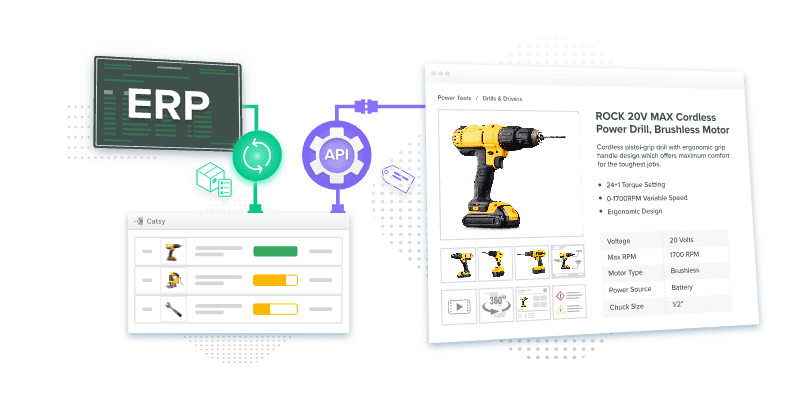
Product Information Management systems exist to solve a simple problem. Businesses need a reliable way to manage product data in one place. A PIM system stores and organizes product descriptions, product images, technical specifications, and product attributes so teams can reuse accurate data across channels.
If you don't yet have a PIM system, your product data is probably living in spreadsheets and other disconnected tools. That can lead to poor data quality and frequent errors. PIM systems improve your business's operational efficiency because it's your single source of truth.
Understanding Machine Learning in PIM Software
Machine learning in PIM software changes how product data is managed. Traditional PIM systems rely on fixed rules and manual workflows. Machine learning models learn from patterns in product data and get better over time.
Several AI technologies work together inside modern PIM systems. Natural language processing, or NLP, helps create and analyze product descriptions. Computer vision lets PIM systems understand product images and automatically assign attributes like color or style. Predictive analytics pulls from historical and real time data to forecast product demand.
Machine learning doesn't replace human expertise. It supports teams by handling repetitive data management tasks and surfacing insights people would struggle to find on their own.
Automated Data Quality and Enrichment
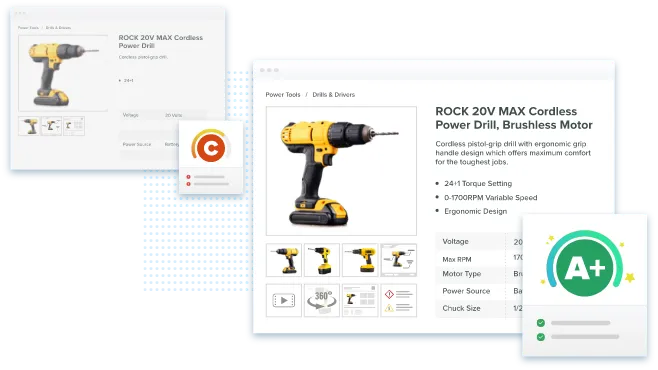
Data quality is the foundation of effective product data management. Poor data quality leads to lost sales, higher returns, and frustrated customers. Machine learning helps ensure accurate product data across even the largest catalogs.
AI powered PIM systems constantly review product data to detect problems. Machine learning algorithms recognize patterns in formatting and attributes. When data errors appear, the system can flag them or correct them automatically.
Data cleansing becomes much easier with machine learning. Instead of checking thousands of SKUs by hand, teams can rely on AI systems to standardize units, normalize product attributes, and remove duplicates.
Another major advantage is data enrichment. Suppliers sometimes send incomplete data, but machine learning models can predict those missing attributes by analyzing similar products.
Intelligent Product Categorization and Classification
Product categorization plays a huge role in how customers find products. When items are placed in the wrong category, search results suffer and customers get frustrated. Manual categorization simply can't scale for large catalogs.
Machine learning solves this problem through automated product categorization. AI powered PIM systems analyze product data using natural language processing and machine learning models. The system reads product titles, descriptions, and attributes to determine the best category placement.
As more products move through the system, machine learning models keep improving. They recognize patterns in existing data and apply them consistently to new products.
Predictive Analytics for Better Business Decisions
Predictive analytics turns PIM systems into tools for planning and strategy. Machine learning models analyze customer behavior, user interactions, and historical sales data to forecast product demand and track product performance.
Demand forecasting helps businesses optimize inventory management. Teams can anticipate which products will sell and when, reducing stock shortages and excess inventory. Predictive analytics also reveals emerging trends so businesses can adjust assortments before competitors catch on.
Customer experience improves through personalization. AI powered PIM systems analyze customer preferences and customer interaction data to recommend relevant products. These personalized experiences increase customer engagement and boost conversion rates.
Image Recognition in Product Data Management
Product images hold valuable data that often goes unused. Image recognition allows PIM systems to extract information directly from images using computer vision.
AI systems analyze product images to identify attributes like color or material. This data is added automatically to product records, improving accuracy and completeness. Image recognition also checks image quality and flags issues that could hurt customer trust.
Enhancing Customer Experience with Machine Learning
Customer experience depends on accurate and consistent product data. Machine learning helps businesses deliver better experiences by aligning product information with customer needs.
AI powered PIM systems analyze customer behavior to improve product descriptions over time. Personalization engines use machine learning techniques to recommend products that match customer preferences.
AI Integration Challenges in PIM Software
AI powered PIM systems offer major benefits, but integration takes planning. Machine learning depends on high quality data, and poor data quality limits what AI systems can do.
Businesses also need strong data governance. AI systems must follow internal rules and external regulations while managing product data. With the right approach, these challenges are manageable.
Scalability and Future-Proofing Your Product Catalog
Growth shouldn't break your systems. Traditional PIM solutions often struggle as catalogs expand and markets multiply, but machine learning powered PIM systems are built to scale.
Cloud based architectures can easily handle large volumes of product data without causing performance issues. These systems support multiple languages and real time updates across channels. As catalogs grow, machine learning models continue to improve instead of slowing down.
