
PIM Strategy

9 Best PIM Software Platforms for 2026

As product catalogs expand across ecommerce platforms, marketplaces, and retail partners, managing product data manually is no longer sustainable. Here’s the 2026 shortlist — and which platform combines PIM with DAM natively.

By Ceejay S Teku  ·  July 2026
Impact of PIM on supply chain efficiency — transforming product data into competitive advantage
What You'll Learn
How the best PIM software centralizes product data and eliminates costly data silos
Which PIM platforms stand out in 2026 and what each is best suited for — including two new entries: Sales Layer and Syndigo
The key features that drive operational efficiency and data accuracy — including AI-assisted enrichment
Which platforms combine PIM and DAM natively, and why that matters for total cost of ownership
What PIM pricing really looks like across small, mid-market, and enterprise tools
A practical framework for selecting the right PIM solution for your business

Not sure which type of PIM fits your stack? Start with the PIM platform comparison to narrow the field before diving into individual vendors here.

Background Context

Businesses now distribute product content across ecommerce platforms, marketplaces, trading partners, print catalogs, brand portals, and digital signage. Without a structured approach, inconsistent product descriptions, outdated pricing, and fragmented digital assets erode customer experience fast.

This is why demand for the best PIM software continues to rise. Companies adopting a product information management system gain the ability to centralize product data, manage complex catalogs, and ensure accurate information flows across all sales channels. The stakes are high: according to Gartner research, poor data quality costs organizations an average of $12.9 million per year.
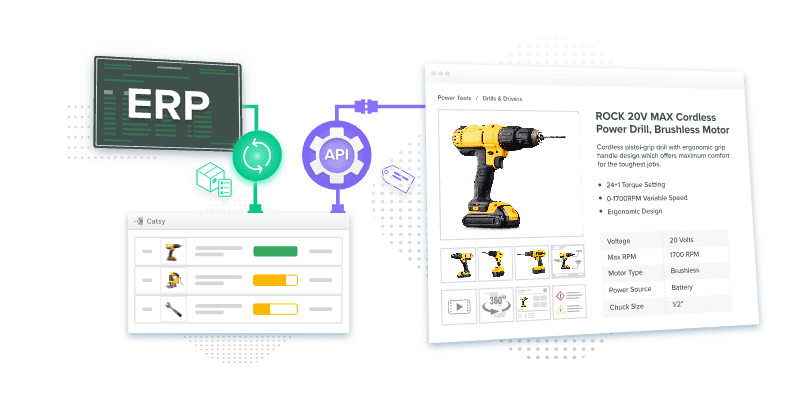
Impact of PIM on supply chain efficiency — transforming product data into competitive advantage

What Is PIM Software and Why Does It Matter?

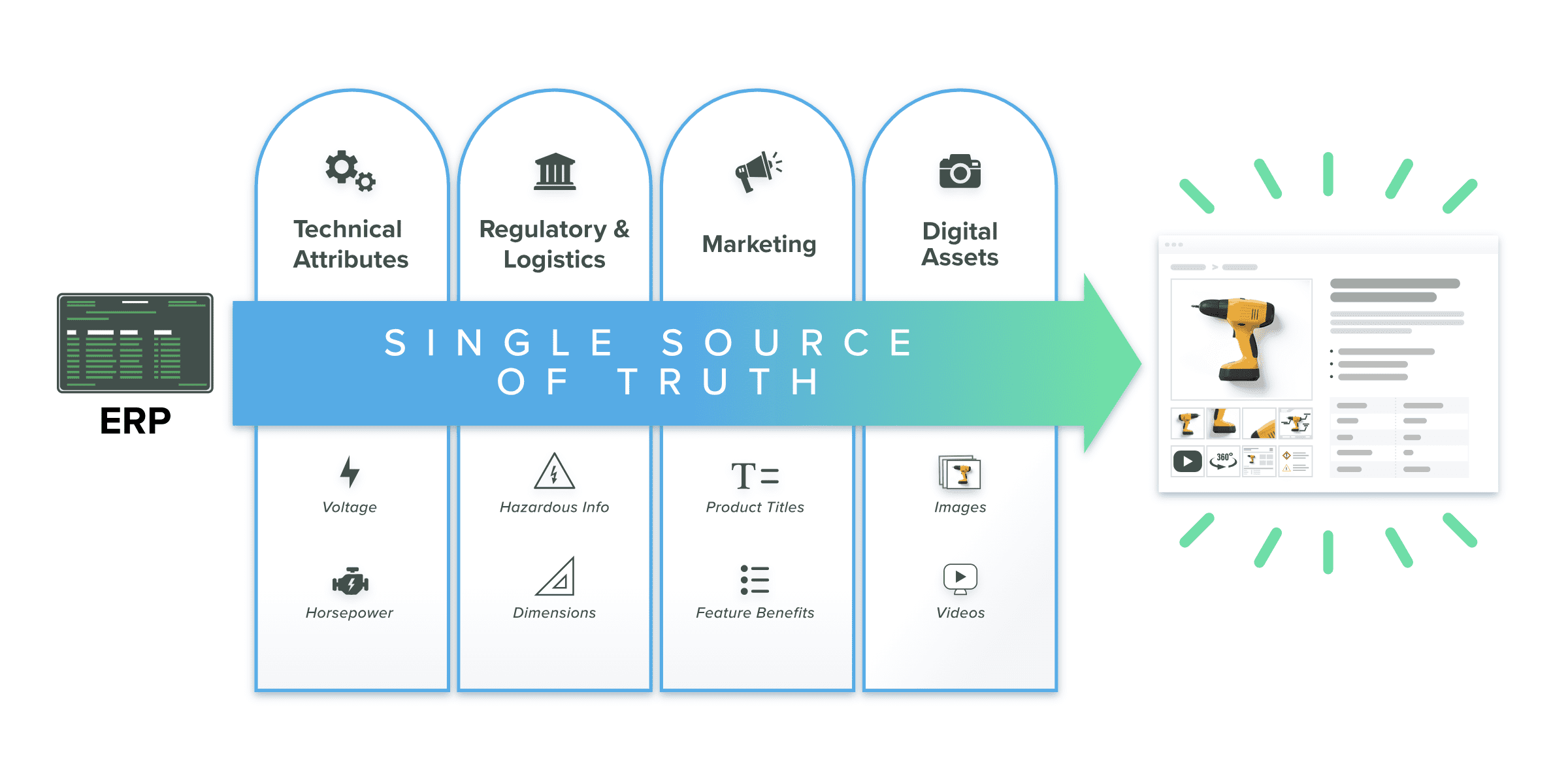
If you’re new to the category, what is PIM covers the fundamentals. In short: product information management software is a centralized platform for managing product data, enriching product content, and syndicating accurate product details across distribution channels. Instead of relying on spreadsheets or disconnected upstream systems, centralizing product data in a PIM system creates a single source of truth for product teams.

·Centralize product data from ERP (enterprise resource planning) systems and existing systems
·Enrich product details with technical specifications and digital assets
·Maintain data governance and ensure data accuracy across every channel
·Automate business processes with workflow management
·Distribute product feeds across ecommerce platforms and selling destinations

GS1, the global authority on product data standards, emphasizes that standardized data improves supply chain visibility and customer trust. Commerce complexity has accelerated dramatically: McKinsey reported that U.S. ecommerce penetration gained a decade’s worth of growth in just three months during 2020. That forced companies to modernize their data infrastructure — and six years later, the channel count has only grown.

Modern platforms take different architectural approaches. Some require separate digital asset management tools, while platforms like Catsy provide native PIM plus DAM within one platform. This reduces synchronization delays and eliminates data silos, especially for visual-first brands managing extensive image libraries.

Key Features to Look for in the Best PIM Software

Centralized Data Repository

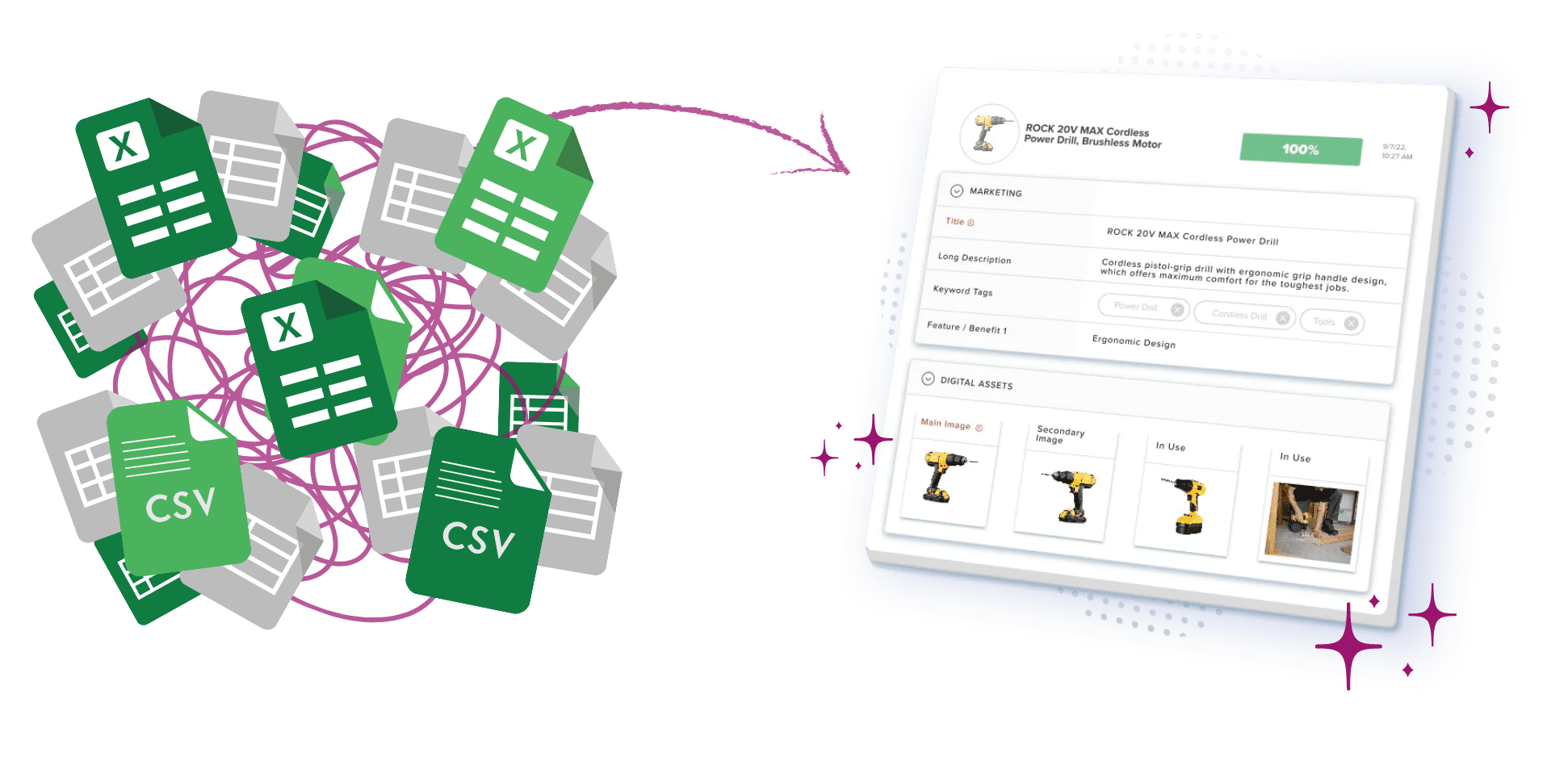
A centralized repository replaces spreadsheet reconciliation with one platform. This ensures accurate product data stays current across channels without version conflicts between teams.

Flexible Data Modeling

Strong data modeling supports variants, bundles, hierarchical relationships, and reference entities. It should enable teams to enrich product data without developer involvement while enforcing governance controls.

Multi-Channel Syndication

Modern product data syndication functions as an ongoing operational layer — not a one-time export. Leading platforms automatically format content for each selling destination, reducing manual rework per channel.

Workflow Automation

Workflow automation handles approvals, bulk edits, and product launches. The goal is throughput, not administrative overhead.

Integrated Digital Asset Management (DAM)

Digital assets directly shape product experience. High-quality product images and videos influence conversion rates and brand perception. Some vendors require separate DAM systems, while others include a native DAM solution. Catsy unifies product data and digital assets within a shared database, reducing licensing costs and preventing integration failures.

AI-Assisted Enrichment

AI capabilities have moved from nice-to-have to a practical evaluation criterion for 2026. Look for platforms that support automated product content generation, intelligent metadata tagging, taxonomy recommendations, and translation workflows. The most grounded implementations — like Catsy’s Copy AI, Image AI, and Taxonomy AI tools — automate specific, repeatable enrichment tasks rather than promising vague “AI-powered” everything. Platforms investing in structured AI capabilities today will compound that advantage as catalog complexity grows.

Integration Ecosystem

Your PIM provider should connect seamlessly with ERP systems, master data management tools, and ecommerce platforms. Robust APIs for PIM and DAM integrations ensure the platform enables organizations to extend capabilities without rebuilding infrastructure.
Top 9 Best PIM Software Platforms for 2026

1
Catsy: Best Integrated PIM Plus DAM for Growing Brands

Catsy differentiates itself through a unified architecture where product data and digital assets exist in one system rather than separate tools connected through APIs.

Best for

Brand manufacturers, distributors, and retailers managing visual content alongside complex product specs.

Key Highlights

·Native PIM plus DAM in a single platform
·Strong integrations with ecommerce platforms
·Advanced data governance controls
·Workflow automation that improves operational efficiency
·AI-powered enrichment tools (Copy AI, Image AI, Taxonomy AI) for auto-tagging, content generation, and taxonomy building
·Pricing starting at $599 per month

Implementation

Mid-market deployments often complete within 10 to 14 weeks — significantly faster than multi-system environments that can take 4 to 12 months.

Ideal Customer

Businesses scaling into multiple channels that want one platform to centralize product data and eliminate data silos.

2
Akeneo: Best Open Source Flexibility

Akeneo is widely known for its customization potential and developer-friendly ecosystem.

Best for

Organizations with technical teams that want control over data modeling.

Key Highlights

·Open source community edition
·Extensive attribute management
·Strong governance features
·Large integration marketplace
·AI-assisted enrichment

Ideal Customer

Companies positioning PIM as an enrichment layer above ERP environments.

3
Salsify: Best for Retail Syndication

Salsify focuses heavily on retailer connectivity and digital shelf performance.

Best for

Brands selling through major retail networks.

Key Highlights

·Unified product content and syndication
·Retail partner network
·Digital shelf analytics
·AI-powered translation workflows

Ideal Customer

Businesses prioritizing compliance and channel optimization.

4
inRiver: Best for Complex Product Lifecycles

inRiver emphasizes workflow maturity and scalable architecture.

Best for

Manufacturers managing sophisticated product relationships.

Key Highlights

·Flexible data modeling
·Advanced workflow automation
·AI-assisted onboarding
·Strong syndication tools

Ideal Customer

Enterprises operating across regions with complex catalogs.

5
Pimcore: Best for Data Hub Strategies

Pimcore combines PIM, master data management, DAM, and content capabilities into a broader platform.

Best for

Enterprises consolidating multiple data environments.

Key Highlights

·Open source foundation
·Knowledge graph relationships
·Multilingual support
·API-first architecture

Ideal Customer

Businesses willing to invest in platform-level implementation.

6
Plytix: Best for Small to Mid-Sized Teams

Plytix is known for accessibility and fast onboarding.

Best for

Organizations transitioning from spreadsheets to structured product content management.

Key Highlights

·Freemium tier
·User-friendly interface
·Bulk edit functionality
·Strong onboarding support

Ideal Customer

Small teams with limited technical resources that need a quick win before scaling to a more robust platform.

7
Pimberly: Best for High Volume Catalog Imports

Pimberly specializes in ingesting supplier data from virtually any format.

Best for

Retailers coordinating large product feeds.

Key Highlights

·Rapid imports
·AI-powered enrichment
·Integrated digital assets library
·Retail-focused workflows

Ideal Customer

Retail organizations managing multi-supplier environments.

8
Sales Layer: Best for Fast B2B Onboarding

Sales Layer has built its reputation on speed-to-value for B2B brands and distributors — particularly those who need to get structured product content into partner and retailer channels quickly without a lengthy implementation cycle.

Best for

B2B manufacturers and distributors that need rapid catalog activation across retail and wholesale channels.

Key Highlights

·Fast implementation with guided onboarding and pre-built connector templates
·Intuitive visual interface designed for non-technical product teams
·Multi-channel connector library for retail and marketplace syndication
·Built-in analytics tracking content quality and channel performance
·PIM-focused architecture with lightweight media management

Ideal Customer

B2B brands scaling from manual spreadsheet processes to structured syndication. Organizations with deeply complex product hierarchies or extensive digital asset libraries may find themselves needing additional DAM tools alongside Sales Layer’s PIM-focused platform.

9
Syndigo: Best for Retail Syndication Networks and Compliance

Syndigo operates at the intersection of product content management and retail data network compliance — particularly strong for brands that need to meet the content requirements of major U.S. retailers and grocery chains.

Best for

CPG brands and manufacturers distributing through large retail networks that enforce strict content and compliance standards.

Key Highlights

·Direct connections to a large retail syndication network (Walmart, Target, Kroger, Amazon, and others)
·Content experience management with enhanced content and rich media capabilities
·Compliance and regulatory data support, including nutritional facts and GDSN readiness
·Robust item management for high-SKU, multi-category environments
·Retailer scorecard tracking for content quality and listing health

Ideal Customer

Consumer goods brands and manufacturers that sell through major U.S. retail chains. Organizations focused primarily on B2B distribution or internal product data workflows may find the platform’s retail-centric architecture more than they need.

Product specification management guide — streamlining product development with PIM

The Best PIM + DAM Combined Systems

If you’ve been searching for PIM + DAM software — or comparing options for a combined PIM + DAM system — you’re asking the right question. Many buyers discover mid-evaluation that managing product data in one tool and digital assets in another creates the exact synchronization headaches PIM was supposed to eliminate.

The honest reality: most PIM platforms treat DAM as an afterthought — either offering a basic media library or requiring a separate DAM solution connected through APIs. That connector-based approach means two vendor contracts, two admin consoles, and an integration layer that can break during bulk updates or channel expansions. A truly integrated DAM and PIM system stores product data and digital assets in the same database, governed by the same workflows. When a product image gets updated, every channel listing that references it reflects the change automatically.

PIM vs. DAM: Key Differences

A PIM system manages structured product data: specifications, attributes, pricing, and product details organized around the SKU. A DAM solution manages digital content: product images, videos, spec sheets, and brand assets — organized around the file, with metadata management, version history, and usage rights. The key difference for buyers: DAM systems on their own don’t know what a product is. Only when digital asset management is connected to product data does an image “belong” to a SKU — which is the entire case for a combined PIM and DAM platform.

Which Systems Are Natively Integrated

Catsy

Purpose-built as an integrated PIM and DAM platform from the ground up. Product records and digital assets live in a shared database with unified governance, workflow automation, and channel syndication. Drag-and-drop uploads, smart metadata tagging, built-in digital rights management, and instant asset delivery through portals all operate within the same system. For manufacturers and distributors managing thousands of SKUs with complex technical specs alongside extensive image and document libraries, this architecture eliminates an entire category of integration risk.

Pimcore

Takes a data-hub approach, combining PIM, DAM, and master data management on an open source foundation. The flexibility makes it a fit for enterprises willing to invest in platform-level implementation to consolidate multiple data environments under one roof. The trade-off is implementation complexity — this is a developer-driven platform, not a turnkey solution.

Plytix

Offers a lightweight integrated approach well suited for small to mid-sized teams transitioning from spreadsheets. Digital assets are managed alongside product data in a single interface, though the depth of the DAM solution (versioning, rights management, transformation) is more limited compared to platforms built specifically for asset-heavy catalogs.

What “Integrated” Actually Means vs. Connector-Based DAM

In a connector-based setup, your PIM sends an API call to fetch or push an asset from a separate DAM — introducing latency, potential sync failures, and a second system to maintain. In a natively integrated PIM and DAM system, product data and assets share one data model: linking an image to a product record is a field assignment, not a cross-system transaction. The operational difference shows up most during bulk updates, new product introductions, and multi-channel launches. The practical test: can you update a product image and have it propagate to every connected channel without touching a second tool or waiting for a sync job to complete?

How a DAM Solution Inside Your PIM Enhances Brand Consistency

When your DAM solution lives inside your PIM system, every image, video, and document connects directly to the SKU it describes. Channel exports always pull the current, approved version — sized and formatted for each destination automatically. The same validated content feeds every touchpoint: your website, marketplaces, distributor portals, and print materials alike. That consistency is difficult to sustain when PIM and DAM are stitched together with connectors; database-level integration is what makes brand consistency reliable rather than aspirational. For manufacturers with complex catalogs, spec sheets, CAD drawings, and safety documentation are digital assets too — and they carry compliance weight.

Choosing a PIM Solution by Business Size

$500–$2,500/month
Small Businesses

Companies with fewer than 10,000 SKUs should prioritize ease of use and minimal technical requirements. Plytix and Catsy are strong options in this tier.

$2,500–$10,000/month
Mid-Market Organizations

Mid-market companies need scalability, automation, and deeper integration. Catsy and Akeneo balance usability and power well for this segment. A mid-market solution typically runs $2,500 to $5,000 monthly; larger catalogs push into the $5,000 to $10,000 corporate tier.

$10,000+/month
Enterprise Companies

Large global brands require advanced governance, localization, and compliance capabilities. Solutions commonly evaluated include Salsify, inRiver, Pimcore, Syndigo, Informatica, and Stibo Systems.

Industry-Specific Recommendations

Fashion and Apparel

Seasonal launches and variant complexity demand strong image management and attribute modeling. Unified PIM plus DAM platforms help brands reduce collection launch timelines while maintaining brand consistency across retail partners.

Home Goods and Furniture

Heavy lifestyle photography combined with multiple retail partners — each with different content specs — creates synchronization challenges. Applying effective digital asset management strategies on platforms that unify digital assets and product specs enables single-action publishing across channels.

Manufacturing and Distribution

Manufacturers rely on structured technical specifications, supplier coordination, compliance certifications, and partner portals. Platforms such as inRiver, Catsy, Pimcore, and Akeneo support these complex product relationships.

Retail and Consumer Goods

Rapid SKU onboarding and automated imports are essential for maintaining the digital shelf, especially when brands operate multiple storefronts and regions. Pimberly, Salsify, Syndigo, and Catsy are frequently evaluated for such use cases.

Food and Beverage

Regulatory demands continue to expand. The European Commission’s Digital Product Passport initiative will phase in traceability and sustainability data requirements between 2026 and 2030. Organizations selling internationally should verify their PIM can accommodate expanding compliance attributes.

PIM Pricing: What to Expect

TierMonthly RangeTypical Use Case
Entry$500 to $2,500Small catalogs
Mid-Market$2,500 to $5,000Growing multi-channel brands
Corporate$5,000 to $10,000Large catalogs
Enterprise$10,000+Global operations

What drives pricing: SKU volume, user seats, integration complexity, syndication endpoints, support levels, and AI modules. Mid-market platforms like Catsy start near $599 monthly and scale based on catalog size. Always evaluate total cost of ownership — not license fees alone.

How to Choose the Right PIM: An 8-Dimension Framework

Not sure which type of PIM architecture fits your stack? The PIM platform comparison breaks down platform categories and helps narrow the field before comparing individual vendors.

1
Data Modeling Depth

Can the platform support your most complex products without brittle customization?

2
Workflow and Collaboration

Look for configurable workflows that improve throughput across product teams without adding approval overhead.

3
DAM and Rich Media Handling

Ensure digital assets remain synchronized automatically. Integrated PIM and DAM platforms keep assets and data in one database; standalone asset management tools require connectors that add sync risk.

4
Localization

Confirm support for regional attributes and translation workflows for every market you serve.

5
Integration Architecture

Most platforms follow one of three patterns: PIM as an enrichment layer above ERP; commerce ecosystem-first platforms; or platform-centric data hubs. Select the approach that aligns with your long-term strategy.

6
Deployment Model

SaaS reduces operational burden, while self-hosted models provide control. Understanding common myths about PIM implementation can clarify which model and rollout approach make the most sense for your team.

7
Pricing Transparency

Understand which capabilities are add-ons versus included in the base license.

8
Vendor Credibility

Evaluate customer reviews, product roadmap, and release cadence.
Product specification management guide — streamlining product development with PIM

Implementation Best Practices

The pattern that separates successful PIM deployments from failed ones: Governance before configuration.
·Clean data before migration
·Assign ownership to maintain accurate product data — by attribute, not just by system
·Establish governance workflows early before configuring the platform around them
·Design processes that improve throughput rather than adding approval layers
·Plan channel requirements in advance so syndication templates exist before go-live
·Treat syndication as an ongoing operational layer, not a launch-day task

The Future of PIM: AI-Driven Commerce

Commerce is entering a phase where AI agents influence product discovery and purchasing decisions directly. OpenAI’s Agentic Commerce Protocol — developed with Stripe — already enables users to browse and buy products inside ChatGPT without leaving the conversation. Etsy sellers and Shopify merchants have adopted it. This signals a shift toward machine-readable product content as a revenue channel, not just an operational requirement.

·Structured, machine-readable product feeds that AI agents can parse and surface
·Governance over brand voice in AI-generated product summaries
·Real-time updates across AI commerce channels as specifications change
·Automated content syndication to new AI endpoints as they emerge

Forward-looking buyers should evaluate vendors based on their readiness for AI-driven environments — not just today’s retail channels — and consider engaging PIM providers directly to understand their AI roadmap.

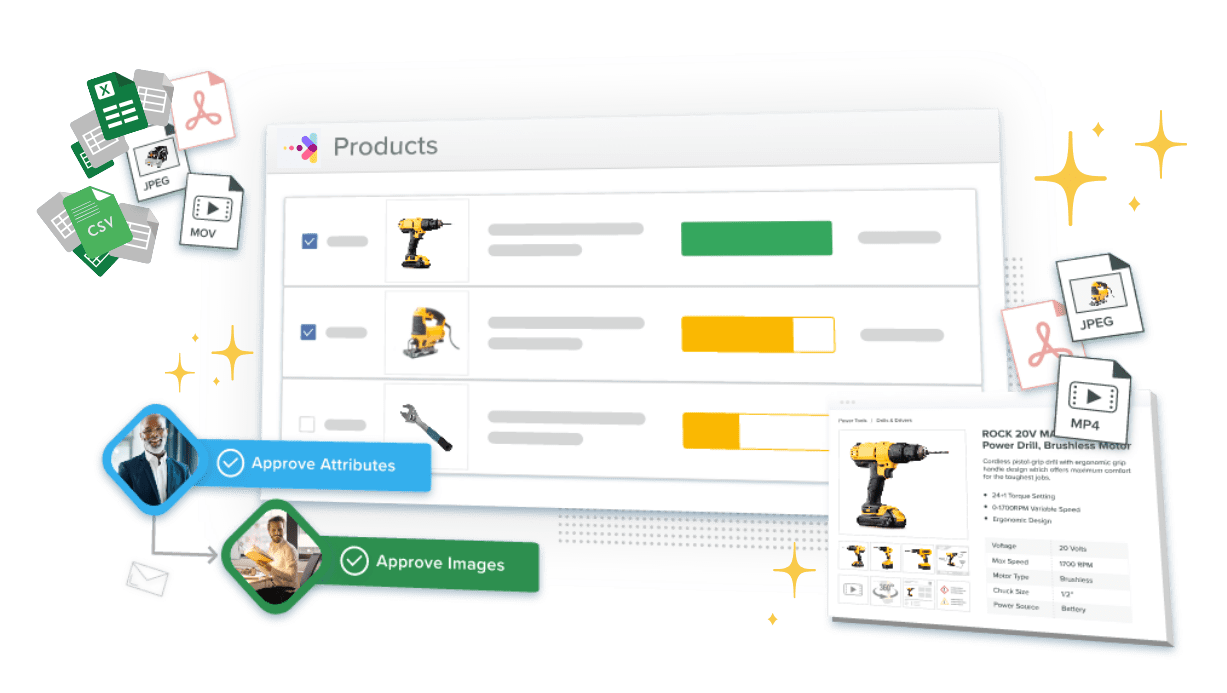
Book a demo with Catsy

Key Takeaways

Catsy tops the 2026 list as the strongest integrated PIM plus DAM platform for manufacturers, distributors, and growing brands — with transparent pricing from $599 per month
Nine platforms made this year’s list, including new entries Sales Layer (fast B2B onboarding) and Syndigo (retail syndication networks and compliance)
If DAM requires a second contract, total cost and integration risk both rise — natively integrated platforms (Catsy, Pimcore, Plytix) store digital assets and product data in one database
Budget realistically: entry tiers run $500 to $2,500 monthly, and total cost of ownership matters more than license fees alone
Use the eight-dimension framework to shortlist two or three vendors, then request demos with your real catalog — not sample data
AI-assisted enrichment and readiness for AI-driven commerce channels are now baseline evaluation criteria, not future considerations

Frequently Asked Questions

What is PIM software?

PIM software centralizes and enriches product data and distributes it across your sales and marketing channels. It manages product descriptions, pricing, digital assets, and technical specifications to keep content consistent no matter where customers find you.

How much does PIM software cost?

Pricing ranges from about $500 per month for entry-level tools to over $10,000 monthly for enterprise platforms. Costs depend on SKU count, integrations, user seats, and channel complexity. Mid-market platforms like Catsy start near $599 monthly and scale based on catalog size.

What is the difference between PIM and digital asset management?

PIM manages structured product data, while digital asset management handles images, videos, and documents. Marketing teams manage digital assets in the DAM, while product teams manage product data in the PIM. Many organizations need both, which is why integrated platforms that combine PIM and DAM natively — eliminating sync delays and dual-vendor complexity — are increasingly preferred over connector-based setups.

How long does PIM implementation take?

Entry-level platforms typically deploy within one to three months. Mid-market solutions often require about 10 to 14 weeks, while enterprise deployments may take six to twelve months depending on complexity, data quality, and integration scope.

Can PIM integrate with ecommerce platforms?

Yes. Most modern PIM platforms prioritize integrations with major ecommerce platforms through native connectors or APIs. The quality and reliability of those integrations — particularly at high SKU volumes — is one of the most important evaluation criteria.

Is PIM suitable for small businesses?

Even companies with modest catalogs benefit from centralized product data, especially when expanding into multiple channels or planning for growth. Entry-level platforms offer accessible pricing and fast onboarding specifically for smaller operations.

What are the biggest benefits of a PIM solution?

Key benefits include improved data accuracy, faster product launches, better operational efficiency, stronger governance, enhanced customer experience, and the ability to scale across global distribution channels without proportional increases in manual work.

What is PIM + DAM software?

PIM + DAM software is a platform that manages both structured product data and digital assets (images, videos, documents) in one system. Instead of running separate PIM and DAM tools connected through integrations, a combined platform stores everything in a single database with unified workflows. This eliminates sync delays, reduces vendor complexity, and ensures that every product listing and its associated assets stay consistent across channels.

Where to Next?

Choosing a PIM is a long-horizon decision — the platform you select shapes how product data flows to every channel you operate today and every channel you add tomorrow. The guides below cover the architectural decisions and platform comparisons that matter most when you’re charting that course.

Ready to See Catsy in Action?

Book a demo and see how an integrated PIM + DAM platform centralizes your product data, digital assets, and channel syndication in one system — from a single source of truth.

Book a Demo