

Still managing product specs across spreadsheets and email chains? That doesn’t just slow you down — it puts your entire supply chain at risk. Accurate, detailed specifications are the blueprint for everything downstream: sourcing, production, compliance, and distribution. As product complexity grows and regulatory requirements multiply, a systematic, data-driven approach becomes essential.
This guide covers what product specification management is, why it matters, the core components that make systems effective, how to implement one, and the common challenges worth preparing for.
1. What Is Product Specification Management?
This includes everything from bills of materials (BOMs) and ingredients to packaging components and technical documentation. Specs like nutritional content, material compositions, weight, dimensions, and supply chain requirements all fall within scope. It’s a dynamic process that encompasses managing changes to a product across its entire lifecycle — not just at launch.
Why it matters beyond storage: The discipline goes far beyond simple data storage. Specification management encompasses templates, workflows, automation, and regulatory constraints that ultimately result in higher-quality, market-ready products. Regular reviews and updates create benchmarks for maintaining quality and building the supplier trust that brand loyalty depends on.
The evolution: Historically, companies managed specs in spreadsheets, PLM systems, and quality management software. Modern spec management platforms digitize every field so specifications become searchable, traceable, and reportable across the entire organization.
Key Components of Product Specifications
2. Why Product Specification Management Software Matters for Your Business
Speed to Market
When teams can stop chasing down the latest version of a specification and start focusing on innovation, product development accelerates. Centralized spec management eliminates the back-and-forth emails asking for the most recent color swatch, material grade, or dimension. The right information is always available to the right person.
Supply Chain Visibility
Legacy systems cause operational inefficiency and lack of visibility, often resulting in compliance failures, product variations, and wasted resources. Modern spec management gives procurement, manufacturing, and quality teams a consistent, current view of every product’s requirements.
Regulatory Compliance
Industries like food and beverage, cosmetics, and pharmaceuticals face stringent regulations around allergens, ingredient disclosures, and labeling requirements. Specification data challenges create real compliance risk when teams rely on outdated, manual methods. Accurate, governed specs reduce exposure to regulatory setbacks and legal liability.
Risk Mitigation
When a critical ingredient becomes unavailable or a quality issue surfaces, linked specifications let teams quickly identify which products were affected, assess alternatives, and execute any necessary recalls. This traceability is impossible when specs are scattered across email threads and shared drives.
Scale Context
Grocery stores carried roughly 7,000 SKUs in the 1970s. By the 1990s, that number had grown to over 40,000 items. Modern industrial manufacturers face similar SKU proliferation — and specification management becomes exponentially more critical as catalog complexity grows.
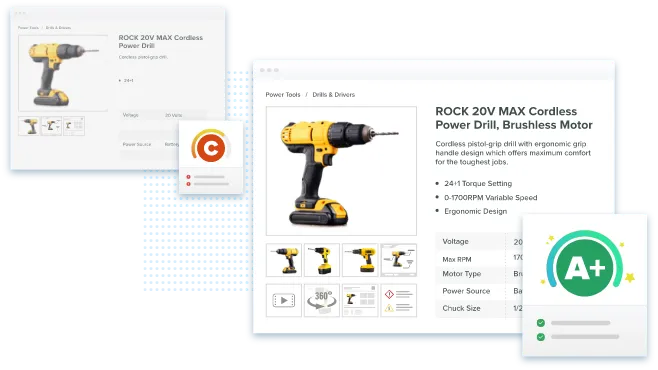
3. Core Components of Effective Specification Management
Centralized Repository
All product and packaging specifications live in a secure, centralized database that serves as the single source of truth. This eliminates the problems caused by specs scattered across email inboxes and shared drives, where version conflicts are inevitable.
Standardized Templates
Product specifications serve as your roadmap: they define roles and responsibilities, project scopes, test plans, and release activities. Templates ensure consistency across products and teams, preventing each department from developing its own spec format that others can’t parse or trust.
Linked Product Information Architecture
Modern systems create relationships between specifications. When one ingredient changes, every linked product automatically reflects the update without manual intervention across multiple records. This prevents spec duplication, ensures accuracy, and makes impact assessment straightforward when changes occur.
Workflow Automation
Approval processes, version control, and change management workflows keep specifications moving efficiently through each stage of development. Automated notifications ensure every stakeholder is informed when specs become effective or require review. Real-time updates facilitate collaboration across internal and external stakeholders — everyone works from the same version.
Collaboration Tools
R&D, quality control, procurement, manufacturing, and sales all need access to specifications. Effective systems allow cross-functional collaboration while maintaining the integrity of product data — role-based access ensures the right people can view, edit, or approve the right specifications.
Integration Capabilities
Specification management software must connect with PLM solutions, ERP systems, quality management platforms, and supply chain management tools to exchange product data seamlessly. Isolated spec management creates the same data silo problem it’s supposed to solve.
4. How to Implement a Product Specification Management System
Phase 1: Assessment
Audit your current situation. Identify where structured specification data currently lives, who owns it, and what pain points teams experience throughout their workflows. Document existing processes and the regulatory requirements that your specifications must support. This phase often reveals more inconsistency than teams expect.
Phase 2: Team Assembly
Writing product specifications is a collaborative activity — each team brings valuable knowledge from their unique position in the product development process. Establish a cross-functional team with representatives from each stakeholder department: R&D, quality, procurement, manufacturing, and commercial. Teams should work together to agree on required fields, validation rules, and approval workflows before any system is configured.
Phase 3: System Selection
Choose a PIM platform purpose-built for specification management. Key capabilities to evaluate:
Phase 4: Data Migration
This critical phase involves cleaning existing specification data, standardizing formats, and migrating information into the new system. Prioritize your most important products first for phased implementation rather than attempting a complete migration at once. Flexible data models in modern PIM platforms accommodate diverse specification types, making migration more manageable when data is prepared correctly.
Phase 5: Training and Adoption
Comprehensive training ensures teams understand not just how to use the system, but why specification management matters. Validation rules guide users toward complete, accurate specs from day one, which accelerates adoption by catching errors early rather than after they’ve caused downstream problems.
Phase 6: Continuous Improvement
Regularly review system usage, gather feedback from users across departments, and refine templates and workflows based on actual operational experience. Specification management is not a one-time implementation — it evolves as your product requirements and regulatory environment change.
5. Common Challenges and Solutions in Managing Product Specs
Challenge: Data Accuracy and Version Control
The problem: Multiple versions of specs floating through email and shared folders — with no single source of truth — create confusion about which version is current and approved.
The solution: Validation rules that automatically grade specs based on completeness and validity, flagging incomplete or inaccurate data before it causes downstream issues. Automated version control timestamps changes, tracks all modifications, and maintains complete audit trails, ensuring teams always work from the most current approved specifications. This audit trail is particularly critical for regulated industries where traceability is a compliance requirement.
Challenge: Unit Conversion Errors
The problem: Industrial manufacturers serving global markets constantly convert between imperial and metric measurements, introducing calculation errors that cause costly production mistakes and affect finished product quality.
The solution: Automatic conversion features that allow users to toggle between unit systems instantly, eliminating manual conversion entirely while ensuring specifications remain accurate across different regional requirements. When conversion is automatic, it’s also consistent — no two engineers rounding differently.
Challenge: Spec Scalability
The problem: As product catalogs grow, many systems impose limitations on the number of specifications they can manage, forcing workarounds or triggering additional licensing costs.
The solution: Unlimited specification support that scales without restrictions. Whether you’re managing hundreds or tens of thousands of products, the system should accommodate growth without performance degradation or artificial constraints that require re-platforming.
Challenge: Industry-Specific Requirements
The problem: Generic data management systems don’t address the complex needs of industrial manufacturers, including multi-level BOMs, technical data sheets, and engineering specifications with precise tolerances and compliance requirements.
The solution: Purpose-built specification management that understands the unique requirements of industrial products. Custom specification fields adapt to product types, while automated spec sheet generation produces formatted technical documents that meet industry standards. Generic platforms require extensive customization to reach the same starting point that purpose-built platforms provide out of the box.
